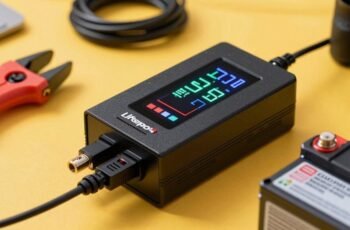
A smart charger for LiFePO4 batteries acts as the vigilant guardian of energy, balancing precision with protection. Its ability to adapt charging parameters in real-time reflects a sophisticated understanding of battery chemistry and safety. As we explore its features and benefits, we uncover how this technology not only enhances performance but also extends lifespan, raising questions about the future of sustainable energy management—an area worth examining closely.
Key Takeaways
- A smart charger for LiFePO4 batteries ensures precise voltage and current regulation to maximize lifespan and safety.
- It uses advanced algorithms to monitor battery health, prevent overcharging, and optimize charging cycles.
- Features like fault detection, thermal management, and cell balancing enhance overall battery safety and performance.
- Compatibility with various chemistries and integration with renewable sources improve versatility and efficiency.
- Proper regulation and diagnostics extend battery life, prevent capacity loss, and support sustainable energy practices.
What Is a LiFePO4 Smart Charger and Why Does It Matter?
A LiFePO4 smart charger is an advanced power management device designed specifically for lithium iron phosphate batteries, enabling precise regulation of charging processes. This precision not only optimizes battery lifespan but also minimizes harmful effects associated with overcharging or deep discharging. By extending battery life, smart chargers contribute to improved battery recycling, reducing the frequency of replacements and waste. This aspect considerably lowers the environmental impact of battery disposal, supporting sustainable practices. Additionally, these chargers incorporate intelligent algorithms to monitor and adapt charging parameters, ensuring safer operation. Consequently, they promote responsible energy use, decrease environmental hazards, and foster a more sustainable energy ecosystem. Fundamentally, a LiFePO4 smart charger is essential for efficient, eco-conscious power management.
How Do LiFePO4 Smart Chargers Optimize Battery Charging?
Since lithium iron phosphate batteries are sensitive to improper charging, smart chargers utilize sophisticated algorithms to optimize the process. These algorithms dynamically adjust charging parameters, ensuring precise voltage and current control throughout each phase. They monitor battery health in real-time, preventing overcharging and undercharging, which extend lifespan and maintain performance. Wireless charging capabilities enable seamless, contactless energy transfer, reducing wear on connectors and enhancing safety. Additionally, integration with solar sources allows smart chargers to adapt to variable renewable energy input, optimizing charging efficiency during fluctuating sunlight conditions. By intelligently managing power flow, these chargers maximize energy utilization and protect the battery’s chemistry, ensuring longevity and reliable operation in diverse applications.
Key Features to Look for in a LiFePO4 Smart Charger
When selecting a LiFePO4 smart charger, it’s essential to focus on key features that guarantee safe, efficient, and reliable operation. A critical feature is precise voltage and current regulation to prevent overcharging and extend battery lifespan, supporting sustainable practices like battery recycling. The charger’s ability to monitor and adapt charging cycles minimizes energy waste, reducing environmental impact. Additionally, built-in safety mechanisms such as thermal management and fault detection protect both the battery and user. Compatibility with various LiFePO4 chemistries ensures versatility, while energy efficiency standards help lower overall ecological footprint. A charger with these features not only optimizes performance but also aligns with broader environmental goals by promoting responsible battery usage and disposal.
Benefits of Using a Smart Charger for Your LiFePO4 Battery
Utilizing a smart charger with your LiFePO4 battery enhances overall performance and longevity by precisely managing the charging process. These chargers optimize charging cycles through advanced algorithms, reducing stress on battery cells and promoting consistent capacity retention. Proper battery insulation is maintained by guaranteeing stable voltage regulation during charge, preventing thermal runaway or degradation. Smart chargers also monitor charging cables for potential faults, reducing the risk of shorts or damage that could compromise battery health. By adjusting charging rates dynamically, they prevent overcurrent conditions, preserving the integrity of connections and ensuring efficient energy transfer. Ultimately, this precise control minimizes wear and tear, extends cycle life, and ensures safer operation—making smart chargers an essential component for maximizing your LiFePO4 battery’s lifespan.
How to Choose the Right Smart Charger for Your Needs
Choosing the right smart charger requires verifying compatibility with your LiFePO4 battery to ensure proper voltage and chemistry support. We also need to take into account charging speed and power to meet your specific energy demands without compromising battery health. Additionally, examining smart features and controls helps optimize charging efficiency and user convenience.
Compatibility With Battery Type
How do you guarantee compatibility between your LiFePO4 battery and a smart charger? The key lies in understanding battery chemistry and confirming charger compatibility. LiFePO4 batteries have unique voltage profiles and charge algorithms that differ from other chemistries like lead-acid or lithium-ion. Selecting a charger specifically designed for Lithium Iron Phosphate chemistry is essential, as it adapts its voltage regulation and current delivery accordingly. Mismatched charger compatibility can lead to incomplete charging, reduced battery lifespan, or safety hazards. Always verify that the smart charger explicitly supports LiFePO4 chemistry and matches your battery’s voltage and capacity specifications. This assures maximum performance, longevity, and safe operation by aligning the charging process with the battery’s specific electrical and chemical characteristics.
Charging Speed and Power
Selecting the appropriate smart charger involves evaluating its charging speed and power output to meet your specific energy demands. Faster charging speeds, such as high current rates, reduce charging time but risk thermal stress if not properly managed. Power output must align with your battery capacity to maximize efficiency without overloading the Lifepo4 cells. Consider chargers with wireless charging capabilities for convenience, especially in mobile or hard-to-reach setups. Solar compatibility is increasingly crucial, allowing integration with renewable energy sources and off-grid applications. A charger’s ability to adapt its power delivery based on the battery’s state of charge enhances lifespan and safety. Ultimately, choosing a charger with adjustable power and fast, reliable charging protocols ensures peak performance tailored to your energy system’s requirements.
Smart Features and Controls
To guarantee peak performance and safety, prioritizing smart features and controls in your charger is essential, as these functionalities directly influence ease of use, monitoring, and system integration. Advanced battery management capabilities enable the charger to adapt to Lifepo4 chemistry, optimizing charge cycles and extending battery lifespan. Intelligent charging algorithms are critical; they tailor current and voltage profiles to specific battery states, preventing overcharge and undercharge risks. Features like real-time data monitoring, remote control, and automatic balancing ensure precise control and enhanced safety. A well-designed smart charger integrates these controls seamlessly, providing diagnostic feedback and automating maintenance routines. Selecting a charger with robust smart features ensures efficient, safe operation aligned with the unique demands of Lifepo4 batteries.
Troubleshooting Common Issues With Lifepo4 Smart Chargers
When troubleshooting issues with Lifepo4 smart chargers, it’s essential to systematically identify the root causes of malfunctions to guarantee reliable operation. Many problems stem from inaccurate assessments of battery capacity or mismanagement of charging cycles. If the charger consistently undercharges or fails to reach full capacity, it may indicate faulty sensors or software errors affecting the charging algorithm. Over time, excessive charging cycles can degrade battery health, leading to inconsistent performance and incomplete charging. Additionally, improper communication between the charger and battery management system can cause erratic charging behavior. By analyzing these factors—battery capacity discrepancies, cycle count irregularities, and communication errors—we can isolate issues more effectively and implement targeted solutions to maximize charger performance.
Tips to Maintain and Extend Your Battery’s Life With Smart Charging
To maximize your Lifepo4 battery’s lifespan, implementing ideal charging practices such as accurate voltage and current regulation is essential. Monitoring battery health through smart diagnostics allows for early detection of degradation, while proper storage techniques—keeping the battery at appropriate states of charge and temperature—prevent capacity loss over time. By focusing on these key areas, you can greatly improve the longevity and reliability of your battery system.
Optimal Charging Practices
Have you considered how smart charging can profoundly influence the longevity of your LiFePO4 battery? Implementing ideal charging practices enhances both battery safety and charging efficiency. Maintaining proper voltage levels prevents overcharging, which can compromise safety and accelerate capacity loss. Using a smart charger that precisely controls current and voltage ensures the battery operates within recommended parameters, reducing thermal stress and degradation. Consistently adhering to recommended charging protocols minimizes the risk of internal damage and prolongs cycle life. Additionally, balancing cells during charging prevents voltage imbalance, further boosting safety. By refining charging practices through smart technology, we not only safeguard the battery but also maximize its performance and lifespan, making it a critical component of effective battery management.
Monitoring Battery Health
How can we effectively monitor our LiFePO4 battery’s health to maximize its lifespan? Understanding battery chemistry is essential; LiFePO4 cells exhibit stable chemistry but still degrade over time. Monitoring involves analyzing voltage, current, and temperature data to assess capacity loss and internal resistance. Smart chargers utilize advanced charging algorithms that adapt to these parameters, preventing overcharging or deep discharges that accelerate degradation. By continuously tracking these metrics, we can detect early signs of capacity fade and imbalance. Implementing real-time monitoring with integrated sensors and data analysis enables proactive maintenance, ultimately extending battery life. Consistently applying precise charging algorithms based on accurate health data ensures peak performance and longevity, making monitoring a key component of smart battery management.
Proper Storage Techniques
Effective storage practices are essential for maintaining LiFePO4 battery health over time, especially when combined with smart charging systems. Proper storage involves ensuring adequate battery insulation to prevent moisture ingress and physical damage, which can degrade cell integrity. Temperature regulation is equally important; storing batteries in a stable, moderate environment—ideally around 15-25°C—minimizes capacity loss and chemical degradation. Extremes in temperature accelerate aging and reduce overall lifespan. Regularly monitoring voltage levels during storage helps prevent over-discharge or overcharge, further preserving battery health. Integrating smart chargers that support ideal voltage and current parameters enhances these storage techniques, ensuring the battery remains in a balanced state. Combining insulation, temperature regulation, and smart charging creates an ideal environment for longevity and performance.
Conclusion
Just as Prometheus brought fire to mankind, smart chargers illuminate the path to ideal LiFePO4 battery performance. By leveraging precise, real-time adjustments, these devices safeguard our energy investments, ensuring longevity and reliability. Embracing intelligent charging isn’t just a choice—it’s a strategic move toward sustainable energy mastery. With the right charger, we harness the power of innovation, transforming potential into enduring energy that fuels our future endeavors with confidence and resilience.