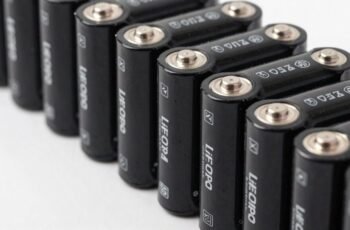
Like a well-engineered bridge connecting safety and sustainability, LiFePO4 batteries exemplify a balanced approach to energy storage. Their unique chemistry offers notable advantages in stability, longevity, and environmental impact. Understanding how these batteries outperform traditional lithium-ion options can reveal insights into their growing role across critical industries. As we explore their core benefits, you’ll see why they are increasingly regarded as a dependable choice for modern energy solutions.
Key Takeaways
- Offers enhanced safety due to stable chemical and crystal structures, reducing thermal runaway risks.
- Provides longer cycle life and durability for reliable, long-term energy storage.
- Produces less heat during operation, minimizing fire and explosion hazards.
- Supports environmental sustainability through recycling and reduced raw material extraction.
- Ideal for renewable energy, electric vehicles, and grid storage due to stable performance.
What Are Lifepo4 Batteries and How Do They Work?
Lifepo4 batteries, also known as lithium iron phosphate batteries, are a type of rechargeable lithium-ion battery distinguished by their cathode chemistry, which enhances stability and safety. Their battery chemistry involves a phosphate-based cathode, providing a robust chemical structure that reduces thermal runaway risk. While their energy density is generally lower than other lithium-ion chemistries like NMC or NCA, Lifepo4 batteries compensate with improved thermal stability and longer cycle life. The chemistry allows for efficient charge and discharge cycles, making them suitable for applications requiring reliability over high energy density. Their electrochemical performance results from a stable crystal lattice, enabling consistent voltage output and durable operation, essential for energy storage systems where safety and longevity are prioritized over maximum energy density.
Why Are Lifepo4 Batteries Safer Than Other Lithium-Ion Batteries?
The unique chemical composition of lithium iron phosphate contributes markedly to its safety profile compared to other lithium-ion chemistries. This battery chemistry inherently produces less heat during operation, reducing thermal runaway risks. Lithium iron phosphate’s stable crystal structure resists decomposition at high temperatures, offering significant safety advantages over cobalt-based chemistries. Unlike other lithium-ion batteries, Lifepo4 cells are less prone to overcharging and short circuits, decreasing the likelihood of fires or explosions. This stability is rooted in its robust chemical bonds, which prevent hazardous reactions under stress. Consequently, the safety advantages of Lifepo4 batteries make them a reliable choice for applications demanding enhanced safety and thermal stability, providing peace of mind without sacrificing performance or longevity.
How Do Lifepo4 Batteries Provide Longer-Lasting Performance?
Because of their stable chemical structure, Lifepo4 batteries inherently exhibit longer cycle life and improved durability compared to other lithium-ion chemistries. This stability reduces electrode degradation over time, directly enhancing battery longevity. Their consistent voltage output supports performance optimization, guaranteeing reliable power delivery across multiple cycles. The table below summarizes key aspects influencing their lasting performance:
| Aspect | Effect on Longevity | Impact on Performance |
|---|---|---|
| Chemical Stability | Reduces capacity fade | Maintains consistent voltage |
| Thermal Stability | Prevents overheating | Ensures safe operation |
| Cycling Tolerance | Allows more charge/discharge cycles | Extends usable life |
| Material Quality | Minimizes degradation | Sustains performance |
| Voltage Consistency | Supports reliable operation | Optimizes output stability |
This combination of factors enables Lifepo4 batteries to excel in delivering long-term, high-performance energy storage.
Are Lifepo4 Batteries Eco-Friendly and Cost-Effective?
While evaluating the environmental and economic aspects of energy storage solutions, it becomes clear that Lifepo4 batteries offer notable advantages. Their recycling benefits considerably reduce long-term waste, as materials like lithium, iron, and phosphate can be efficiently recovered and reused. This minimizes environmental impact by decreasing reliance on raw material extraction and lowering hazardous waste generation. Economically, Lifepo4 batteries demonstrate cost-effectiveness through extended cycle life and lower maintenance costs, translating into reduced total ownership expenses. Their stability and safety further contribute to lower disposal risks, supporting sustainable practices. Overall, Lifepo4 batteries present a compelling balance of eco-friendliness and economic viability, making them a strategic choice for environmentally conscious energy storage applications.
What Are the Key Applications of Lifepo4 Battery Technology?
Lifepo4 batteries have gained prominence across diverse sectors due to their reliability and safety features, making them suitable for a wide range of applications. Their stability and long cycle life make them ideal for energy storage systems, especially in renewable energy setups where efficient charge-discharge cycles are vital. Additionally, Lifepo4 batteries are increasingly utilized in electric vehicles, offering improved safety and longevity. Their recyclability supports sustainable practices in battery recycling, reducing environmental impact. In grid-scale energy storage, these batteries provide reliable power backup, essential for grid stability. Their robustness also makes them suitable for off-grid applications and portable devices. Overall, Lifepo4 technology’s versatility in energy storage and eco-friendly recycling initiatives cements its role across multiple industrial and consumer sectors.
Conclusion
In fundamental terms, LiFePO4 batteries stand as a beacon of safety and sustainability amid the evolving energy landscape. Their stable chemistry and long cycle life resemble a steady, unwavering current—powering our renewable future and electric mobility with resilience. As we harness this technology, we’re not just exchanging energy; we’re cultivating a safer, greener world. This deep-rooted stability ensures that, like a well-rooted tree, our energy solutions grow stronger, supporting lasting progress.