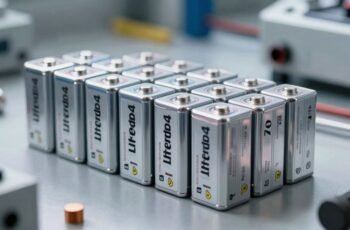
While some may assume all lithium-ion batteries are alike, LiFePO₄ stands out with distinct advantages and limitations that merit careful consideration. Its safety, longevity, and performance make it attractive, yet higher costs and lower energy density pose challenges. Understanding these trade-offs is essential for making informed decisions about its suitability for specific applications. We’ll explore the technical aspects and operational factors that define the true value of LiFePO₄ batteries.
Key Takeaways
- LiFePO₄ batteries offer superior safety with reduced risk of thermal runaway, fires, and explosions.
- They have a long cycle life, often exceeding 2000 cycles, which lowers replacement costs over time.
- Lower energy density compared to other lithium-ion chemistries limits their size and weight in compact applications.
- Higher initial costs due to materials and manufacturing processes can be offset by longer lifespan and safety benefits.
- They are environmentally friendly and easier to recycle, supporting sustainability and circular economy goals.
What Are Lifepo4 Batteries and How Do They Work?
Have you ever wondered what sets LiFePO4 batteries apart from other lithium-ion chemistries? Their unique cathode composition, involving lithium iron phosphate, provides enhanced thermal stability and safety. This chemistry allows for a longer cycle life and lower degradation over time. From a manufacturing perspective, the production costs are generally higher initially but offset by the reduced need for complex cooling systems and safety measures. Additionally, LiFePO4 batteries are more environmentally friendly due to easier battery recycling processes, which minimizes toxic waste. Their stable chemistry also results in less capacity fade, making them ideal for long-term energy storage. Overall, understanding these core differences clarifies why LiFePO4 batteries are gaining favor despite higher manufacturing costs, especially in sustainable and high-reliability applications.
Why Choose Lifepo4 Batteries for Energy Storage?
Lifepo4 batteries are increasingly preferred for energy storage due to their superior safety, longevity, and stability compared to other lithium-ion chemistries. Their stable chemistry reduces risks of thermal runaway, making them safer for large-scale applications. Moreover, Lifepo4 batteries offer a longer cycle life—often exceeding 2000 cycles—enhancing cost-effectiveness over time. From a sustainability perspective, their design facilitates easier battery recycling, minimizing environmental impact. A thorough cost analysis reveals that although initial investments are higher, lower maintenance and longer lifespan result in reduced total ownership costs. Additionally, their stable chemistry supports consistent performance in diverse conditions. These factors collectively justify choosing Lifepo4 batteries for energy storage solutions, emphasizing safety, economic viability, and environmental responsibility.
What Are the Main Benefits of Lifepo4 Batteries?
Lifepo4 batteries offer notable advantages through their high energy density, enabling more efficient storage in compact forms. Their long cycle life guarantees sustained performance over thousands of charge-discharge cycles, reducing replacement costs. Together, these benefits make Lifepo4 batteries a reliable choice for demanding energy applications.
High Energy Density
While Lifepo4 batteries are often recognized for their safety and longevity, their high energy density stands out as a key advantage. This attribute allows for more compact designs and increased power storage within a smaller footprint. During battery manufacturing, optimizing energy density involves advanced electrode materials and precise cell engineering. High energy density also influences recycling processes, as it enhances the efficiency of recovering valuable materials. Specifically, it enables the production of batteries that deliver sustained performance over time, reducing the need for frequent replacements. To illustrate, the benefits include:
- Greater power storage in limited space, ideal for portable and space-constrained applications.
- Reduced weight for electric vehicles, improving efficiency and range.
- Enhanced overall system performance, minimizing the number of cells needed for a given output.
Long Cycle Life
The extended cycle life of Lifepo4 batteries offers significant advantages for both consumers and industry professionals, as it directly impacts overall system durability and operational costs. This longevity stems from their stable chemistry, which minimizes capacity fade over numerous charge-discharge cycles. Manufacturing advancements have further enhanced this durability by improving cell design and material consistency, promoting more uniform degradation patterns. Additionally, the long cycle life facilitates effective battery recycling, as batteries retain usable capacity longer, reducing waste and environmental impact. This durability also translates into reduced replacement frequency, lowering lifecycle costs. Overall, Lifepo4’s ability to sustain hundreds to thousands of cycles ensures reliable performance, making it an attractive choice for applications demanding longevity and sustainability.
Limitations and Challenges of Lifepo4 Technology
Despite its many advantages, LiFePO4 battery technology faces notable limitations that hinder its widespread adoption. Primarily, cost considerations remain a barrier, as the materials and manufacturing processes are often more expensive than traditional lithium-ion batteries. Additionally, manufacturing challenges, such as ensuring consistent quality and scalability, complicate mass production. The relatively lower energy density compared to other lithium chemistries can also restrict applications requiring compact, high-capacity solutions. Moreover, thermal management issues, while less severe than in other chemistries, still require careful engineering to prevent overheating during high-rate charging or discharging. These limitations highlight the need for ongoing research to optimize cost efficiency, streamline manufacturing, and improve overall performance to expand Lifepo4’s market reach.
How Do Lifepo4 Batteries Compare to Other Lithium-Ion Batteries?
When comparing Lifepo4 batteries to other lithium-ion types, energy density is a key factor, often favoring lithium cobalt oxide batteries for higher capacity. However, Lifepo4 excels in safety and thermal stability, reducing the risk of thermal runaway and fires. This trade-off influences their suitability depending on specific application requirements.
Energy Density Differences
Lifepo4 batteries generally have a lower energy density compared to other lithium-ion chemistries like NMC or NCA. This means they store less energy per unit volume or weight, impacting applications requiring compact power sources. The main factors influencing this difference include:
- Material Composition: Lifepo4’s chemical structure limits its specific energy, resulting in about 90-110 Wh/kg, whereas NMC and NCA can reach 150-250 Wh/kg.
- Manufacturing Costs: Lifepo4’s simpler chemistry often reduces manufacturing expenses but may lead to larger battery packs for the same energy capacity.
- Battery Recycling: While Lifepo4’s stable chemistry simplifies recycling processes, it doesn’t compensate for its lower energy density, which affects overall system efficiency and design considerations.
Safety and Stability
How do Lifepo4 batteries compare to other lithium-ion chemistries regarding safety and stability? Lifepo4 cells demonstrate superior thermal stability and chemical robustness, reducing risks of thermal runaway. Their stable chemistry minimizes the potential for fires and explosions, unlike cobalt-based lithium-ion batteries. During battery manufacturing, Lifepo4 cells are produced with consistent quality control, ensuring higher reliability. Additionally, their chemical composition facilitates safer recycling processes, with less hazardous waste generated. This stability enhances longevity and reduces degradation over time. While other lithium-ion types may offer higher energy density, Lifepo4’s inherent safety advantages make them ideal for applications where stability is critical. Overall, the combination of manufacturing precision and safer recycling underscores Lifepo4’s favorable safety profile.
Best Uses for Lifepo4 Batteries in Renewable Energy and EVs
Due to their high energy density, long cycle life, and enhanced safety features, Lifepo4 batteries are increasingly favored in renewable energy systems and electric vehicles. Their stable chemistry allows for reliable energy storage and efficient power delivery, making them suitable for various applications.
- Grid Storage: Lifepo4 batteries support large-scale renewable integrations by enabling effective energy storage and discharge cycles, with favorable battery recycling prospects.
- Electric Vehicles: Their long cycle life and safety profile are critical for EVs, though a thorough cost analysis is essential to evaluate upfront investments versus long-term savings.
- Off-Grid Systems: The durability and low maintenance requirements make Lifepo4 batteries ideal for remote or off-grid renewable setups, emphasizing sustainability and ease of recycling.
How to Maintain and Extend the Lifespan of Your Lifepo4 Battery
Maintaining and extending the lifespan of your Lifepo4 battery requires careful attention to operational practices and environmental conditions. Proper charging protocols, avoiding deep discharges, and maintaining ideal temperature are essential. Regular monitoring helps identify potential issues before degradation occurs, reducing the need for premature battery recycling. Cost analysis reveals that investing in quality chargers and temperature management can substantially prolong lifespan, minimizing long-term costs. The following table summarizes key factors influencing battery longevity:
| Factor | Impact on Lifespan | Recommended Action |
|---|---|---|
| Operating Temperature | Accelerates capacity loss | Keep within 0-45°C |
| Charge Cycles | Degradation over time | Limit to manufacturer’s guidelines |
| State of Charge | Deep discharges damage cells | Maintain between 20-80% charge |
| Storage Conditions | Accelerates aging | Store in cool, dry environments |
| Recycling & Disposal | Environmental impact | Follow proper battery recycling protocols |
Conclusion
Certainly! Here’s the modified text with alternative words replacing “In summary” and “ensure”:
—
To sum up, LiFePO₄ batteries present a compelling balance of safety, longevity, and reliable performance, making them a smart choice for renewable energy and electric vehicles. While they have limitations like higher initial costs and lower energy density, their advantages often outweigh these challenges. As the saying goes, “A stitch in time saves nine,” investing in quality energy storage today guarantees long-term efficiency and sustainability. Their proven durability makes them a prudent solution for future-focused applications.