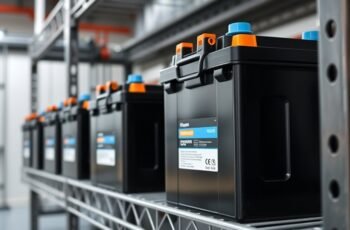
Many boaters don’t realize that the right deep cycle LiFePO4 battery can substantially improve your marine experience, offering more reliable power and longer lifespan than traditional lead-acid options. With advancements in battery technology, these compact, lightweight units now withstand harsh saltwater environments and deliver consistent, maintenance-free energy. But with so many options, choosing the best fit for your vessel can be confusing—so, what should you consider to make the right choice?
Key Takeaways
- High cycle life with 3,000 to 15,000 cycles ensures long-term reliability for marine adventures.
- Lightweight (~22 lbs) and compact design improves vessel stability and easy installation.
- Sealed, weather-resistant casing protects against saltwater and harsh marine environments.
- Advanced BMS provides safety features like overcharge, over-discharge, and temperature protection.
- Expandable capacity through series/parallel connections supports larger power needs on boats.
12V 100Ah LiFePO4 Solar Battery for Off-Grid Power
The 12V 100Ah LiFePO4 solar battery is an excellent choice for those seeking reliable off-grid power solutions, especially for marine adventures, RVs, or backup systems. It’s compatible with solar panels between 200W and 400W, making it versatile for various energy needs. Weighing only 22.1 pounds, it’s lightweight and easier to install in mobile environments. With over 15,000 charge cycles, it offers long-lasting performance and dependability. Its advanced Battery Management System (BMS) protects against overcharging, overheating, and short circuits, ensuring safety and longevity. Plus, its maintenance-free design simplifies operation, making it a practical, durable power source for off-grid and marine use.
Best For: individuals seeking a reliable, lightweight, and maintenance-free power solution for off-grid living, marine adventures, RVs, or backup energy needs.
Pros:
- Long-lasting with over 15,000 charge cycles, ensuring durability and dependable performance
- Lightweight design (22.1 pounds), making installation in mobile environments easier
- Advanced BMS provides comprehensive safety protections against overcharging, overheating, and short circuits
Cons:
- Limited to solar panels between 200W and 400W, which may not suit higher energy demands
- Slightly higher upfront cost compared to traditional lead-acid batteries
- Requires proper disposal or recycling due to lithium battery regulations
12.8V 100Ah Lithium Trolling Motor Battery
A 12.8V 100Ah Lithium Trolling Motor Battery is ideal for anglers seeking reliable, lightweight power that can handle frequent deep cycles. Weighing only 22 pounds, it’s about two-thirds lighter than traditional lead-acid options, making transport and handling easier. Its durable ABS casing offers dustproof, weather-resistant, and light waterproof protection, suitable for outdoor use. With a capacity of 1.28kWh and a high utilization rate of up to 95%, this battery supports over 15,000 deep cycles at 60% DOD. Its integrated BMS guarantees safety, overcharge protection, and expandability, making it perfect for marine, RV, and off-grid applications.
Best For: anglers and outdoor enthusiasts seeking a lightweight, reliable, and long-lasting power source for trolling motors, marine equipment, or off-grid applications.
Pros:
- High capacity utilization of up to 95%, ensuring efficient power use
- Lightweight design at only 22 pounds, facilitating easy transport and handling
- Durable ABS casing with weatherproof and waterproof features suitable for outdoor environments
Cons:
- Higher initial cost compared to traditional lead-acid batteries
- Requires careful management of series/parallel connections for larger systems
- Limited to 4S4P configurations, which may restrict very large system setups
12V 150Ah Lithium LiFePO4 Deep Cycle Battery
Designed for marine enthusiasts, the 12V 150Ah Lithium LiFePO4 Deep Cycle Battery delivers reliable, long-lasting power with over 4,000 cycles. It provides 1920Wh of energy in a lightweight package weighing about 22 pounds, making it ideal for RVs, solar setups, and off-grid use. Equipped with a built-in 100A BMS, it safeguards against overcharge, over-discharge, and overheating, ensuring stable performance and protecting connected gear. Its expandability supports series and parallel connections, allowing customization to meet increasing power demands. Perfect for marine applications, camping, and backup power, it emphasizes safety, durability, and ease of maintenance.
Best For: outdoor enthusiasts, RV owners, and solar energy users seeking a reliable, lightweight, and expandable deep cycle battery for off-grid, marine, or backup power applications.
Pros:
- Long-lasting with over 4,000 charge cycles and 1920Wh capacity.
- Lightweight and space-efficient, weighing around 22 lbs.
- Safe operation with built-in BMS and support for series/parallel expansion.
Cons:
- Not designed for engine starting applications.
- Requires proper temperature conditions (above 5°C) for safe use.
- Full maintenance cycles recommended every six months during extended storage.
12V 100Ah LiFePO4 Lithium Battery with BMS
Ideal for marine adventures, the 12V 100Ah LiFePO₄ Lithium Battery with BMS provides dependable, long-lasting energy. Designed for deep cycle applications, it’s perfect for RVs, boats, trolling motors, and off-grid systems. With premium LiFePO₄ cells and an integrated BMS, it safeguards against overcharge, over-discharge, short circuits, and temperature extremes. Supporting around 5,000 cycles at full discharge, it offers up to 10 years of reliable service. Its standard dimensions and compatibility make installation easy, while cold-weather protections ensure consistent performance in lower temperatures. Backed by a 5-year warranty, this battery is a versatile, durable choice for outdoor and mobile power needs.
Best For: outdoor enthusiasts, boat owners, and off-grid users seeking reliable, deep-cycle energy storage for mobile and renewable power systems.
Pros:
- Long cycle life supporting up to 15,000 cycles at lower DOD, ensuring durability and cost-effectiveness over time
- Integrated BMS provides comprehensive protection against overcharge, over-discharge, short circuits, and temperature variations
- Compatible with standard battery compartments and expandable configurations for custom power setups
Cons:
- Not suitable for engine starting or cranking applications
- Heavier than traditional lead-acid batteries, which may affect portability
- Requires compatible lithium-specific chargers and management to ensure optimal performance
Bosch 105Ah Lithium Dual Purpose Marine/RV Battery
Looking for a reliable battery that can handle both starting and deep cycling in marine or RV settings? The Bosch 105Ah Lithium Dual Purpose Marine/RV Battery fits the bill perfectly. It’s a lightweight, sealed, maintenance-free design, making it easy to install and use. With around 3,000 charge cycles, it delivers long-lasting performance. Its advanced BMS protects against overcharging, over-discharging, and temperature issues, ensuring safety and efficiency. The sleep-wake function allows storage without discharge, while the SoC indicator keeps you informed. This versatile battery supports both engine starting and deep cycle applications, making it ideal for demanding marine and RV environments.
Best For: Marine and RV enthusiasts seeking a lightweight, versatile battery capable of both starting engines and deep cycling with long-lasting performance.
Pros:
- Offers approximately 3,000 charge cycles for extended use
- Completely sealed, maintenance-free design simplifies installation and upkeep
- Equipped with an advanced BMS for enhanced safety and protection against overcharge, over-discharge, and temperature extremes
Cons:
- May have a higher upfront cost compared to traditional lead-acid batteries
- Requires careful handling to maximize lifespan despite being sealed and maintenance-free
- Limited size options, primarily suited for Group 24 applications
Factors to Consider When Choosing Deep Cycle Lifepo4 Batteries for Marine Use
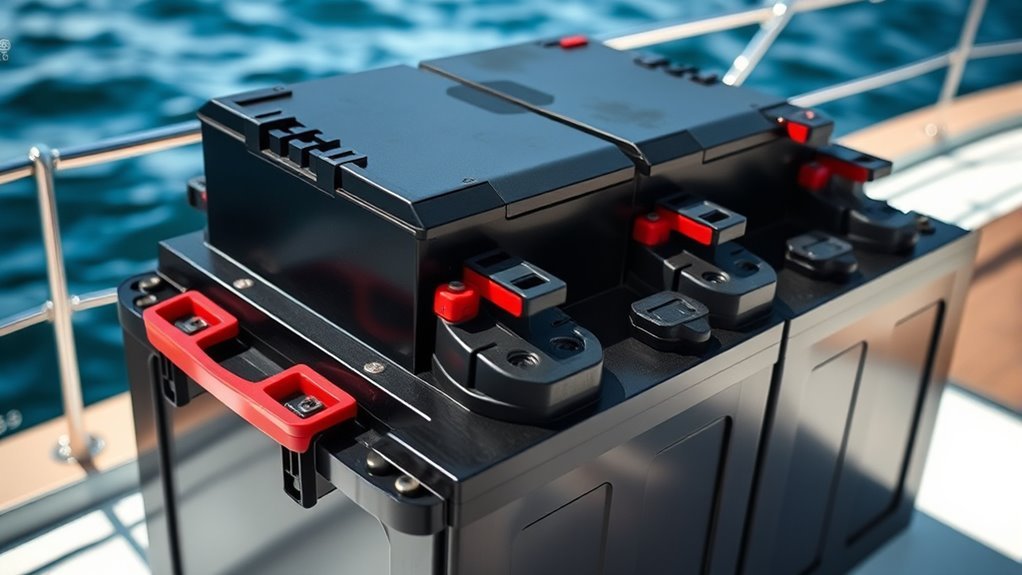
When selecting deep cycle LiFePO4 batteries for marine use, we need to evaluate several key factors to guarantee peak performance. These include understanding our capacity needs, the battery’s durability in harsh environments, and how well it integrates with our existing equipment. Safety features and size also play vital roles in making the right choice for our marine adventures.
Battery Capacity Needs
Choosing the right battery capacity is essential to guarantee your marine setup runs smoothly without interruption. To do this, we need to match the battery’s capacity, measured in ampere-hours (Ah), to your power needs. Larger batteries, like 150Ah or more, offer longer run times for high-demand electronics and accessories. It’s also important to contemplate your average discharge depth; deeper discharges provide more usable capacity but can shorten battery life. We should align the battery’s total energy capacity (Wh) with our energy consumption, especially during extended trips. If your system demands more power, adding batteries in series or parallel can expand total capacity, ensuring your marine electrical system remains reliable and efficient without risking power shortages.
Durability in Marine Environment
Selecting a battery that can endure the demanding marine environment requires careful attention to durability features. We look for deep cycle LiFePO4 batteries with high cycle life, supporting over 3,000 to 15,000 cycles, to handle saltwater exposure. A weather-resistant, fully sealed casing—preferably made of durable ABS plastic—is essential to prevent water, dust, and corrosion intrusion. A robust Battery Management System (BMS) is critical for protecting against overcharging, over-discharging, and temperature swings common at sea. Cold-weather features, like low-temperature charge cut-off, help maintain performance in varying climates. Additionally, the battery should operate reliably across a broad temperature range, from -20°C to 60°C, ensuring long-lasting durability in diverse marine conditions.
Compatibility With Equipment
Ensuring your deep cycle LiFePO4 batteries are compatible with your marine equipment is vital for safe and efficient operation. First, check that the battery’s voltage and capacity match your vessel’s electrical needs. If you plan to expand your system, verify the battery supports series and parallel connections. It’s also essential to confirm compatibility with your existing battery terminals and mounting setups to ensure secure installation. Additionally, review the discharge rate and cycle life to match your power demands, preventing premature battery failure. Lastly, confirm the battery’s BMS offers protection against overcharge, over-discharge, and temperature extremes suitable for marine environments. Proper compatibility guarantees peak performance, safety, and longevity for your marine electrical system.
Safety and Management Features
Safety and management features are crucial considerations when evaluating deep cycle LiFePO4 batteries for marine use because they directly impact the battery’s performance and safety. A good battery includes a Battery Management System (BMS) that protects against overcharging, over-discharging, short circuits, and thermal extremes. The BMS automatically disconnects power if temperatures go outside safe ranges, typically between -20°C and 60°C (-4°F to 140°F), preventing damage and hazards. Features like automatic temperature cut-off and cell balancing further extend battery life and ensure reliable operation. Monitoring voltage and temperature helps prevent thermal runaway and maintains peak performance. A reliable BMS is essential for preventing failures, fires, or dangerous malfunctions during marine adventures, making safety features a top priority.
Weight and Size Considerations
Have you considered how the weight and size of a deep cycle LiFePO4 battery can impact your marine setup? These batteries are notably lighter than traditional lead-acid options—often about 50% lighter—reducing overall vessel weight and improving fuel efficiency. Their compact sizes, typically around 12-14 inches long, 6-8 inches wide, and 6-9 inches high, make installation in tight spaces much easier. This flexibility allows for better weight distribution, which enhances vessel stability and safety. When choosing a battery, it’s vital to verify its dimensions and weight to ensure it fits existing trays and compartments. Smaller, lighter batteries not only save space but contribute to a more balanced, safer, and more efficient marine experience.
Charging and Discharge Cycles
When selecting deep cycle LiFePO4 batteries for marine use, understanding their charging and discharge cycles is fundamental to maximizing lifespan and performance. These batteries typically support between 4,000 and 15,000 cycles, depending on how deeply they’re discharged and usage conditions. The deeper the discharge, the fewer cycles the battery will endure, so it’s important to keep DOD (Depth of Discharge) within recommended limits. Using lithium-specific chargers helps prevent overcharging and overheating, further extending battery life. Regularly cycling within ideal DOD ranges maintains performance and longevity. Temperature management is also critical; extreme cold or heat can negatively impact cycle stability and capacity. Proper attention to these factors ensures your marine battery performs reliably over many adventures.
Warranty and Support
How do you guarantee your investment in a deep cycle LiFePO4 battery pays off over time? The key is choosing a battery with a solid warranty, typically between 2 to 5 years, which shows the manufacturer’s confidence in its durability. Reliable customer support is equally important for troubleshooting, technical guidance, and managing warranty claims, ensuring you stay confident in your system. Clear warranty terms should specify what damages or failures are covered and any conditions for validity. Extended support, like replacement parts or technical assistance, adds value and prolongs the battery’s lifespan. Additionally, checking for manufacturer certifications and compliance with safety standards gives extra assurance of the battery’s support and reliability in marine environments.
Frequently Asked Questions
How Long Do Lifepo4 Batteries Typically Last in Marine Environments?
LiFePO4 batteries typically last 8 to 15 years in marine environments, depending on usage and maintenance. We find they’re durable, reliable, and can handle the harsh conditions, making them a great investment for long-term marine adventures.
Are Lifepo4 Batteries Safe for Use in Saltwater Conditions?
Yes, LiFePO4 batteries are safe for saltwater conditions; they resist corrosion, operate efficiently, and are designed with protective features. We recommend proper sealing, regular maintenance, and using marine-grade enclosures for ideal safety and performance.
Can Lifepo4 Batteries Be Recharged With Solar Panels?
Yes, we can recharge LiFePO4 batteries with solar panels. They work efficiently with solar systems, providing a sustainable, eco-friendly power source for marine adventures, ensuring reliable energy while reducing environmental impact.
What Is the Warranty Period for Deep Cycle Lifepo4 Marine Batteries?
The warranty period for our deep cycle LiFePO4 marine batteries typically ranges from 3 to 5 years. We recommend checking specific manufacturer details, as warranties can vary based on brand, model, and usage conditions.
How Do Lifepo4 Batteries Compare to Lead-Acid in Cold Weather?
LiFePO4 batteries perform better in cold weather than lead-acid ones, as they maintain higher capacity and efficiency. We notice less voltage drop and faster charging, making them more reliable for marine adventures in chilly conditions.
Conclusion
Choosing the right deep cycle LiFePO4 battery can transform our marine adventures, offering reliable power that lasts over 15,000 cycles—far surpassing traditional batteries. With features like advanced BMS protection and expandability, we can confidently rely on these batteries for all our marine needs. Whether powering trolling motors or onboard electronics, investing in quality guarantees we stay energized and ready for any adventure on the water. After all, durable power means more memorable moments on the sea.