Did you know that LiFePO4 batteries can last anywhere from 8 to 15 years with proper care? It’s a remarkable lifespan compared to other types, but many factors influence how long they truly serve you. As we explore what impacts their longevity and how to recognize the signs of wear, you’ll see why understanding these details can make all the difference in maximizing their value and safety.
Key Takeaways
- LiFePO4 batteries typically last between 2,000 to 5,000 charge cycles, equivalent to 8 to 15 years of use.
- Proper maintenance and optimal charging practices can extend their lifespan.
- Extreme temperatures and deep discharges accelerate battery degradation.
- Physical signs like swelling or leaks indicate end-of-life; capacity also decreases over time.
- High-quality manufacturing and storage in cool conditions help maximize battery longevity.
What Are LiFePO4 Batteries and How Do They Work?
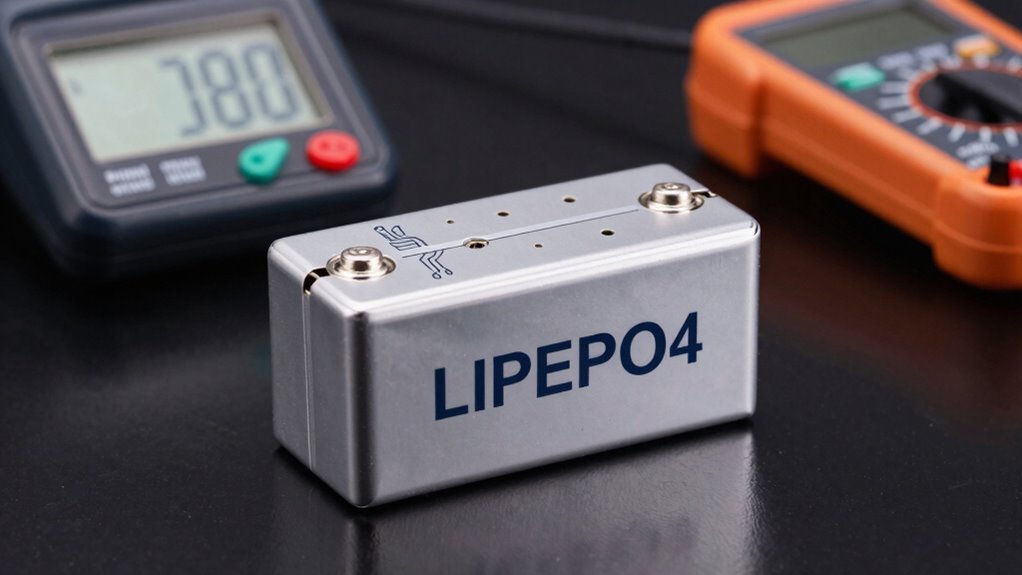
LiFePO4 batteries, also known as lithium iron phosphate batteries, are a type of rechargeable lithium-ion battery renowned for their safety, stability, and long lifespan. They use lithium iron phosphate as the cathode material, which offers excellent thermal stability and reduces the risk of overheating or combustion. Inside, these batteries store energy through the movement of lithium ions between the cathode and anode during charging and discharging cycles. When we charge them, lithium ions flow from the cathode to the anode, and during use, they move back, releasing energy. This stable chemistry means they’re less prone to overheating and thermal runaway. Overall, LiFePO4 batteries provide reliable, safe power sources for various applications, from solar energy storage to electric vehicles.
How Long Do LiFePO4 Batteries Typically Last?
Thanks to their stable chemistry and robust design, LiFePO4 batteries are known for their impressive lifespan. Typically, these batteries last between 2,000 to 5,000 charge cycles, which often translates to 8 to 15 years of reliable use. Unlike other battery types, they maintain their capacity well over time, showing minimal degradation even after many cycles. This longevity makes them ideal for solar energy storage, electric vehicles, and backup power systems. Proper maintenance and avoiding extreme temperatures can help extend their lifespan further. Overall, LiFePO4 batteries are a smart investment because they offer consistent performance and durability, ensuring you’ll get years of dependable service from your investment.
Factors That Affect Your LiFePO4 Battery’s Lifespan
Several factors can influence how long your LiFePO4 battery lasts, and understanding these can help you maximize its lifespan. First, proper charging practices are essential; overcharging or discharging too deeply can shorten the battery’s life. Temperature also plays a crucial role—extreme heat accelerates degradation, while cold temperatures can reduce performance temporarily. The number of charge cycles impacts longevity, so avoiding unnecessary recharging helps preserve capacity. Storage conditions matter too; keeping the battery in a cool, dry place when not in use prevents premature aging. Additionally, the quality of the battery and how it’s manufactured affects durability. Regular maintenance, like checking connections and avoiding physical damage, further supports a longer lifespan. By managing these factors, we can extend your LiFePO4 battery’s usable life markedly.
How to Tell When Your LiFePO4 Battery Is Near the End?
As your battery ages and approaches the end of its lifespan, certain signs become noticeable that indicate it’s time for a replacement or maintenance. You might notice a decrease in overall capacity, meaning it doesn’t hold a charge as long as it used to. If your battery takes longer to recharge or doesn’t reach its full voltage, those are clear warning signs. Additionally, if it displays irregular voltage readings or shuts down unexpectedly, it’s likely nearing the end. Swelling, leaking, or unusual heat during charging or use are serious red flags that require immediate attention. Regularly monitoring your battery’s performance helps you catch these signs early, preventing unexpected failures and ensuring safe, efficient operation.
Tips to Maximize Your LiFePO4 Battery’s Life
To get the most out of your LiFePO4 battery, it’s essential to follow simple yet effective maintenance tips that extend its lifespan. First, avoid deep discharges; keeping the charge between 20% and 80% helps preserve battery health. Second, store the battery in a cool, dry place when not in use, as high temperatures accelerate degradation. Third, use a compatible charger with proper voltage and current ratings to prevent overcharging or undercharging. Regularly checking connections guarantees peak performance.
| Tip | Benefit | Best Practice |
|---|---|---|
| Keep charge between 20-80% | Extends cycle life | Monitor and adjust charging levels |
| Store in cool, dry place | Reduces wear and tear | Avoid heat and humidity |
| Use proper charger | Prevents damage | Use manufacturer-recommended chargers |
Frequently Asked Questions
Are Lifepo4 Batteries Safe for All Applications?
Yes, Lifepo4 batteries are generally safe for most applications because they have a stable chemistry, low risk of thermal runaway, and are non-toxic. However, we recommend proper usage, monitoring, and adhering to manufacturer guidelines for ideal safety and performance.
Can Lifepo4 Batteries Be Recycled Easily?
We believe Lifepo4 batteries can be recycled fairly easily, despite some concerns about complex processes. Their materials are recyclable, and many specialized facilities are improving methods, making eco-friendly disposal achievable and reducing environmental impact considerably.
How Does Temperature Affect Lifepo4 Battery Performance?
Temperature critically impacts Lifepo4 battery performance; high heat accelerates degradation, reducing lifespan, while cold temperatures decrease efficiency temporarily. We recommend keeping batteries within ideal temperature ranges for maximum longevity and consistent performance.
What Are Signs of a Failing Lifepo4 Battery?
We notice signs of a failing LiFePO4 battery when it holds less charge, experiences rapid voltage drops, shows increased internal resistance, or exhibits overheating. If you see these, it’s time to contemplate replacing or servicing the battery.
Are Lifepo4 Batteries Suitable for High-Drain Devices?
Lifepo4 batteries are great for high-drain devices, providing around 3,000 to 5,000 cycles. We’ve found their stable voltage and quick recharge make them reliable, making them a smart choice for demanding applications.
Conclusion
In the end, understanding how long LiFePO4 batteries last helps us make smarter choices and extend their lifespan. With proper care—avoiding deep discharges, managing temperature, and regular monitoring—we can enjoy their reliable performance for years. Isn’t it worth investing a little effort now to save money and hassle later? By staying attentive and mindful of their needs, we guarantee our batteries serve us well far beyond their expected lifespan.