Did you know that properly managed Lifepo4 batteries can last up to 10,000 cycles, far surpassing many other lithium-ion options? While this sounds impressive, achieving such longevity depends heavily on how we care for and operate these batteries. There are several factors at play, from charge practices to temperature control, that influence cycle life. Understanding these elements can help us maximize battery performance and lifespan—something worth exploring further.
Key Takeaways
- Maintaining a State of Charge (SoC) between 20% and 80% significantly extends Lifepo4 battery cycle life.
- Operating within 20°C to 25°C optimizes performance and minimizes degradation.
- Avoid deep discharges and rapid charging to reduce internal stress and prolong battery lifespan.
- Proper thermal management prevents overheating and cold-related capacity loss, enhancing durability.
- Regular monitoring and early detection of capacity decline help prevent safety issues and extend battery service life.
What Are Lifepo4 Batteries and How Do They Work?
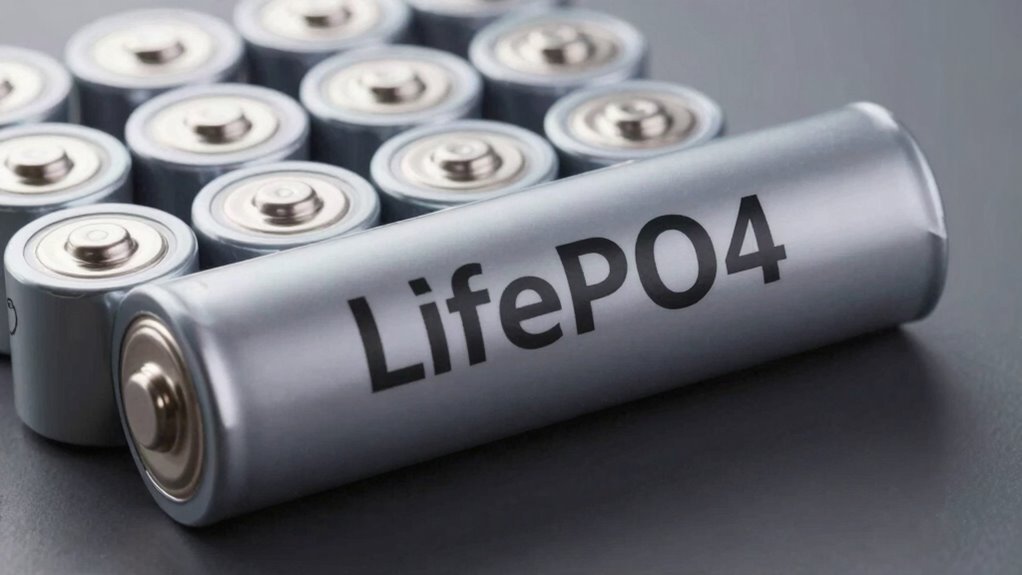
LiFePO4 batteries, also known as lithium iron phosphate batteries, are a type of rechargeable battery that offers high stability and safety. They use lithium iron phosphate as the cathode material, which provides a more stable chemical structure compared to other lithium-ion batteries. When charging, lithium ions move from the cathode to the anode, and during discharging, they flow back, generating electrical power. This process is efficient and reliable, making these batteries ideal for various applications. They hold their voltage well throughout discharge and resist overheating or thermal runaway. Unlike some batteries, LiFePO4 cells have a lower risk of fire or explosion, ensuring safer operation. Overall, their durability and safety features make them a popular choice for energy storage needs.
What Factors Affect Lifepo4 Battery Cycle Life?
Several factors influence the lifespan of Lifepo4 batteries, including how quickly we charge and discharge them, as well as the operating temperature. We also need to take into account how deeply we use the battery during each cycle. Understanding these elements helps us maximize the battery’s longevity.
Charge and Discharge Rates
While charging and discharging at high rates might seem convenient, it can substantially shorten the cycle life of a LiFePO4 battery. Fast charging generates more heat and stress on the cells, accelerating degradation. Similarly, rapid discharges put strain on the battery’s internal structure. To picture the impact:
- Think of a battery pushed to its limit, like a car engine revving at maximum RPM repeatedly.
- Imagine the internal electrodes wearing down faster, similar to a tire wearing unevenly from high-speed driving.
- Visualize the increased thermal stress causing microcracks inside the cells.
- Envision the electrolyte breaking down quicker, leading to capacity loss over time.
Keeping charge and discharge rates moderate helps extend the battery’s overall lifespan and maintains ideal performance.
Temperature Effects on Cells
Temperature plays a significant role in determining the lifespan of a LiFePO4 battery. When cells operate within an ideal temperature range, typically between 20°C and 25°C, they perform efficiently and last longer. Excessive heat accelerates chemical reactions inside the battery, leading to faster degradation of active materials and reduced cycle life. Conversely, low temperatures slow down these reactions, impairing performance and potentially causing internal damage over time. Extreme temperatures also increase the risk of capacity loss and safety hazards like swelling or thermal runaway. To maximize longevity, it’s essential to keep batteries within a moderate temperature range, avoid prolonged exposure to hot or cold environments, and guarantee proper thermal management during operation and storage.
Depth of Discharge
How does the depth of discharge (DoD) impact the cycle life of a LiFePO4 battery? The deeper we discharge the battery each cycle, the fewer total cycles we can expect. A shallow DoD, like 20%, can substantially extend its lifespan, while a full 100% discharge shortens it. To visualize, consider these effects:
- Imagine a battery drained just halfway, like a cup filled to the brim but not spilling.
- Think of a battery drained to near empty, like a car running on fumes.
- Picture the wear on a tire after many slow, gentle rotations.
- Envision the stress on a battery stretched beyond its limits during deep discharges.
Keeping DoD low helps preserve battery health and prolongs its useful life.
How Does Lifepo4 Cycle Life Compare to Other Lithium-Ion Batteries?
Lifepo4 batteries generally outperform other lithium-ion chemistries regarding cycle life, making them a popular choice for long-term energy storage. They typically last between 2,000 to 5,000 cycles, far exceeding the 500 to 1,500 cycles seen in traditional lithium-ion batteries like NMC or LCO. This extended cycle life means Lifepo4 batteries maintain their capacity longer, reducing replacement costs and environmental impact. Their stable chemistry also makes them more resistant to capacity loss from repeated charging and discharging. While other lithium-ion types may offer higher energy density, Lifepo4’s durability and safety advantages make them superior for applications requiring longevity. Overall, Lifepo4 batteries deliver consistent performance over many more cycles, emphasizing their reliability for long-term use.
How Does Depth of Discharge Impact Lifepo4 Battery Longevity?
We’ve found that shallow discharges help extend the life of Lifepo4 batteries, while deep discharges tend to accelerate wear. Pushing the battery to its ideal depth of discharge can maximize its overall cycle count and longevity. Understanding this balance is key to getting the most out of your battery’s performance.
Shallow Discharges Extend Life
Since deep discharges put more stress on a battery’s internal components, limiting the depth of discharge can markedly prolong its lifespan. By keeping discharges shallow, we reduce wear and tear, helping the battery stay healthy longer. Imagine these benefits:
- Fewer cycles needed to reach end-of-life, saving money.
- Less strain on internal electrodes, maintaining capacity.
- Reduced risk of voltage dips that damage cells.
- Longer intervals between maintenance or replacements.
Shallow discharges keep the battery operating within a safer, more stable range. This approach minimizes stress on the chemical structure, preserving its integrity over time. As a result, Lifepo4 batteries last considerably longer when we avoid draining them completely, ensuring reliable performance and better value over their lifespan.
Deep Discharges Accelerate Wear
Deep discharges considerably hasten the degradation of a battery’s internal components, leading to a shorter overall lifespan. When a Lifepo4 battery is deeply discharged, its cathode and anode endure stress that accelerates capacity loss. The more often this occurs, the faster the battery’s ability to hold charge diminishes. To understand this better, consider the impact on different aspects of battery health:
| Aspect | Effect of Deep Discharge |
|---|---|
| Cathode Degradation | Increased wear due to high stress |
| Anode Wear | Accelerated formation of solid electrolyte interphase (SEI) |
| Internal Resistance | Rising resistance impairs performance |
| Cycle Life | Reduced number of effective cycles |
Avoiding deep discharges helps preserve battery longevity and performance.
Optimal Depth Maximizes Cycle
Maintaining an ideal depth of discharge (DoD) is essential for maximizing a Lifepo4 battery’s cycle life. When we keep DoD at a moderate level, we prevent excessive strain on the cells, extending their lifespan. Specifically, staying around 20-80% discharge can markedly improve longevity. Imagine:
- A battery that’s not drained completely, like a reservoir never running dry.
- Charging before it hits the very bottom, avoiding deep stress.
- Regularly balancing the charge levels across all cells.
- Using optimized charging routines that prevent unnecessary wear.
How Temperature Affects Lifepo4 Battery Performance and Durability?
Temperature plays a critical role in determining the performance and lifespan of Lifepo4 batteries. When temperatures are too high or low, it strains the battery, reducing its efficiency and longevity. Excessive heat accelerates chemical reactions, causing faster degradation, while cold temperatures hinder chemical activity, lowering capacity. Maintaining ideal temperatures is essential for durability and safety. We recognize the emotional impact of losing reliable power when it’s most needed. Here’s a glimpse of how temperature affects us:
| Temperature Range | Effect on Battery | Emotional Impact |
|---|---|---|
| Below 0°C | Reduced capacity | Frustration, power loss |
| 0°C – 25°C | Optimal performance | Confidence, reliability |
| Above 25°C | Accelerated aging | Anxiety, safety concerns |
| 45°C and above | Rapid degradation | Fear of failure |
| Below -20°C | Severe capacity loss | Power insecurity |
Keeping batteries cool or warm within safe limits is essential for durability and peace of mind.
Tips to Maximize Your Lifepo4 Battery’s Cycle Life
To extend the lifespan of your Lifepo4 battery and get the most out of each cycle, it’s vital to follow some practical tips. First, avoid deep discharges; keep the battery within 20-80% charge to reduce stress. Second, store your battery in a cool, dry place to prevent temperature-related degradation. Third, use a compatible charger that matches the battery’s specifications to prevent overcharging or undercharging. Finally, try to limit rapid charging and discharging, as frequent high current flows can shorten cycle life. Imagine the battery as a delicate machine—treat it gently by maintaining ideal charge levels, controlling the environment, using the right equipment, and avoiding extreme load demands. These simple steps can greatly prolong your Lifepo4 battery’s usable life.
When Should You Replace Your Lifepo4 Battery? Key Signs and Indicators
Knowing when to replace your Lifepo4 battery is essential to guaranteeing reliable performance and avoiding unexpected failures. Signs like a noticeable drop in capacity or shorter run times indicate the battery may be nearing the end of its useful life. If your battery takes longer to charge or won’t hold a full charge, it’s a clear sign it’s aging. Swelling, leaks, or unusual heat during operation also suggest it’s time to replace it for safety reasons. Additionally, if your battery’s performance no longer meets your needs, despite proper maintenance, replacement might be necessary. Monitoring these signs helps prevent sudden failures and ensures you maintain peak performance with your system. Recognizing these indicators early saves you time and potential troubleshooting costs.
Frequently Asked Questions
Can Lifepo4 Batteries Be Recycled or Reused After End-Of-Life?
Yes, Lifepo4 batteries can be recycled and reused after end-of-life. We work with specialized facilities to recover valuable materials, ensuring environmental safety and sustainability, and sometimes refurbish batteries for continued use, extending their lifespan.
How Does Manufacturing Quality Influence Lifepo4 Cycle Life?
Imagine a factory where strict quality controls guarantee each Lifepo4 cell is precisely manufactured. High manufacturing quality greatly extends cycle life by reducing defects, ensuring consistent performance, and minimizing degradation, which ultimately leads to longer-lasting, more reliable batteries.
Are There Specific Brands Known for Longer Lifepo4 Cycle Life?
We find that certain brands like Thunder Power and CALB are known for longer Lifepo4 cycle life due to their strict manufacturing standards. We recommend researching brand reputations and user reviews to guarantee you choose a reliable, long-lasting battery.
What Are the Environmental Impacts of Lifepo4 Battery Disposal?
Like a modern-day alchemist, we see Lifepo4 batteries’ disposal impacts the environment through potential toxic waste and resource depletion. We believe responsible recycling and proper disposal are essential, helping protect our planet for future generations.
How Do Charging Algorithms Affect Lifepo4 Battery Longevity?
Charging algorithms considerably influence Lifepo4 battery longevity by ensuring ideal voltage and current levels, preventing overcharging or deep discharges, and maintaining temperature control, ultimately extending battery life and performance through precise, adaptive charging practices.
Conclusion
As we’ve seen, taking proper care of our Lifepo4 batteries can markedly extend their lifespan. But even with all the tips, there’s always that lingering question of when they might finally give out. Will your next charge be the last, or can you push the limits further? Keep monitoring, maintain ideal conditions, and stay vigilant—because the moment you notice signs of wear, it’s time to act. The future of your battery’s longevity is in your hands.