When it comes to Lifepo4 batteries, understanding how long they last during storage is essential for ensuring reliable performance when needed. Proper storage conditions can greatly extend their lifespan and maintain capacity over time. But many factors influence their longevity, from environmental conditions to handling habits. Curious about how to best preserve these batteries and avoid common pitfalls? Let’s explore what it takes to maximize their shelf life and keep them working effectively when you need them most.
Key Takeaways
- Lifepo4 batteries can last several years with proper storage and maintenance.
- Store at 50-60% charge in a cool, dry environment between 0°C-25°C to maximize shelf life.
- Regularly check voltage levels and recharge if necessary to prevent capacity loss.
- Exposure to high humidity, extreme temperatures, or direct sunlight accelerates degradation.
- Proper disposal of damaged or degraded batteries is essential for safety and environmental protection.
How Long Do Lifepo4 Batteries Last When Stored?
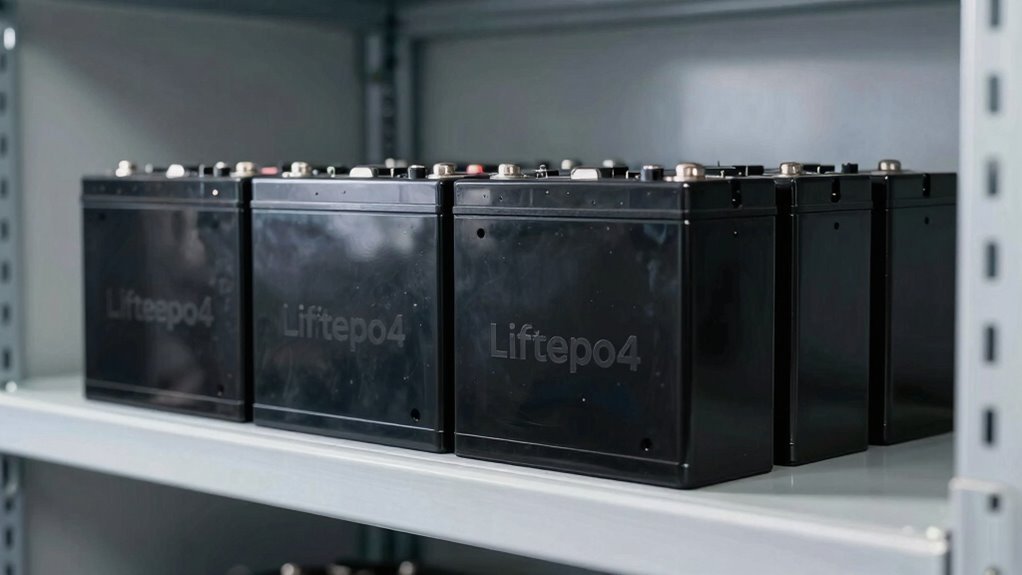
When stored properly, LiFePO4 batteries can last quite a long time—often several years—without significant degradation. To maximize their lifespan, it’s essential to keep them in a cool, dry place, ideally between 0°C and 25°C. Avoid exposing them to extreme temperatures or direct sunlight, which can accelerate capacity loss. It’s also important to store the batteries at around 50% charge rather than fully charged or completely drained. This balance helps prevent capacity fade over time. Regularly checking the voltage and guarantee they’re stored in a stable environment can extend their shelf life even further. Proper storage practices guarantee that when you need the batteries, they’ll perform reliably, making them a durable and cost-effective energy solution.
What Factors Affect Lifepo4 Battery Shelf Life?
Several key factors influence the shelf life of LiFePO4 batteries, and understanding them can help us maximize their longevity. First, the state of charge during storage matters; storing batteries at around 50% charge generally extends their life. Overcharging or storing them fully charged can accelerate capacity loss, while a deeply discharged state risks damage. Second, the age of the battery plays a role—older batteries tend to degrade faster, even when not in use. Third, the quality of the battery’s internal components impacts how long it can be stored effectively. Finally, manufacturing quality and inherent design features influence durability during storage. By paying attention to these factors, we can better preserve the capacity and performance of LiFePO4 batteries over time.
How Temperature and Humidity Impact Battery Storage?
Temperature and humidity levels are essential for maintaining Lifepo4 battery health during storage. Keeping the temperature within the ideal range helps prevent capacity loss, while stable humidity levels protect against corrosion and damage. We’ll share practical tips to create the perfect storage environment and minimize the effects of fluctuations.
Optimal Temperature Range
Have you ever wondered how temperature and humidity influence the storage life of Lifepo4 batteries? Maintaining an *essential* temperature range is *key* for longevity. Ideally, batteries should be stored between 0°C and 25°C, where chemical reactions slow down without causing damage. Temperatures outside this range can accelerate aging or cause capacity loss. Humidity is also important but less discussed here; excessive moisture can lead to corrosion. Visualize the ideal storage conditions:
| Temperature Range | Humidity Level |
|---|---|
| 0°C to 25°C | 30% to 50% relative humidity |
| Slight fluctuations | Maintain consistent conditions |
Humidity Fluctuation Effects
While maintaining the right temperature range is important, fluctuations in humidity can also considerably affect Lifepo4 battery storage. High humidity can lead to moisture buildup inside the battery, causing corrosion and potential failure. Conversely, very low humidity can dry out the electrolyte, reducing performance and lifespan. To minimize these risks, consider these factors:
- Keep humidity levels between 45-55% to prevent moisture problems.
- Avoid storage in damp or humid environments like basements or outdoor sheds.
- Use silica gel packs or dehumidifiers to control humidity fluctuations.
- Regularly check storage conditions to ensure humidity remains stable.
Controlling humidity is key to maintaining battery integrity, helping your Lifepo4 batteries last longer and perform reliably over time.
Storage Environment Tips
Maintaining the right storage environment is essential for preserving the performance and longevity of Lifepo4 batteries. Temperature and humidity directly affect battery health, so keeping conditions stable is key. Ideally, store batteries in a cool, dry place between 20°C and 25°C, with humidity levels around 40-50%. High temperatures accelerate chemical reactions, causing capacity loss, while excessive humidity can lead to corrosion. To help visualize this, consider the table below:
| Condition | Ideal Range | Effect of Deviations |
|---|---|---|
| Temperature | 20°C – 25°C | Faster aging above or below range |
| Humidity | 40% – 50% | Corrosion or dielectric issues |
| Storage Duration | Several months | Longer storage needs specific care |
| Ventilation | Good airflow | Prevents moisture buildup |
| Direct Sunlight | Avoid | Causes overheating |
Proper storage prolongs battery life and maintains performance.
Best Practices for Storing Lifepo4 Batteries to Maximize Longevity
To maximize the lifespan of Lifepo4 batteries, we need to focus on proper storage conditions and charging habits. Keeping batteries in a cool, dry place and at a partial charge can greatly extend their life. Following ideal charging practices helps prevent capacity loss and ensures reliable performance over time.
Ideal Storage Conditions
Have you wondered how to store Lifepo4 batteries to guarantee they last as long as possible? Proper storage conditions are key to preserving their lifespan. First, keep batteries in a cool, dry place—ideally between 32°F and 77°F (0°C and 25°C)—to prevent temperature-related degradation. Second, store them at about 40-60% charge; this prevents capacity loss from over- or under-charging. Third, avoid direct sunlight or high humidity, which can cause corrosion or damage. Finally, make sure batteries are stored in a well-ventilated area to prevent heat buildup. By following these steps, we can help extend the life of Lifepo4 batteries and maintain their performance over time.
Optimal Charging Practices
Proper charging practices are essential for ensuring Lifepo4 batteries remain healthy during storage. We recommend charging batteries to around 50-60% capacity before long-term storage, as this level minimizes stress and degradation. Avoid fully charging or discharging, which can harm the cells over time. Regularly check the voltage and top off the charge if it drops below the recommended level. Temperature also plays a role; charge in a cool, dry environment. Here’s a quick guide:
| Charging Step | Rationale |
|---|---|
| Charge to 50-60% | Reduces stress and prolongs lifespan |
| Avoid full charges | Prevents over-voltage stress |
| Store in cool environment | Maintains battery health |
| Regular checks | Detects issues early, maintains capacity |
How to Maintain Capacity During Long-Term Storage?
Maintaining capacity during long-term storage requires careful attention to how we store and handle Lifepo4 batteries. Proper storage conditions help preserve their capacity and extend lifespan. First, we should store batteries in a cool, dry place, ideally between 0°C and 25°C, to prevent capacity loss from heat or cold. Second, we need to keep batteries at a storage charge level of around 50-60%, preventing over-discharge or overcharge. Third, it’s essential to periodically check and recharge batteries if they’ve been stored for several months, keeping them within the most suitable voltage range. Finally, avoid exposing batteries to direct sunlight or moisture, which can cause deterioration. Following these steps helps us maximize capacity retention during long-term storage.
How to Test Your Lifepo4 Battery’s Capacity?
Testing your Lifepo4 battery’s capacity is essential to guarantee it performs as expected and to identify any decline in performance over time. To do this, you’ll need a reliable battery analyzer or a dedicated discharge tester. First, fully charge the battery to its maximum capacity. Next, connect it to the tester and discharge it under a controlled load, recording the amount of energy delivered until it reaches the cutoff voltage. Comparing this capacity to the battery’s original specifications helps determine its health. Keep in mind, testing should be conducted in a safe environment, following manufacturer guidelines. Regular capacity tests allow us to track performance trends and decide when maintenance or replacement might be necessary. This proactive approach helps ensure our Lifepo4 batteries remain reliable and efficient.
Signs That Your Lifepo4 Battery Is Aging?
We notice that aging Lifepo4 batteries often show reduced charging capacity, making them take longer to power up. You might also see increased self-discharge, where the battery loses charge even when not in use. Additionally, physical signs like swelling or corrosion can indicate that the battery is deteriorating.
Reduced Charging Capacity
Have you noticed that your Lifepo4 battery isn’t holding a charge like it used to? Reduced charging capacity is a clear sign of aging. When your battery can’t reach its full voltage or takes longer to charge, it’s a warning sign. Here are some indicators:
- Charging takes notably longer than before
- The battery doesn’t reach its usual full capacity
- You need to charge it more frequently
- The overall runtime decreases despite a full charge
These signs mean the battery’s internal chemistry is degrading, and its ability to store energy is diminishing. If you observe these, it’s time to contemplate replacing or servicing your Lifepo4 battery to maintain ideal performance.
Increased Self-Discharge Rate
As your Lifepo4 battery ages and its capacity diminishes, you might notice it losing charge more quickly even when not in use. An increased self-discharge rate is a clear sign of aging. Normally, Lifepo4 batteries hold their charge well, but over time, internal chemical changes cause them to lose energy faster. You may find that the battery drains several percentage points daily, even without any load. This accelerated self-discharge can surprise you, especially if you’re expecting a long shelf life. It’s not just a matter of reduced capacity but also how quickly the battery seems to “forget” its stored energy. Recognizing this sign early helps you decide whether it’s time to replace or service the battery before performance drops further.
Physical Battery Degradation
Physical degradation of a Lifepo4 battery is often visible through signs like swelling, cracks, or leaks, which indicate internal damage or chemical breakdown. Recognizing these signs helps us determine when a battery is aging and may need replacing.
Here are four key indicators:
- Swelling or bulging: The battery casing expands due to gas buildup.
- Cracks or fractures: Physical damage weakens the battery’s structure.
- Leaks or corrosion: Fluid or electrolyte leakage signals internal failure.
- Unexpected temperature rise: Excessive heat during use suggests internal issues.
Being attentive to these signs guarantees safety and peak battery performance. If you notice any of these, it’s best to take action quickly to prevent further damage or hazards.
When and How to Dispose of Old or Degraded Lifepo4 Batteries?
Knowing when and how to dispose of old or degraded Lifepo4 batteries is essential for safety and environmental responsibility. If a battery shows persistent capacity loss, swelling, or leakage, it’s time to retire it properly. Never throw lithium iron phosphate batteries in regular trash, as they can be hazardous. Instead, take them to a certified recycling facility. When preparing to dispose, guarantee contacts are covered to prevent accidental short circuits. Use protective gloves and containers to transport the batteries safely. Proper disposal involves professional recycling processes that recover valuable materials and prevent environmental contamination.
| Battery Condition | Recommended Action |
|---|---|
| Swelling or leakage | Dispose at certified recycling center |
| Capacity loss below 70% | Replace and recycle old batteries |
| No voltage or dead battery | Recycle at authorized facility |
| Visual damage or corrosion | Handle with care and recycle |
Common Mistakes That Shorten Battery Shelf Life
One common mistake that shortens battery shelf life is exposing Lithium Iron Phosphate (LiFePO4) batteries to extreme temperatures. High heat accelerates chemical reactions inside the battery, causing capacity loss over time. Conversely, freezing temperatures can slow down chemical activity, leading to potential damage if not properly managed. To avoid this, keep your batteries within recommended temperature ranges.
Here are some other common mistakes:
- Storing batteries at full charge or completely discharged for long periods.
- Failing to regularly check and maintain voltage levels.
- Ignoring manufacturer’s storage guidelines.
- Leaving batteries exposed to moisture or corrosive environments.
Avoiding these mistakes helps preserve your battery’s longevity and performance.
FAQs About Lifepo4 Battery Storage and Longevity
Understanding how to properly store LiFePO4 batteries and maximize their lifespan often leads to questions. We often ask, “What’s the ideal storage temperature?” or “Should I keep them fully charged?” Generally, storing LiFePO4 batteries in a cool, dry place between 40% and 60% charge helps preserve longevity. Avoid extreme temperatures, as heat accelerates capacity loss, while cold can temporarily reduce performance. It’s best not to leave batteries fully charged or completely drained for long periods. Regularly checking and maintaining the charge level prevents deterioration. Also, store batteries in a well-ventilated area away from direct sunlight or moisture. By following these simple guidelines, we can assure our LiFePO4 batteries stay healthy and perform well over time.
Frequently Asked Questions
How Do Temperature Fluctuations Affect Lifepo4 Battery Shelf Life?
Temperature fluctuations can considerably impact Lifepo4 battery shelf life by causing capacity loss, internal stress, and potential damage. We recommend storing batteries in a stable, cool environment to maximize longevity and maintain ideal performance over time.
Can Improper Storage Cause Irreversible Damage to Lifepo4 Batteries?
Yes, improper storage can cause irreversible damage to Lifepo4 batteries. Exposure to extreme temperatures, moisture, or physical shocks can degrade the cells permanently, reducing performance and lifespan, so proper storage is essential for maintaining battery health.
What Are the Recommended Storage Durations for Optimal Lifepo4 Battery Longevity?
We recommend storing LiFePO4 batteries for no more than six months at a 40-50% charge, as prolonged storage can drastically reduce lifespan—think of it as aging a fine wine too long, losing its sparkle.
How Does Charging State Influence Lifepo4 Battery Shelf Stability?
Charging state considerably impacts Lifepo4 battery shelf stability; we recommend storing batteries at around 40-60% charge, as this minimizes capacity loss and degradation over time, ensuring peak performance when you’re ready to use them again.
Are There Specific Storage Containers That Better Preserve Lifepo4 Batteries?
We find that using insulated, airtight containers with moisture-absorbing packs acts like a fortress, shielding LiFePO4 batteries from environmental enemies. These containers keep batteries stable, prolonging their shelf life like a well-guarded treasure chest.
Conclusion
By storing our Lifepo4 batteries wisely, we’re tending to a delicate garden—watering it with proper temperature, humidity, and care. With patience and attention, we guarantee they bloom beautifully for years to come, avoiding the harsh winds of degradation. When we nurture their longevity, these batteries become steadfast allies, quietly powering our lives. In the end, thoughtful storage is like tending a precious seed—turning potential into lasting strength.