While lead-acid batteries may seem like the traditional choice, LiFePO4 batteries challenge that notion with their longer lifespan and better performance over time. But how much of a difference does this actually make in real-world use? We’ll explore the factors that influence battery longevity and help you determine which option truly offers the best value for your needs. Keep in mind, the choice isn’t just about initial costs — it’s about long-term reliability.
Key Takeaways
- LiFePO4 batteries last 8-10 years or 2,000-3,000 cycles, compared to 3-5 years or 500-1,000 cycles for lead-acid batteries.
- LiFePO4 maintains more consistent capacity and performance over its longer lifespan.
- Lead-acid batteries degrade faster with deep discharges and high temperatures.
- Despite higher initial costs, LiFePO4 offers better long-term value due to fewer replacements.
- Proper maintenance and optimal usage extend the lifespan of both battery types, with LiFePO4 generally more durable.
How Long Do LiFePO4 and Lead-Acid Batteries Last?
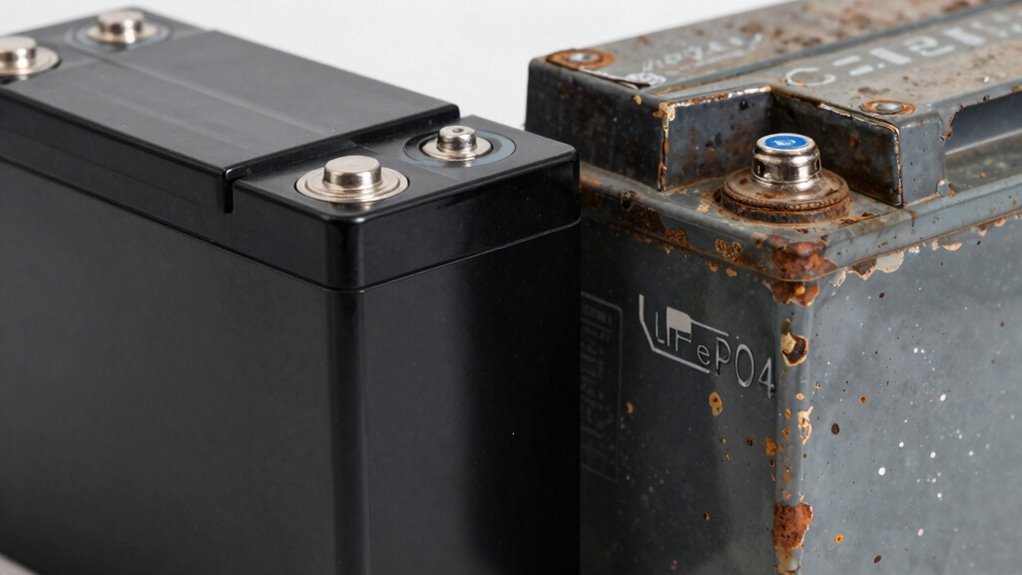
When comparing the lifespan of LiFePO4 and lead-acid batteries, it’s clear that their durability varies considerably. LiFePO4 batteries typically last between 8 to 10 years or about 2,000 to 3,000 charge cycles, making them highly durable. Lead-acid batteries, on the other hand, usually last around 3 to 5 years and offer approximately 500 to 1,000 cycles. This difference means that LiFePO4 batteries generally provide a longer-term investment, with fewer replacements needed over time. Additionally, their cycle life remains more consistent under regular use. Lead-acid batteries tend to degrade faster, especially if not maintained properly. So, if longevity is your priority, LiFePO4 batteries clearly have the edge.
Key Factors That Affect Battery Lifespan
Several factors directly influence how long a battery lasts, regardless of its type. First, cycling habits matter; frequent deep discharges accelerate aging, so shallow cycles tend to extend lifespan. Temperature also plays a essential role; high heat speeds up degradation, while cold can temporarily reduce capacity. Proper maintenance is crucial—keeping terminals clean and ensuring correct charging prevents damage. Additionally, the quality of manufacturing impacts longevity; better components resist wear and tear longer. Voltage levels and charging practices are key, as overcharging or undercharging can harm the cells. Finally, the overall usage environment, including vibration and moisture exposure, can accelerate deterioration. Being mindful of these factors helps maximize your battery’s lifespan and performance over time.
Tips to Extend Your Battery’s Longevity
To maximize your battery’s lifespan, it’s essential to adopt simple yet effective habits. Proper maintenance and mindful usage can notably extend your battery’s life. First, avoid deep discharges; keep the battery between 20% and 80% charge whenever possible. Second, store batteries in cool, dry environments to prevent overheating and degradation. Third, regularly check connections and clean terminals to prevent corrosion and ensure efficient power flow. Additionally, use a quality charger designed for your battery type, as overcharging or undercharging can hasten wear. Staying attentive to these practices helps preserve capacity and performance over time. By implementing these habits, you’ll get the most out of your battery, ensuring reliable operation and longer service life.
LiFePO4 vs. Lead-Acid: Which Lasts Longer in Practice?
LiFePO4 batteries generally outlast lead-acid batteries in real-world use, thanks to their more robust chemical stability and deeper cycle capabilities. They can typically handle 2,000 to 3,000 cycles, compared to 500 to 1,000 cycles for lead-acid batteries. This means LiFePO4 batteries maintain their capacity longer over time, reducing the need for frequent replacements. Lead-acid batteries tend to degrade faster, especially if they’re frequently discharged deeply or exposed to high temperatures. Additionally, LiFePO4 batteries resist sulfation and other common issues that shorten lead-acid lifespan. In practical terms, this durability translates into a longer effective service life, making LiFePO4 a more reliable choice for applications demanding longevity. Overall, in real-world conditions, LiFePO4 batteries simply last longer than lead-acid counterparts.
Battery Cost and Value Over Its Lifetime
While LiFePO4 batteries may have a higher upfront cost compared to lead-acid batteries, their longer lifespan and superior performance can make them more cost-effective over time. Though the initial investment is higher, you save money in the long run through fewer replacements and reduced maintenance costs. Over their lifespan, LiFePO4 batteries typically provide more charge cycles, which means more value per dollar spent.
Consider these benefits:
- Lower total cost of ownership over time
- Reduced replacement frequency
- Better performance in demanding conditions
Ultimately, investing in LiFePO4 batteries can lead to significant savings and better reliability, making them a smarter choice economically in the long haul.
Frequently Asked Questions
How Do Temperature Fluctuations Impact Battery Lifespan?
Temperature fluctuations can considerably shorten battery lifespan. We see high temperatures accelerate degradation, while cold temperatures reduce efficiency temporarily. Consistent, moderate temperatures help us maintain ideal performance and extend the longevity of both Lifepo4 and lead-acid batteries.
Can Battery Recycling Affect Overall Lifespan or Performance?
Imagine a battery gracefully returning to nature; recycling extends its life by reducing waste and recovering valuable materials. We believe recycling positively impacts performance and lifespan, ensuring batteries serve longer and more sustainably for everyone.
What Are the Environmental Impacts of Disposing of These Batteries?
Disposing of batteries harms the environment through toxic chemicals and heavy metals leaching into soil and water. We believe proper recycling reduces pollution, conserves resources, and minimizes ecological damage, making responsible disposal essential for protecting our planet.
How Does Depth of Discharge Influence Battery Longevity?
Imagine a battery’s life as a delicate dance—deep discharges strain its steps, shortening its performance. We’ve found shallow discharges extend lifespan, helping batteries stay vibrant and reliable longer, like a well-choreographed routine that endures.
Are There Specific Brands Known for Longer-Lasting Batteries?
We’ve found that brands like Battle Born, Renogy, and Victron are known for producing longer-lasting batteries. We recommend researching customer reviews and warranties to find reliable options that suit your needs and guarantee durability over time.
Conclusion
As we navigate the journey of energy storage, choosing between LiFePO4 and lead-acid is like selecting a sturdy bridge over a rushing river. LiFePO4, with its longer lifespan, stands resilient against the currents of time, offering us a dependable path. Though it requires a higher initial investment, its durability and reliability promise smoother crossings ahead, guiding us toward a future where energy flows steadily, like a calm, enduring stream.