Did you know that while both LiFePO4 and lithium-ion batteries are popular choices for RVs, they have distinct advantages that can substantially impact your trips? Many owners overlook these differences, which can influence safety, longevity, and overall cost. Understanding these nuances might be the key to choosing the best power source for your adventures—something you’ll want to take into account carefully before making a decision.
Key Takeaways
- LiFePO4 batteries are safer, more stable, and have a longer lifespan than lithium-ion batteries for RV use.
- Lithium-ion batteries offer higher energy density, making them lighter and more compact for smaller RV setups.
- LiFePO4 performs better in deep discharges and is more resistant to thermal runaway risks.
- Lithium-ion batteries charge faster and are cheaper upfront but have a shorter lifespan and higher safety concerns.
- Choice depends on trip length, power needs, weight considerations, and budget.
What Are Lithium Iron Phosphate and Lithium-Ion Batteries?
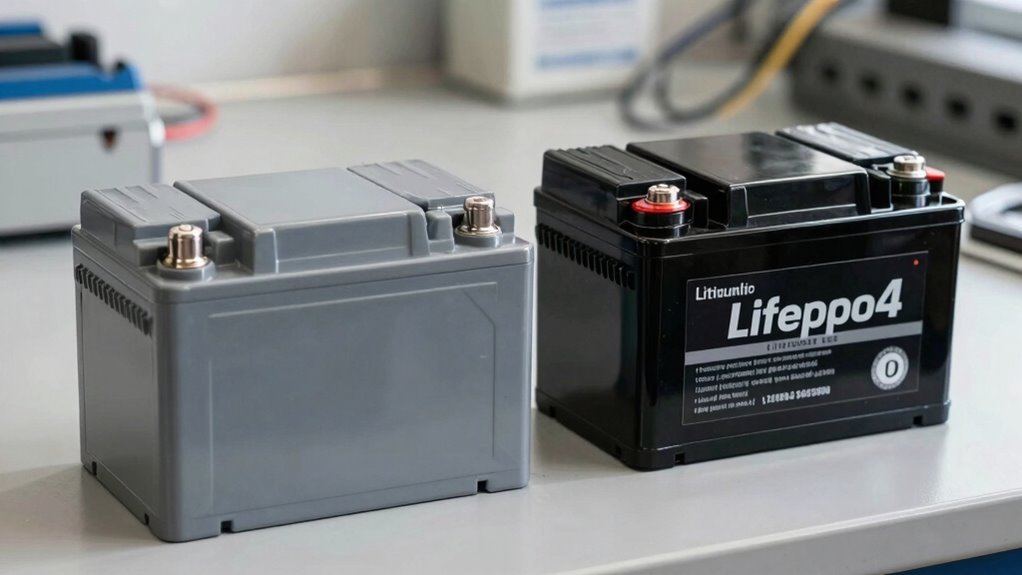
Lithium Iron Phosphate (LiFePO4) and lithium-ion (Li-ion) batteries are two common types of rechargeable batteries used in RVs, each with distinct characteristics. LiFePO4 batteries are known for their stability, safety, and longer lifespan. They have a stable chemistry that reduces the risk of overheating or catching fire. These batteries also handle deep discharges better, making them ideal for RV use. On the other hand, lithium-ion batteries are widely used in consumer electronics and have a higher energy density, meaning they store more power in a smaller size. They are lighter and more compact, which can save space in your RV. Both types offer rechargeable power, but their differences influence performance, safety, and how they fit into your RV lifestyle.
Which RV Battery Is Safer and Lasts Longer?
When comparing the safety and longevity of RV batteries, LiFePO4 batteries generally come out ahead due to their stable chemistry and robust construction. They are less prone to thermal runaway and fires, making them a safer choice for RV use. Their durable design also means they can withstand more charge cycles, often lasting 8-10 years with proper maintenance. Lithium-ion batteries, on the other hand, can be more sensitive to damage from overcharging or high temperatures, increasing safety risks. While they may have a slightly higher energy density, their shorter lifespan and higher safety concerns make LiFePO4 the more reliable and safer option for RV owners seeking long-term performance and peace of mind.
How Do Lithium Batteries Perform in Extreme Conditions?
While LiFePO4 batteries excel in safety and longevity, their performance can vary considerably under extreme conditions. Cold temperatures, especially below freezing, markedly reduce their capacity and efficiency, making them less reliable in harsh winter environments. Conversely, high temperatures can accelerate degradation, shortening their lifespan. In extreme heat, the internal chemistry can become unstable, risking thermal runaway if not properly managed. Humidity and moisture can also impact performance, potentially causing corrosion or internal damage over time. However, with proper insulation, temperature management, and ventilation, these issues can be minimized. Overall, lithium batteries can handle extreme conditions better than traditional lead-acid, but they still require careful consideration of environmental factors to guarantee peak performance and longevity.
Cost and Charging Efficiency: Which Battery Saves You More?
Although the initial investment for LiFePO4 batteries is higher, they often save you money in the long run through better charging efficiency and longer lifespan. LiFePO4 batteries charge faster and more efficiently, meaning you spend less time and energy topping them off. They also tolerate more charge cycles—sometimes twice as many as traditional lithium-ion batteries—reducing replacement costs over time. While lithium-ion batteries may seem cheaper upfront, their shorter lifespan and less efficient charging can lead to higher expenses eventually. Additionally, LiFePO4 batteries produce less heat during charging, which helps maintain their health and efficiency. Overall, investing in LiFePO4 batteries can be more cost-effective over the long haul, saving you money through fewer replacements and more efficient energy use.
Choosing the Right Battery for Your RV Travel Needs
Choosing the right battery for your RV depends on your travel style and energy needs. If you mostly go on short trips, a smaller, less expensive battery might suffice. For longer adventures, you’ll want a high-capacity, durable battery to handle extended off-grid stays. Consider how often you run appliances, charge devices, or need power for heating and cooling. Lithium-ion batteries are great for weight savings and quick charging, making them ideal if mobility and rapid recharge are priorities. Conversely, Lifepo4 batteries offer longer lifespan and better thermal stability, perfect for frequent or prolonged use. Think about your typical trip duration, power demands, and budget. Making an informed choice guarantees you stay powered-up and enjoy your travels without worries.
Frequently Asked Questions
How Do Lithium Batteries Impact Overall RV Weight and Space?
Lithium batteries markedly reduce RV weight and save space due to their high energy density. We find they’re lighter and more compact than traditional batteries, allowing us to maximize our RV’s interior and extend our travel range effortlessly.
Are Lithium Batteries Environmentally Friendly and Recyclable?
Yes, lithium batteries are generally kinder to our planet, with recyclable components that help reduce waste. We believe they gently support sustainability, turning bright, clean energy into a lasting legacy for future adventures.
Can Lithium Batteries Be Used With Existing RV Charging Systems?
Yes, lithium batteries can be used with existing RV charging systems, but we recommend verifying compatibility and possibly upgrading the system to optimize performance and guarantee safety, especially with lithium-ion or LiFePO4 batteries.
What Are the Warranty Differences Between Lifepo4 and Lithium-Ion Batteries?
We see warranties as promises of reliability, offering Lifepo4 batteries longer coverage and better protection than lithium-ion, reassuring us of their durability, safety, and long-term performance, making our RV adventures more worry-free and dependable.
How Do Temperature Fluctuations Affect Battery Lifespan?
Temperature fluctuations can substantially impact battery lifespan, causing faster degradation in extreme heat or cold. We’ve found that maintaining stable temperatures helps prolong battery life, ensuring reliable performance and avoiding early replacements, especially in varying RV environments.
Conclusion
So, whether we choose the sturdy, long-lasting LiFePO4 or the sleek, quick-charging lithium-ion, it seems like the perfect battery might just be the one that keeps us guessing. Ironically, the safer, more durable option might also be the less glamorous choice, while the lightweight, fast-charging battery tempts us with convenience but demands a higher price. In the end, it’s all about balancing our trip dreams with the reality of what we’re willing to invest.