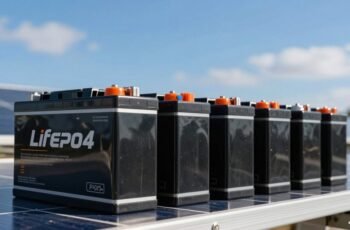
Imagine a company switching from lithium-ion to Lifepo4 batteries for their solar storage system, aiming for greater safety and longevity. While Lifepo4 offers promising advantages, questions about energy density, cost, and suitability for different applications come to mind. Understanding the key differences between these two types of batteries can help you make the right choice for your needs, but it’s not always straightforward. Let’s explore what sets them apart.
Key Takeaways
- Lifepo4 batteries prioritize safety, thermal stability, and long cycle life over higher energy density offered by lithium-ion batteries.
- Lithium-ion batteries have higher energy density, making them suitable for portable electronics and high-performance applications.
- Lifepo4 batteries are more stable, less prone to overheating, and better suited for renewable energy storage and electric vehicles focused on safety.
- Lithium-ion batteries typically have a shorter lifespan (500-1000 cycles) compared to Lifepo4’s 2000-5000 cycles.
- Cost-wise, Lifepo4 batteries may have higher initial costs but lower total expenses due to durability and reduced maintenance needs.
Understanding Lifepo4 and Lithium-Ion Batteries: How They Work
Understanding how Lifepo4 and lithium-ion batteries work is essential to compare their performance and suitability for various applications. Both types are rechargeable, storing energy chemically and converting it to electrical power when needed. Lithium-ion batteries use a liquid electrolyte and a carbon-based anode, allowing for high energy density and lightweight design. Lifepo4 batteries, on the other hand, employ a phosphate-based cathode, which provides a more stable chemical structure. This stability results in longer cycle life and enhanced safety. While lithium-ion batteries excel in energy density, Lifepo4 batteries prioritize safety, longevity, and thermal stability. Recognizing these fundamental differences helps us determine which battery type best fits specific needs, whether for portable electronics, electric vehicles, or energy storage systems.
Which Battery Stores More Power? Comparing Energy Density
When comparing energy density, we see that lithium-ion batteries generally store more power than Lifepo4 batteries, making them more suitable for high-energy applications. Material composition plays a key role here, as different chemistries influence how much energy each cell can hold. Additionally, weight and size factors considerably impact how these batteries perform in real-world use.
Energy Density Differences
While both Lifepo4 and lithium-ion batteries are popular choices for energy storage, their energy densities differ considerably. Lithium-ion batteries generally store more energy per unit volume and weight, making them ideal for applications where space and weight are limited, like smartphones and laptops. Lifepo4 batteries, on the other hand, typically have lower energy densities but excel in safety and longevity. This means they’re less compact but provide reliable power over a longer lifespan. For users needing maximum energy storage in a compact form, lithium-ion batteries are the better choice. However, if safety, durability, and cycle life are priorities, Lifepo4’s lower energy density becomes a worthwhile trade-off. Ultimately, it depends on the application’s specific energy and safety requirements.
Material Composition Impact
The core difference in energy storage capabilities between Lifepo4 and lithium-ion batteries stems from their material compositions. Lithium-ion batteries typically use nickel-manganese-cobalt (NMC) or nickel-cobalt-aluminum (NCA) cathodes, which allow for higher energy density. In contrast, Lifepo4 batteries utilize lithium iron phosphate cathodes, offering a safer but slightly less energy-dense alternative.
- Lithium-ion cathodes enable more energy storage per unit volume
- Lifepo4’s chemical stability results in a longer lifespan
- Lithium-ion batteries can be designed for higher voltage outputs
- Lifepo4’s composition reduces risks of thermal runaway
- Material choice influences overall energy capacity and safety profiles
Understanding these compositional differences helps explain why lithium-ion batteries generally store more power.
Weight and Size Factors
Energy density plays a crucial role in determining which battery can store more power in a given space or weight. When comparing LiFePO4 and lithium-ion batteries, size and weight become essential factors. Lithium-ion batteries generally have a higher energy density, meaning they can store more energy in a smaller, lighter package. This makes them ideal for applications where space and weight are limited, such as smartphones or laptops. On the other hand, LiFePO4 batteries tend to be larger and heavier for the same capacity, but they offer advantages like longer lifespan and improved safety. Ultimately, if maximizing power in a compact form is important, lithium-ion batteries usually come out ahead. However, for durability and safety, LiFePO4 batteries hold significant advantages despite their larger size.
Are Lifepo4 Batteries Safer and More Reliable? Safety and Durability
LiFePO4 batteries are often considered safer and more reliable than traditional lithium-ion batteries because of their stable chemical composition. This stability reduces the risk of thermal runaway, fires, or explosions, making them a safer choice for various applications. Their robust design also means they are less prone to capacity loss over time, ensuring consistent performance. Additionally, LiFePO4 batteries handle deep discharges better and resist overcharging, adding to their durability.
- Less prone to overheating and thermal runaway
- Longer cycle life and consistent performance
- Better resistance to overcharging and deep discharges
- Reduced risk of fires or explosions
- Maintains performance over more charge cycles
Battery Lifespan and Maintenance: How Long Do They Last?
When properly maintained, LiFePO4 batteries can last considerably longer than traditional lithium-ion options, often reaching 2000 to 5000 charge cycles. Regular maintenance, such as avoiding overcharging and keeping them at ideal temperatures, extends their lifespan. Unlike lithium-ion batteries, which typically last 500-1000 cycles, LiFePO4’s durability makes them a cost-effective choice over time. To understand their longevity better, consider this table:
| Aspect | LiFePO4 Battery | Lithium-ion Battery | Maintenance Impact |
|---|---|---|---|
| Cycle Life | 2000-5000 cycles | 500-1000 cycles | Proper care prolongs lifespan |
| Temperature Tolerance | High, up to 60°C | Moderate, 40°C max | Affects overall battery health |
| Cost Over Time | Lower due to longevity | Higher due to shorter life | Maintenance reduces costs |
Proper upkeep ensures maximum efficiency and lifespan.
Cost and Value: Which Battery Saves You Money Over Time?
Although the initial purchase price can be higher, lithium iron phosphate (LiFePO4) batteries often save you money over time thanks to their longer lifespan and lower maintenance needs. They resist degradation better, meaning fewer replacements, and require less frequent checks or repairs. In contrast, traditional lithium-ion batteries may cost less upfront but tend to need replacement sooner, adding to your expenses.
Consider these cost advantages:
- Longer cycle life reduces replacement costs
- Less frequent maintenance saves labor and parts
- Greater thermal stability lowers cooling requirements
- Higher efficiency means less energy waste
- Better longevity maximizes overall investment value
Best Uses for Lifepo4 and Lithium-Ion Batteries
We find that Lifepo4 batteries excel in renewable energy storage and electric vehicle applications due to their safety and long cycle life. Lithium-ion batteries are often preferred for portable devices because of their high energy density and compact size. Understanding these strengths helps us choose the right battery for each specific use.
Renewable Energy Storage
Renewable energy storage has become essential as we shift toward cleaner power sources, and choosing the right battery technology plays a crucial role in maximizing efficiency and longevity. Both Lifepo4 and lithium-ion batteries are popular choices for this purpose, but each excels in different applications. Lifepo4 batteries are ideal for large-scale solar and wind storage systems due to their stability and long cycle life. Lithium-ion batteries work well in grid balancing, community energy projects, and backup power systems thanks to their higher energy density. Selecting the right battery depends on factors like cost, lifespan, safety, and space requirements. Properly chosen, these batteries help guarantee a reliable, sustainable energy supply, supporting the global transition to greener power.
- Large-scale solar and wind storage
- Grid balancing and stabilization
- Off-grid renewable systems
- Backup power for critical infrastructure
- Community energy projects
Portable Device Power
When it comes to powering portable devices, choosing the right battery technology can considerably impact performance and reliability. Lifepo4 batteries excel in applications requiring stability, safety, and long cycle life, making them ideal for high-end flashlights, portable power stations, and medical devices. They offer consistent power output and can handle frequent charge cycles without significant degradation. Lithium-ion batteries, on the other hand, dominate smartphones, laptops, and tablets due to their high energy density and lightweight design. They enable longer usage times in compact sizes. While Lifepo4 batteries provide superior safety and durability, lithium-ion batteries deliver more energy in a smaller package. Both have their strengths, but the choice depends on whether priority is safety and longevity or maximizing energy density for portable device use.
Electric Vehicle Applications
Are Lifepo4 and lithium-ion batteries suitable choices for electric vehicle applications? Yes, they both have unique advantages. Lifepo4 batteries excel in safety, longevity, and thermal stability, making them ideal for electric buses, bikes, and solar-powered vehicles. Lithium-ion batteries, on the other hand, offer higher energy density, which translates to longer driving ranges and faster charging—perfect for electric cars and high-performance vehicles.
Here are some best uses for each:
- Electric buses and commercial vehicles (Lifepo4)
- Personal electric cars (Lithium-ion)
- E-bikes and scooters (Lifepo4)
- Long-range electric vehicles (Lithium-ion)
- Off-road and recreational vehicles (Lifepo4)
How to Choose the Right Battery for Your Needs
Choosing the right battery depends on understanding your specific needs and how you’ll use it. First, consider the required capacity—how much energy you need stored. For longer usage, opt for batteries with higher amp-hour ratings. Next, think about the cycle life; if you need frequent charging and discharging, a battery with a longer lifespan is essential. Safety features and operating temperatures are also vital, especially for demanding environments. Additionally, consider weight and size if space or portability matters. Cost is another factor—sometimes investing more upfront saves money over time through durability and performance. Finally, check compatibility with your device or application. By evaluating these aspects carefully, you can select a battery that offers the best balance of performance, safety, and value for your specific needs.
Frequently Asked Questions
How Do Temperature Variations Affect Lifepo4 and Lithium-Ion Battery Performance?
Temperature variations can considerably impact battery performance; high temperatures may cause lithium-ion batteries to overheat and degrade faster, while Lifepo4 batteries handle heat better, maintaining stability and safety across a broader temperature range for reliable, long-term use.
Are Lifepo4 Batteries More Environmentally Friendly Than Lithium-Ion Batteries?
We believe Lifepo4 batteries are more environmentally friendly because they contain no cobalt, have longer lifespans, and are safer to recycle. While lithium-ion batteries excel in energy density, Lifepo4’s eco benefits make them a better choice.
Can Lifepo4 Batteries Be Recycled Easily?
Yes, lifepo4 batteries can be recycled more easily than many other types. We find that their materials are less toxic, and recycling processes are developing, making them a more sustainable choice for environmentally conscious people like you and us.
What Are the Charging Time Differences Between These Batteries?
We find that Lifepo4 batteries typically charge faster, often within 2-4 hours, whereas lithium-ion batteries may take slightly longer, around 3-5 hours, depending on capacity and charging conditions. This difference benefits quick turnaround times for both.
How Do These Batteries Perform in Extreme Weather Conditions?
Ever wondered how batteries handle extreme weather? We find that LiFePO4 performs better in cold temperatures, maintaining stability and safety, while traditional lithium-ion batteries struggle with temperature fluctuations, risking capacity loss or safety issues in harsh conditions.
Conclusion
In our journey with batteries, Lifepo4 feels like a steadfast guardian—offering safety, longevity, and peace of mind—like a reliable lighthouse guiding us through stormy seas. Lithium-ion, on the other hand, is the nimble explorer, compact and powerful, ready to energize our portable worlds. Knowing their strengths helps us choose the right partner for each adventure, ensuring we stay powered up, safe, and ready for whatever comes next.