When considering energy storage options, understanding how long LiFePO4 batteries last is vital. These batteries are known for their durability, but their lifespan depends on several factors we need to understand. We’ll explore what influences their longevity, how to extend their life, and what signs indicate it may be time for a replacement. Knowing these details can help you make smarter choices for your power needs and guarantee your investment pays off.
Key Takeaways
- Lifepo4 batteries typically last between 2,000 to 5,000 charge cycles, equating to about 8 to 10 years of use.
- Proper care, such as avoiding overcharging and deep discharges, significantly extends battery lifespan.
- Operating within the ideal temperature range (20°C to 25°C) prevents heat-related degradation.
- Signs of aging include capacity loss, swelling, or reduced runtime, indicating it’s time for replacement.
- Regular maintenance and early replacement ensure optimal performance and prevent complete battery failure.
How Long Do Lifepo4 Batteries Usually Last?
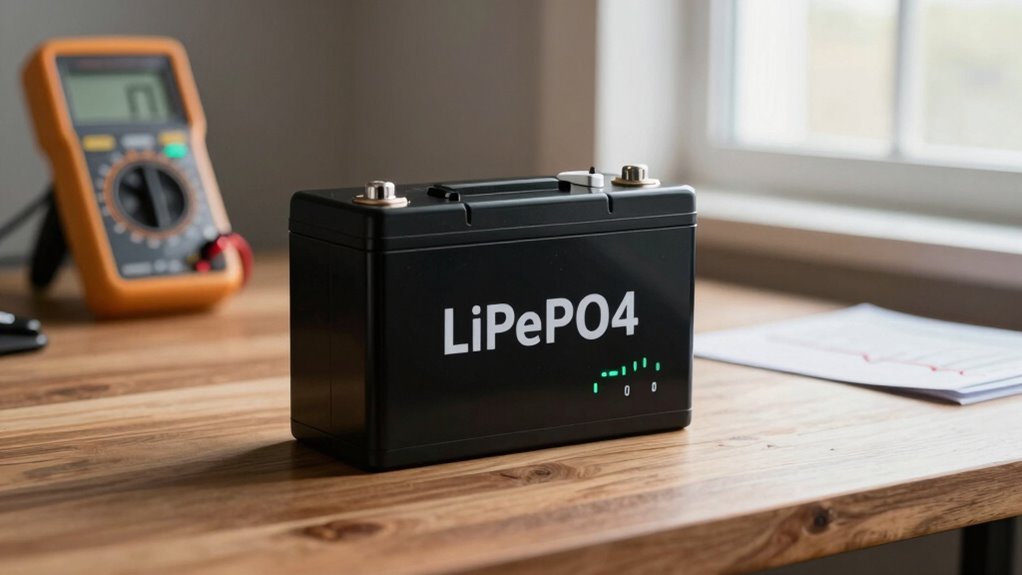
Lifepo4 batteries typically last between 2,000 and 5,000 charge cycles, which translates to about 8 to 10 years of regular use. This durability makes them a popular choice for many applications, from solar energy storage to electric vehicles. The actual lifespan depends on how often you recharge and discharge the battery, but with proper care, you can expect them to perform reliably for years. Unlike other battery types, Lifepo4 batteries maintain their capacity well over time, providing consistent power throughout their lifespan. They’re known for their safety and stability, which also contributes to their long service life. Overall, investing in Lifepo4 batteries means you’re choosing a long-lasting, dependable energy storage solution.
What Factors Affect the Lifespan of Lifepo4 Batteries?
- Use proper chargers and avoid overcharging.
- Maintain moderate charge levels and avoid deep discharges.
- Store batteries in cool, dry places when not in use.
How Temperature Influences Lifepo4 Battery Durability
Temperature plays a critical role in the durability of Lifepo4 batteries, with a preferable range typically between 20°C and 25°C. When temperatures rise above this range, overheating can speed up degradation and shorten the battery’s lifespan. Conversely, exposure to cold can reduce performance and slow down chemical reactions, impacting overall longevity.
Optimal Temperature Ranges
Maintaining batteries within their ideal temperature range is essential for maximizing their lifespan and performance. For Lifepo4 batteries, the recommended temperature range is typically between 0°C and 45°C (32°F to 113°F). Staying within this range ensures ideal chemical reactions and prevents damage. To keep your batteries in good shape:
- Avoid extreme cold, which can reduce capacity and increase charging time.
- Prevent excessive heat, which accelerates degradation and decreases longevity.
- Use temperature-controlled environments or cooling systems when necessary.
Effects of Overheating
Overheating can greatly compromise the durability of Lifepo4 batteries, causing irreversible damage that shortens their lifespan. When temperatures rise too high, chemical reactions within the battery accelerate, leading to capacity loss and potential safety hazards. Excessive heat can cause the cathode and anode materials to degrade faster, decreasing performance over time. It may also result in swelling, leakage, or thermal runaway, which can permanently damage the battery. We’ve seen that even short periods of overheating can have long-lasting effects, reducing overall cycle life. To maximize lifespan, it’s essential to keep Lifepo4 batteries within their recommended temperature ranges and avoid exposing them to extreme heat. Proper ventilation and cooling are vital for maintaining battery health and ensuring reliable, long-term operation.
How Charging Cycles Impact Your Lifepo4 Battery’s Lifespan
Charging cycles play a key role in how long our Lifepo4 batteries last, and practicing ideal charging can make a big difference. We should avoid deep discharges whenever possible, as they can shorten battery life. By following proper charging routines, we can maximize the lifespan of our batteries and get the most value from them.
Optimal Charging Practices
Have you ever wondered how the way you charge your Lifepo4 battery can extend or shorten its lifespan? Proper charging practices are key. First, avoid charging to 100% unless necessary, as keeping the battery between 20% and 80% helps reduce stress. Second, use a charger compatible with Lifepo4 batteries to prevent over-voltage or under-voltage issues. Third, charge at a steady, moderate rate; fast charging can generate heat, which accelerates aging. Following these simple steps minimizes wear and tear, ensuring your battery lasts longer. Consistency is essential—regular, ideal charging preserves capacity and reduces degradation over time. By paying attention to these practices, you maximize your Lifepo4 battery’s lifespan and maintain its performance longer.
Impact of Deep Discharges
While maintaining proper charging practices helps preserve your Lifepo4 battery, frequent deep discharges can still take a toll over time. Deep discharges stress the battery’s chemistry, reducing its overall lifespan. Each cycle that fully depletes the battery accelerates capacity loss. To understand this better, consider the table below:
| Discharge Level | Impact on Lifespan | Recommended Practice |
|---|---|---|
| 20% or higher | Minimal stress | Keep above 20% charge |
| 50% | Moderate wear | Avoid frequent deep drops |
| 0% | Accelerated degradation | Recharge before empty |
Limiting deep discharges helps maximize cycle life, saving you money and hassle in the long run.
Signs Your Lifepo4 Battery Is Nearing the End of Its Life
As a Lifepo4 battery approaches the end of its lifespan, you might notice several clear signs that indicate it’s time for a replacement. First, the battery’s capacity drops considerably, meaning it holds less charge than when new. Second, you may experience longer charging times or inconsistent power delivery, causing devices to shut down unexpectedly. Ultimately, the battery might show physical signs of wear, like swelling or corrosion. Recognizing these signs early can prevent sudden failures and protect your equipment. Keep an eye on overall performance, and don’t ignore any irregularities. If you notice these indicators, it’s a good idea to start considering a replacement to maintain reliable operation and avoid unexpected downtime.
Tips to Maximize Your Lifepo4 Battery’s Life
When you notice your Lifepo4 battery starting to show signs of wear, taking proactive steps can considerably extend its lifespan. Proper care involves avoiding deep discharges, keeping the charge level between 20% and 80%, and using a quality charger. Regularly inspecting connections and cleaning terminals prevents corrosion, guaranteeing efficient performance.
Here’s how it feels when we care for our batteries:
| Charge Wisely | Keep Cool | Handle Gently |
|---|---|---|
| Less stress, longer life | Cooler batteries last longer | Fragile when mishandled |
| Prevents capacity loss | Avoid overheating | Protects internal components |
| Saves money, peace of mind | Ensures consistent performance | Maintains safety and reliability |
Taking these small steps makes a big difference.
How Temperature Management Extends Battery Durability
Maintaining batteries within ideal temperatures is key to prolonging their lifespan, as extreme heat or cold can cause damage over time. Heat stress, in particular, accelerates chemical degradation, reducing overall durability. By managing temperature effectively, we can greatly extend the life and performance of Lifepo4 batteries.
Optimal Operating Temperatures
Proper temperature management is essential for maximizing the lifespan of Lifepo4 batteries. Keeping these batteries within their ideal temperature range ensures better performance and longevity. Generally, the ideal operating temperature is between 15°C and 25°C (59°F and 77°F). Exposure to temperatures outside this range accelerates degradation. To maintain suitable conditions, we recommend:
- Regularly monitoring battery temperature during use.
- Using cooling systems or ventilation in hot environments.
- Avoiding charging or discharging at extreme temperatures.
These steps help prevent stress on battery cells, reduce capacity loss, and extend overall lifespan. Maintaining proper temperatures ensures your Lifepo4 batteries operate efficiently and last longer, ultimately saving you money and hassle over time.
Impact of Heat Stress
Have you ever wondered how heat stress impacts the longevity of Lifepo4 batteries? High temperatures accelerate chemical reactions inside the battery, leading to faster degradation of the electrodes and electrolyte. This process reduces overall capacity and shortens the battery’s lifespan. Excessive heat can also increase the risk of thermal runaway, which is dangerous and can cause permanent damage. Proper temperature management is vital; keeping batteries within ideal temperature ranges slows down these damaging effects. Using cooling systems, avoiding prolonged exposure to direct sunlight, and storing batteries in cool environments all help extend their life. By controlling heat stress, we guarantee Lifepo4 batteries perform efficiently for longer periods, saving money and maintaining safety over their operational lifespan.
Lifepo4 vs Other Batteries: Which Lasts Longer?
When comparing Lifepo4 batteries to other types like lithium-ion or lead-acid, it’s clear that Lifepo4 often outperforms in aspects of durability. They typically last longer, handle deeper discharges better, and resist damage from temperature fluctuations. Specifically, Lifepo4 batteries:
- Offer around 2000-5000 charge cycles, compared to 300-1000 for lead-acid batteries.
- Maintain capacity after many cycles, reducing the need for frequent replacements.
- Are more resistant to thermal stress, preventing degradation under temperature changes.
This makes Lifepo4 a smarter investment for long-term use. While lithium-ion batteries may have similar cycle counts, Lifepo4’s stability and safety features give it a durability edge, making it the more reliable choice over time.
Common Mistakes That Shorten Lifepo4 Battery Life
Many of us unknowingly shorten the lifespan of Lifepo4 batteries by making simple mistakes that can be easily avoided. One common error is consistently discharging the battery below its recommended voltage, which can cause damage over time. Similarly, regularly charging to 100% instead of stopping at a lower, more ideal level can stress the cells. Leaving batteries fully charged or completely drained for extended periods also accelerates wear. Additionally, exposing Lifepo4 batteries to extreme temperatures—either hot or cold—reduces their longevity. Using incompatible chargers or charging at incorrect rates can lead to overcharging or undercharging, damaging the internal chemistry. By avoiding these mistakes, we can greatly extend the useful life of our Lifepo4 batteries and keep them performing reliably.
When Should You Replace Your Lifepo4 Battery?
Determining the right time to replace your Lifepo4 battery depends on its performance and capacity over time. When you notice a significant drop in capacity or efficiency, it’s likely time for a change. Here are key signs to watch for:
- Consistent Capacity Loss: If your battery’s capacity drops below 80% of its original, it’s losing effectiveness.
- Reduced Run Time: Shorter usage periods between charges indicate aging.
- Failure to Hold Charge: If your battery can’t hold a charge or discharges quickly, replacement is necessary.
Regularly monitoring these indicators helps you decide when to replace your Lifepo4 battery to ensure optimal performance and safety. Don’t wait until it completely fails—early replacement saves money and hassle.
Frequently Asked Questions
Can Lifepo4 Batteries Be Recycled After Their Lifespan Ends?
Yes, Lifepo4 batteries can be recycled after their lifespan ends. We can safely recover valuable materials like lithium, iron, and phosphate, helping reduce waste and environmental impact, making recycling an important part of responsible battery use.
How Do Storage Conditions Affect Lifepo4 Battery Longevity?
Storage conditions are like a delicate dance for Lifepo4 batteries; if we keep them in cool, dry places and avoid full charges or discharges, their longevity can stretch out like a well-tuned symphony.
Are Lifepo4 Batteries Prone to Capacity Loss Over Time?
Yes, Lifepo4 batteries can lose capacity over time, especially with repeated charge cycles and improper storage. We recommend proper maintenance, avoiding deep discharges, and storing them in cool, dry places to extend their capacity and lifespan.
What Are the Best Practices for Maintaining Lifepo4 Batteries?
Think of maintaining LiFePO4 batteries like tending a garden; we keep them in shape by avoiding deep discharges, storing them properly, and charging with compatible chargers. Regular checks and gentle use help extend their life.
Do Lifepo4 Batteries Degrade Faster With High Current Loads?
Yes, Lifepo4 batteries can degrade faster under high current loads because increased stress accelerates capacity loss and wear. We recommend avoiding consistently high discharge rates to prolong battery life and guarantee ideal performance over time.
Conclusion
In the end, understanding how to care for our LiFePO4 batteries can greatly extend their lifespan. Did you know they can last up to 10 years or 5,000 cycles? That’s a remarkable lifespan compared to traditional lead-acid batteries. By avoiding deep discharges, managing temperature, and proper charging, we guarantee reliable power for years to come. Staying attentive to signs of wear helps us make timely replacements, maximizing our investment and energy efficiency.