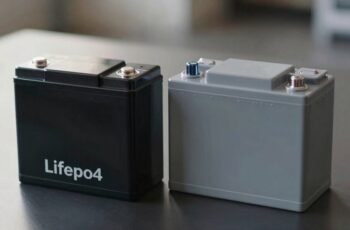
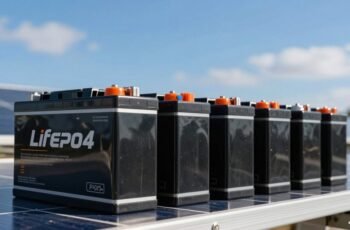
When choosing between LiFePO4 and AGM batteries, we recognize the importance of making an informed decision. Both types have their strengths and limitations, but understanding how they compare in performance, safety, and cost can be complex. As we explore their differences, you’ll see why selecting the right one depends on your specific needs and long-term goals. Keep in mind, the best choice may not be immediately obvious, and there’s more to learn.
Key Takeaways
- LiFePO4 batteries have a longer lifespan (8-15 years) and support more charge cycles than AGM batteries.
- LiFePO4 offers better thermal stability and durability in extreme temperatures and harsh environments.
- AGM batteries are initially cheaper but require more maintenance and have a shorter operational lifespan.
- LiFePO4 is safer with lower risks of thermal runaway and leaks, making it suitable for demanding applications.
- Despite higher upfront costs, LiFePO4 provides greater long-term value due to durability and lower replacement frequency.
What Are the Main Differences Between LiFePO4 and AGM Batteries?
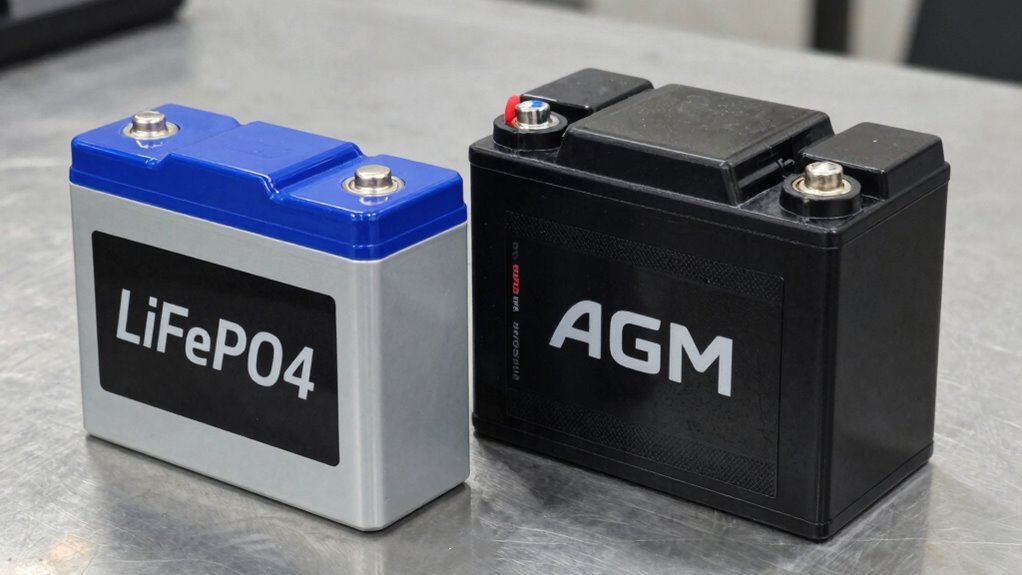
When comparing LiFePO4 (Lithium Iron Phosphate) batteries and AGM (Absorbent Glass Mat) batteries, the key differences lie in their chemistry, performance, and lifespan. LiFePO4 batteries use lithium iron phosphate as their cathode, offering a more stable chemical structure. They deliver higher energy density and better charge efficiency, with faster charging times. AGM batteries, on the other hand, are lead-acid batteries with fiberglass mats that absorb electrolyte, making them spill-proof and maintenance-free. While AGM batteries are generally less expensive upfront, they tend to have a shorter lifespan and lower cycle life compared to LiFePO4. Overall, LiFePO4 batteries provide longer durability and improved performance, but at a higher initial cost.
How Do LiFePO4 and AGM Batteries Perform in Real-World Conditions?
When it comes to real-world conditions, we find that durability in extremes and the ability to handle charge and discharge cycles are key factors. LiFePO4 batteries generally perform better under harsh temperatures and repeated cycling, while AGM batteries can struggle with longevity in tough environments. Understanding these differences helps us choose the right battery for demanding applications.
Durability in Extremes
In real-world conditions, the durability of LiFePO4 and AGM batteries varies markedly, especially under extreme temperatures and physical stresses. LiFePO4 batteries excel in high and low temperatures, maintaining performance without significant degradation. AGM batteries, however, tend to struggle in extreme heat or cold, which can shorten their lifespan. Physical stresses like vibration or shock also impact these batteries differently; LiFePO4 handles vibrations better due to its rigid structure. Here’s a comparison:
| Aspect | LiFePO4 | AGM | Notes |
|---|---|---|---|
| Cold Tolerance | Performs well, retains capacity | Loses capacity quickly | Better suited for cold climates |
| Heat Resistance | Resists thermal degradation | Prone to faster aging | LiFePO4 more durable in heat |
| Vibration/Shock | Highly resistant | Less resistant | Suitable for rough environments |
| Physical Durability | Very durable | Less durable | Impact-resistant |
| Overall Durability | Longer lifespan in tough conditions | Shorter lifespan in extremes | Better in harsh environments |
Charge and Discharge Cycles
Charge and discharge cycles play a crucial role in determining the practical lifespan of LiFePO4 and AGM batteries, especially in real-world applications. LiFePO4 batteries typically handle more cycles—often 2,000 to 5,000—before their capacity drops considerably. AGM batteries usually last around 500 to 1,000 cycles, making them less durable over time. In daily use, this means LiFePO4 batteries can be discharged and recharged many more times without losing performance. The higher cycle count translates to a longer lifespan and better value in the long run. However, how you care for and use these batteries also impacts their cycle life. Proper charging, avoiding deep discharges, and managing temperature are essential for maximizing performance in both types.
Are LiFePO4 Batteries Safer Than AGM Batteries?
LiFePO4 batteries are generally considered safer than AGM batteries due to their stable chemical composition and thermal characteristics. Unlike other lithium-ion chemistries, LiFePO4 cells are less prone to thermal runaway, which can cause fires or explosions. They maintain stability even under high temperatures and physical damage, reducing safety risks. AGM batteries, being lead-acid based, contain sulfuric acid and can leak or emit dangerous gases if damaged or overcharged. While AGM batteries are relatively safe, their chemical instability presents a higher risk in extreme conditions. Overall, LiFePO4 batteries offer a safer profile thanks to their inherent chemical stability and resistance to overheating, making them a preferred choice for applications where safety is a top concern.
What Is the Lifespan and Durability of Each Battery Type?
When comparing Lifepo4 and AGM batteries, their lifespan and durability are key factors to contemplate. Lifepo4 batteries typically last longer and handle more charge cycles, while AGM batteries are known for their ruggedness and reliability over time. Understanding these differences helps us choose the best option for our specific needs.
Lifepo4 Battery Longevity
Understanding the longevity and durability of each battery type is essential for making an informed choice. Lifepo4 batteries are known for their impressive lifespan, often lasting between 8 to 15 years with proper maintenance. They typically support around 2,000 to 5,000 charge cycles, which means they can endure years of regular use without significant capacity loss. Their durability stems from strong chemical stability and resistance to degradation over time. Unlike other batteries, Lifepo4 batteries are less prone to thermal runaway and capacity fade. This resilience makes them ideal for long-term applications. Overall, Lifepo4 batteries provide consistent performance over many years, ensuring reliability and value for users who prioritize longevity and durability.
AGM Battery Durability
AGM batteries are known for their reliable performance and solid durability, making them a popular choice for many applications. Typically, they last between 3 to 5 years with proper maintenance, though some can go longer. Their sealed design helps prevent leaks and reduces evaporation, which contributes to their longevity. However, their durability can be affected by factors like deep discharges, high temperatures, and frequent cycling. While they can handle more charge-discharge cycles than traditional flooded batteries—around 500 to 1,000—they still wear out over time. Regular care, such as avoiding deep discharges and keeping them in a cool environment, can extend their lifespan. Overall, AGM batteries offer dependable durability but are not immune to wear and tear over years of use.
Are LiFePO4 or AGM Batteries More Cost-Effective Long-Term?
Although both LiFePO4 and AGM batteries have their advantages, evaluating their long-term cost-effectiveness reveals key differences. LiFePO4 batteries typically have a higher upfront cost but offer a longer lifespan—often 10 years or more—and can endure over 2,000 charge cycles. This means you’ll replace them less frequently, saving money over time. AGM batteries are cheaper initially but have a shorter lifespan, usually around 3 to 5 years, with fewer charge cycles. They often require replacement sooner, which can add up costs. When considering total cost of ownership, LiFePO4 batteries tend to be more economical in the long run, especially for applications demanding reliability and longevity. Ultimately, investing in LiFePO4 batteries can be more cost-effective despite the higher initial expense.
Which Battery Is Better for Solar Power Systems?
When choosing a battery for a solar power system, it’s vital to take into account how each type performs under real-world conditions. LiFePO4 batteries excel in longevity, safety, and charge cycles, making them ideal for consistent, long-term energy needs. AGM batteries are more affordable upfront and handle short-term demands well but tend to have a shorter lifespan and lower depth of discharge.
| Feature | LiFePO4 Battery | AGM Battery |
|---|---|---|
| Longevity | 10+ years | 3-5 years |
| Safety | Highly safe, stable | Less stable, prone to leaks |
| Cost | Higher initial cost | Lower initial cost |
| Maintenance | Virtually maintenance-free | Regular maintenance needed |
What Key Factors Should You Consider When Choosing?
Choosing the right battery depends on several key factors that align with your specific energy needs and budget. First, consider the capacity and how much power you require daily. Next, evaluate the lifespan and how long the battery will reliably serve you. Finally, think about maintenance—some batteries need more upkeep than others.
Here are three critical factors to keep in mind:
- Performance in Cold Weather: Some batteries perform better in low temperatures, which matters if you live in a colder climate.
- Charging Speed: Look at how quickly the battery charges to ensure it fits your energy schedule.
- Cost and Value: Balance upfront costs with long-term durability and performance to find the best value for your investment.
What Are the Downsides of LiFePO4 and AGM Batteries?
Both LiFePO4 and AGM batteries have their advantages, but they also come with notable downsides that are important to take into account. LiFePO4 batteries tend to be more expensive upfront and require specialized charging systems to avoid damage. They are also sensitive to high temperatures, which can reduce their lifespan. AGM batteries, on the other hand, are generally more affordable initially and easier to install, but they have a shorter lifespan and can degrade faster under heavy cycling. They are also less tolerant of deep discharges, which can harm their performance over time. Additionally, AGM batteries are more prone to leakage if damaged, and both types can be affected by extreme weather conditions. Recognizing these downsides helps us make better, more informed choices.
Frequently Asked Questions
How Do Charging Times Compare Between Lifepo4 and AGM Batteries?
Charging times for Lifepo4 batteries are generally faster than AGM batteries, thanks to their higher charge acceptance rates. We notice quicker recharge cycles with Lifepo4, making them more efficient for frequent use and demanding applications.
Can Lifepo4 Batteries Handle Deeper Discharge Cycles Than AGM Batteries?
Yes, Lifepo4 batteries handle deeper discharge cycles better than AGM batteries. We find they can often be discharged up to 80-90% without significant damage, making them more durable and suitable for demanding applications.
Are Lifepo4 Batteries Environmentally Friendly Compared to AGM Batteries?
We believe Lifepo4 batteries are more environmentally friendly than AGM ones because they last longer, contain fewer toxic materials, and are more recyclable. This reduces waste and environmental impact, making them a smarter, greener choice for us all.
How Do Temperature Sensitivities Differ for Lifepo4 and AGM Batteries?
We find that Lifepo4 batteries handle temperature changes better, performing well in cold conditions and avoiding overheating in heat, unlike AGM batteries, which are more sensitive and can have reduced lifespan or safety issues in extreme temperatures.
What Maintenance Requirements Are Unique to Each Battery Type?
We keep an eye on each battery’s needs; LiFePO4s require occasional balancing and proper charging, while AGMs need regular checks for electrolyte levels and terminal cleanliness. It’s no use crying over spilled milk when we stay proactive.
Conclusion
In the end, whether you choose LiFePO4 or AGM batteries, it’s all about your patience and wallet’s patience. If you enjoy throwing money at short-lived batteries, AGM’s your guy. But if you prefer investing in something that actually lasts and keeps your solar dreams alive, LiFePO4 is the no-brainer. Either way, just remember: your batteries might outlast your current relationship, but they’ll never replace good judgment. Choose wisely!