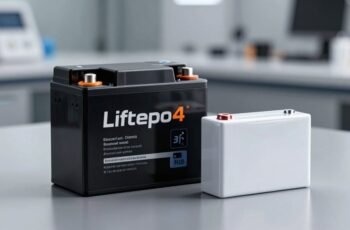
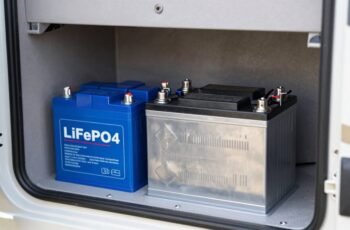
Many believe that all batteries serve the same purpose, but the truth is more complex. When choosing between LiFePO4 and lead-acid options, several factors influence long-term performance and cost-efficiency. It’s worth examining their chemistry and design to see which truly fits your needs. As we explore their differences, you’ll uncover considerations that could impact your decision more than you might expect.
Key Takeaways
- Lifepo4 batteries have higher energy density, longer lifespan, and require less maintenance than lead-acid batteries.
- Lead-acid batteries are cheaper upfront but offer lower cycle life and higher total cost over time.
- Lifepo4 provides more stable voltage and better performance under high-demand, frequent cycling conditions.
- Lead-acid batteries are suitable for stationary applications like backup power due to simpler design and lower initial cost.
- Total lifecycle costs favor Lifepo4 despite its higher initial investment, thanks to durability and lower maintenance.
Understanding Lifepo4 vs. Lead-Acid Batteries: Chemistry and Design
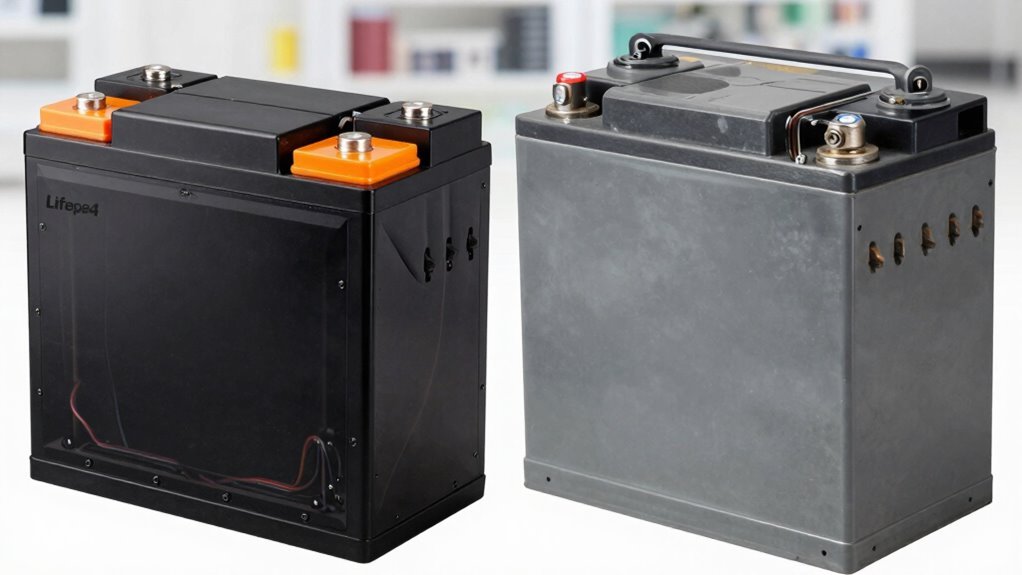
Although both Lifepo4 and lead-acid batteries store electrical energy, their internal chemistry and design differ considerably. Lifepo4 batteries use lithium iron phosphate as the cathode material, providing a stable and safe chemical structure. This chemistry allows for a higher energy density and faster charging. Lead-acid batteries, on the other hand, rely on lead plates immersed in sulfuric acid, which produces electrical energy through chemical reactions. Their design is simpler but less efficient, with heavier components and a lower energy-to-weight ratio. Lifepo4 cells are sealed and maintenance-free, while lead-acid batteries often require regular topping off with distilled water. These fundamental differences impact how each battery performs, their lifespan, and their overall suitability for various applications.
Which Battery Lasts Longer and Is Easier to Maintain?
When comparing Lifepo4 and lead-acid batteries, their longevity and ease of maintenance stand out as key differences. Lifepo4 batteries generally last longer, often providing 2000-5000 charge cycles compared to 500-1000 cycles for lead-acid. They also require less maintenance, as they don’t need regular water refilling or equalization charges. Lifepo4 batteries are more resistant to deep discharges, which extends their lifespan. On the other hand, lead-acid batteries need frequent checks, watering, and careful charging.
Lifepo4 batteries last longer and need less maintenance than lead-acid options.
- Lifepo4 batteries have a longer cycle life
- They require minimal maintenance
- Lead-acid batteries need regular watering
- Lifepo4 resist deep discharges better
- Lead-acid batteries are more prone to sulfation
How Do Lifepo4 and Lead-Acid Batteries Perform in Real Use?
In real-world applications, Lifepo4 and lead-acid batteries often perform quite differently, depending on the specific use case. Lifepo4 batteries generally deliver consistent power and maintain voltage longer under load, making them ideal for high-demand situations like solar or electric vehicles. They handle frequent cycling better and recharge faster, which means less downtime. Lead-acid batteries, on the other hand, tend to struggle with deep discharges and can lose capacity over time with repeated use. They perform well in standby applications, such as backup power, but require careful maintenance to prevent sulfation. Overall, Lifepo4 batteries offer more reliable and efficient performance in demanding environments, while lead-acid batteries remain suitable for simpler, less intensive applications.
What Are the Cost Differences and Value Factors?
Cost is a significant factor when choosing between Lifepo4 and lead-acid batteries, and understanding their price differences helps us make informed decisions. Lifepo4 batteries typically have a higher upfront cost but offer better long-term value due to their longer lifespan, fewer replacements, and lower maintenance. Lead-acid batteries are cheaper initially but tend to degrade faster and require more frequent replacements. When comparing costs, we also need to consider factors like efficiency, safety, and total lifecycle expenses.
Lifepo4 batteries cost more upfront but save money long-term through durability and lower maintenance.
- Lifepo4 batteries last 2-3 times longer than lead-acid
- Lower maintenance costs over time
- Faster charging capabilities
- Safer and more stable chemistry
- Higher initial investment but better long-term savings
Which Battery Is Best for Your Specific Power Needs?
Choosing the right battery depends on your specific power needs, as each type offers distinct advantages suited to different applications. If you need high power output and quick charging, lead acid batteries are reliable and cost-effective. They work well for stationary setups like solar storage or backup systems. However, if you’re looking for longer lifespan, lighter weight, and better efficiency, LiFePO4 batteries are the better choice. They excel in applications requiring frequent cycling, such as electric vehicles or portable equipment. Consider your energy demands, budget, and space constraints. For short-term, high-current needs, lead acid batteries often suffice. But for long-term, high-performance use, LiFePO4 batteries provide superior value and durability. Matching your power needs with the right battery ensures peak performance and cost savings.
Frequently Asked Questions
Are Lifepo4 Batteries Environmentally Friendly Compared to Lead-Acid?
We believe LiFePO4 batteries are more environmentally friendly than lead-acid ones because they contain fewer toxic materials, last longer, and are easier to recycle, helping reduce harmful waste and environmental impact over time.
How Do Lifepo4 and Lead-Acid Batteries Handle Extreme Temperatures?
In extreme temperatures, lifepo4 batteries handle the heat better, maintaining performance and safety, while lead-acid batteries struggle, risking damage or failure. We prefer lifepo4 for its resilience and reliability in challenging conditions.
Can Lifepo4 Batteries Be Recycled More Easily Than Lead-Acid?
We believe Lifepo4 batteries are easier to recycle than lead-acid ones because they contain fewer hazardous materials, are more durable, and can be reused or repurposed more efficiently, reducing environmental impact and promoting sustainable energy practices.
What Are the Safety Risks Associated With Each Battery Type?
We believe both batteries have gentle safety considerations. Lithium iron phosphate is less prone to overheating or leaks, while lead-acid batteries require careful handling to avoid spills and acid burns, ensuring safe use with proper precautions.
How Does Battery Lifespan Impact Overall System Design?
Battery lifespan greatly influences our system design by determining replacement frequency, maintenance costs, and reliability. Longer-lasting batteries like LiFePO4 allow for more durable, cost-effective setups, while shorter-lived lead acids require frequent replacements and increased upkeep.
Conclusion
In the end, choosing between LiFePO4 and lead-acid batteries depends on what matters most to you—long-term durability, safety, or upfront cost. We’ve seen that LiFePO4 offers superior performance and longer lifespan, making it ideal for demanding applications. But if your needs are more basic and budget-friendly, lead-acid could still be a good fit. So, what’s your top priority—cost now or value over time?