When considering the longevity of LiFePO4 batteries, it’s important to understand how they perform in real-world conditions. These batteries are known for their durability, but their lifespan can vary widely based on several factors. We’ll explore what influences their cycle life, how to extend their usability, and when it might be time for a replacement. Knowing these details can help you make informed decisions and get the most out of your investment.
Key Takeaways
- Typical LiFePO4 batteries last between 2,000 to 5,000 charge cycles with stable capacity.
- Proper management and moderate operating temperatures extend battery lifespan.
- High temperatures and deep discharges accelerate battery aging and capacity loss.
- Regular balanced charging and avoiding overcharging help maintain battery health.
- Signs of end-of-life include capacity reduction, voltage instability, and increased internal resistance.
What Is the Typical Lifespan of a LiFePO4 Battery in Real-World Use?
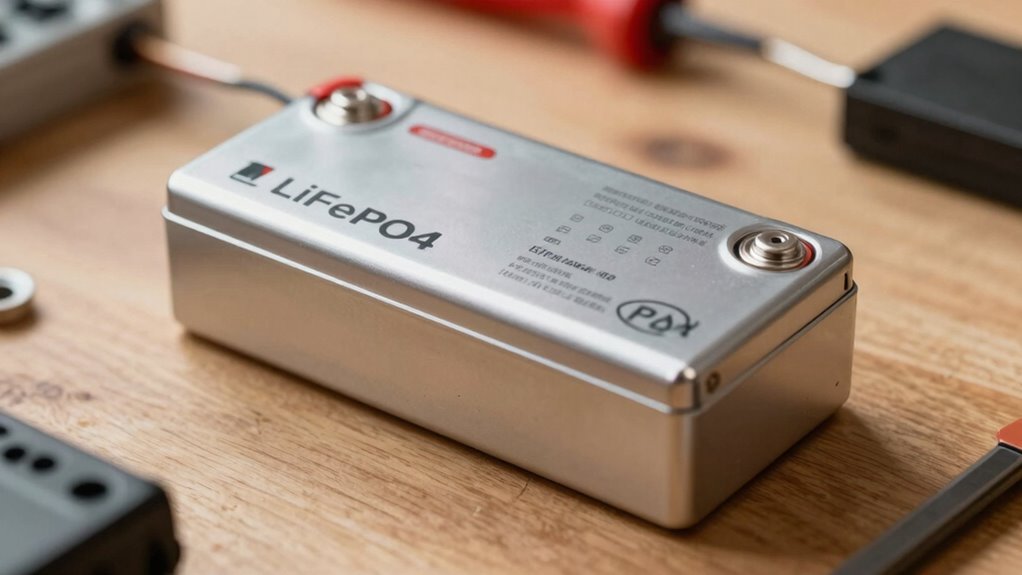
LiFePO4 batteries are known for their durability, and in real-world use, they typically last between 2,000 to 5,000 charge cycles. This means they can power your devices, solar systems, or electric vehicles for many years before their capacity noticeably drops. The actual lifespan depends on factors like usage patterns and maintenance, but generally, these batteries outperform other lithium-ion types. You’ll find that with proper care, they maintain their performance over a long period. The longevity of LiFePO4 batteries makes them a reliable choice for many applications, especially where safety and lifespan are priorities. Knowing they can handle thousands of cycles gives us confidence in investing in this durable, long-lasting energy solution.
Environmental, Usage, and Charging Factors That Affect LiFePO4 Battery Lifespan
Have you ever wondered what factors can shorten the lifespan of a LiFePO4 battery? Environmental conditions play a big role; high temperatures accelerate aging, while cold temperatures can reduce performance temporarily. Consistent exposure to extreme heat can cause the battery’s chemistry to degrade faster, leading to fewer charge cycles over time. Usage patterns also matter—frequent deep discharges or overuse can wear out the battery more quickly. Additionally, if the battery is stored or operated in excessively humid or dusty environments, it may experience early deterioration. Proper management of these factors is essential for maximizing lifespan. By keeping the battery within recommended temperature ranges, avoiding deep discharges, and protecting it from harsh conditions, we can considerably extend its usable life.
How Charging Habits Impact Your LiFePO4 Battery’s Longevity
Charging habits play a critical role in determining how long your battery will last. Proper charging guarantees the longevity and performance of your LiFePO4 battery. Frequent overcharging or deep discharges can accelerate wear, reducing its lifespan. It’s best to keep the battery within a moderate voltage range, avoiding extremes. Consistent, balanced charging habits help preserve capacity over time.
| Charging Practice | Impact on Battery Longevity |
|---|---|
| Avoid Deep Discharges | Extends cycle life |
| Use a Suitable Charger | Prevents voltage spikes and damage |
| Keep Charging Within Range | Maintains peak battery health |
| Charge Regularly | Reduces stress from infrequent charging |
| Do Not Overcharge | Prevents capacity loss and overheating |
Environmental Factors That Affect Your LiFePO4 Battery’s Durability
Environmental conditions play a significant role in how well your battery maintains its performance over time. Extreme temperatures, both hot and cold, can accelerate battery aging or reduce its capacity temporarily. High heat speeds up chemical reactions inside the battery, leading to faster degradation, while cold temperatures can decrease efficiency and make charging more difficult. Humidity and moisture can cause corrosion and damage internal components if not properly protected. Additionally, exposure to direct sunlight or harsh weather can impact the battery’s casing and overall lifespan. To maximize durability, keep your LiFePO4 battery in a stable, moderate environment, away from extreme heat, cold, and moisture. Proper storage and regular monitoring help assure your battery performs reliably throughout its lifespan.
Signs Your LiFePO4 Battery Is Nearing the End of Its Life
As our LiFePO4 batteries near the end of their lifespan, we often notice subtle changes in their performance that signal it’s time to contemplate replacement. One of the first signs is a noticeable drop in capacity, meaning the battery doesn’t hold a charge as long as it used to. We also see increased internal resistance, causing the battery to heat up more during use. Another indicator is inconsistent voltage output, which can lead to erratic device operation. Additionally, the battery may frequently shut down or fail to charge fully. Over time, the electrolyte may deteriorate, reducing overall efficiency. If these signs start to appear, it’s a clear signal that your LiFePO4 battery is nearing the end of its useful life.
Practical Tips to Extend Your LiFePO4 Battery’s Cycle Life
To maximize the lifespan of your LiFePO4 batteries, we can adopt simple, practical strategies that help reduce stress on the cells and maintain ideal performance. First, avoid deep discharges; keeping the battery’s state of charge between 20% and 80% prevents unnecessary strain. Second, store batteries in a cool, dry place, as high temperatures accelerate degradation. Third, use a quality charger designed for LiFePO4 chemistry to guarantee proper charging and prevent overvoltage. Ultimately, monitor the battery regularly for signs of imbalance or aging, which allows early intervention. These small steps can considerably extend your battery’s cycle life, keeping it reliable and efficient for years to come.
Common Mistakes That Shorten Your LiFePO4 Battery’s Lifespan
Ignoring proper charging practices is one of the quickest ways to reduce your LiFePO4 battery’s lifespan. Overcharging, undercharging, or charging at unsafe voltages causes stress and shortens its life. Additionally, exposing the battery to extreme temperatures accelerates degradation.
| Mistake | Consequence |
|---|---|
| Charging too quickly | Increased heat, reduced cycle life |
| Using incompatible chargers | Over-voltage damage, capacity loss |
| Ignoring temperature limits | Accelerated chemical breakdown |
Avoid these pitfalls by sticking to recommended voltage ranges, using the right charger, and keeping your battery in moderate temperatures. Small mistakes add up, and over time, they can considerably impact your battery’s longevity.
LiFePO4 Battery Longevity in Solar, Electric Vehicles, and Portable Devices
When considering LiFePO4 battery longevity in solar systems, electric vehicles, and portable devices, cycle life and environmental factors play vital roles. We need to understand how usage patterns and conditions impact battery performance over time. By examining these points, we can better optimize battery care and extend their useful life.
Battery Cycle Life
Battery cycle life is a critical factor in determining the overall longevity of LiFePO4 batteries used in solar systems, electric vehicles, and portable devices. It refers to how many complete charge-discharge cycles a battery can handle before its capacity drops markedly. Generally, LiFePO4 batteries excel here, offering around 2,000 to 3,000 cycles, far surpassing other chemistries.
Here’s what impacts cycle life:
- Depth of Discharge: Shallow discharges extend cycle life.
- Charging Speed: Fast charging can reduce lifespan.
- Temperature: Operating within ideal temps prevents degradation.
- Maintenance: Proper care and avoiding overcharging help maximize cycles.
Understanding these factors helps us enhance battery performance and lifespan.
Environmental Impact Factors
Environmental conditions play a significant role in shaping the lifespan of LiFePO4 batteries across various applications like solar power systems, electric vehicles, and portable devices. Temperature, humidity, and exposure to elements directly impact battery health and longevity. High temperatures accelerate degradation, while extreme cold reduces efficiency. Humidity can cause corrosion and damage internal components. Proper environmental management is essential to extend battery life. To illustrate, consider this overview:
| Condition | Effect on Battery | Best Practice |
|---|---|---|
| High Temperature | Accelerates aging | Keep in cool, stable environments |
| Humidity | Causes corrosion | Store in dry conditions |
| Extreme Cold | Reduces performance | Use insulation or controlled environments |
When Is It Time to Replace Your LiFePO4 Battery?
We understand it’s time to contemplate replacing your LiFePO4 battery when it shows signs like decreased capacity or inconsistent voltage swings. If you notice you’re charging more often than usual, it’s another clear indicator. Recognizing these signs early helps guarantee your system stays reliable and efficient.
Decreased Capacity Indicators
As LiFePO4 batteries age, their ability to hold a full charge diminishes, signaling that it might be time for a replacement. You’ll notice several signs, including:
- Reduced run time during use, meaning the battery doesn’t last as long as it used to.
- Increased charging times, even when the battery isn’t deeply discharged.
- Noticeable drops in voltage under load, indicating weakened capacity.
- The battery reaching a markedly lower state of charge after a full charge cycle.
These indicators show the battery’s capacity is declining. If you see these signs consistently, it’s a clear signal that your battery’s lifespan is nearing its end, and replacement might be the best option to restore reliable performance.
Excessive Voltage Fluctuations
Excessive voltage fluctuations are a clear sign that your LiFePO4 battery may be nearing the end of its useful life. When your battery’s voltage swings unpredictably during use or charging, it indicates internal issues like degraded cells or compromised connections. These fluctuations can lead to uneven power delivery, causing your devices to perform poorly or shut down unexpectedly. Over time, the battery’s ability to maintain stable voltage diminishes, making fluctuations more frequent and severe. If you notice your battery’s voltage isn’t steady despite proper charging practices, it’s a strong sign it’s time to consider replacing it. Ignoring these signs can lead to further damage and reduced safety, so monitoring voltage stability is essential for maintaining reliable, safe operation.
Frequent Charging Cycles
How often should you be charging your LiFePO4 battery before it signals that it’s time for a replacement? Frequent charging cycles can wear down the battery faster. Typically, if you’re charging daily or multiple times a day, it might be a sign that the battery’s capacity is diminishing. Here’s what to watch for:
- Reduced runtime between charges
- Longer charging times for full capacity
- Noticeable decrease in overall power output
- Increased battery temperature during charging
If these signs become persistent, it’s a good idea to consider replacement. Consistently cycling your battery too often accelerates its aging. Monitoring these indicators helps you maintain your battery’s lifespan and avoid unexpected failures.
Frequently Asked Questions
How Do Temperature Fluctuations Specifically Impact Lifepo4 Battery Lifespan?
Temperature fluctuations can shorten Lifepo4 battery lifespan by causing stress on the internal chemistry, leading to faster degradation. We recommend keeping batteries within ideal temperature ranges to guarantee longer life and maintain reliable performance.
Can Using Incompatible Chargers Damage Lifepo4 Batteries Over Time?
Using incompatible chargers can definitely damage Lifepo4 batteries over time. We’ve seen improper charging cause capacity loss, swelling, and even safety hazards, so always use chargers specifically designed for Lifepo4 to guarantee longevity and safety.
What Are the Best Storage Practices to Maximize Lifepo4 Battery Longevity?
Think of your Lifepo4 battery as a delicate plant; we keep it in a cool, dry place, avoid full charges or discharges, and store it halfway charged, ensuring it stays healthy and lasts longer.
How Does High Cycle Count Affect the Overall Capacity of Lifepo4 Batteries?
High cycle counts gradually decrease Lifepo4 batteries’ capacity, meaning they hold less charge over time. We see this as normal wear, but proper care can extend their effective lifespan and help maintain better capacity longer.
Are There Any Warranty Considerations for Lifepo4 Batteries Nearing End-Of-Life?
Warranties usually offer peace of mind before batteries reach their twilight years. As they near end-of-life, we recommend reviewing warranty terms closely, as coverage might shift or diminish, helping you plan for future replacements smoothly.
Conclusion
In the end, understanding the factors that influence our LiFePO4 batteries helps us unveil their true potential. Like a trusted companion, proper care and mindful habits can extend their life, saving us time and money. By paying attention to signs of wear and avoiding common mistakes, we keep their promise of durability alive. After all, isn’t it worth nurturing a powerhouse that keeps our world moving forward? Let’s cherish and maintain our batteries wisely.