When it comes to LiFePO4 batteries, knowing when to replace them is essential for safety and reliable performance. These batteries typically last between 8 to 10 years or around 2,000 to 3,000 charge cycles, but various factors can influence their lifespan. Understanding the signs of aging and proper maintenance can help you make informed decisions. Let’s explore how to determine the right time for a replacement and what you can do to maximize your battery’s life.
Key Takeaways
- Replace the LiFePO4 battery when capacity drops below 80% of the original.
- Consider replacement if the battery shows swelling, overheating, or charging issues.
- Typically, LiFePO4 batteries last 8-10 years or 2,000-3,000 charge cycles.
- Regularly monitor for signs of degradation or performance decline to determine the need for replacement.
- Proper maintenance and safe disposal extend battery life and ensure timely replacement when necessary.
How Long Do LiFePO4 Batteries Last?
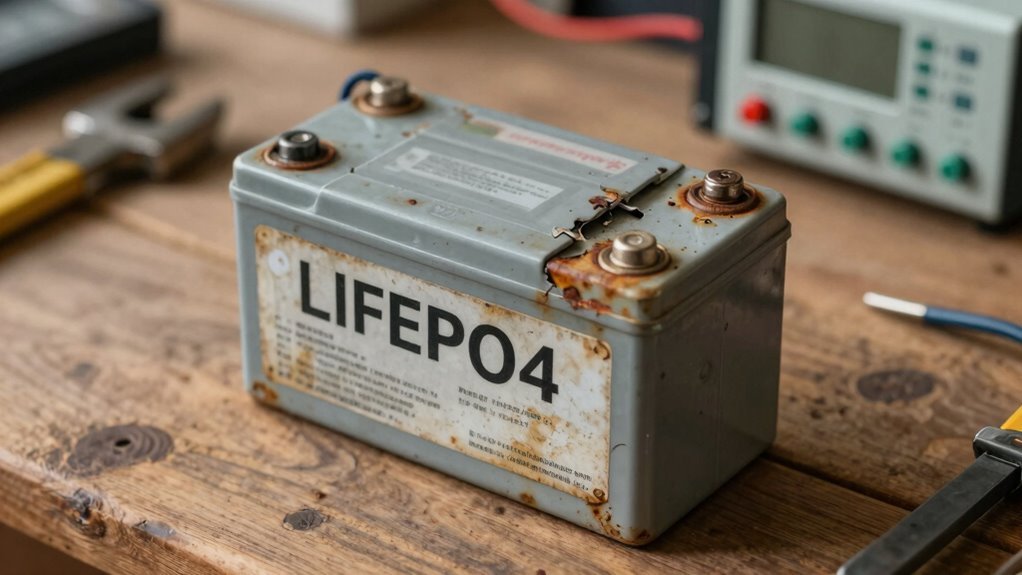
LiFePO4 batteries are known for their durability and long lifespan, often outlasting other lithium-ion types. Typically, they last between 2,000 to 5,000 charge cycles, which translates to about 8 to 10 years of regular use. Their chemistry makes them less prone to capacity loss over time, so they maintain performance longer. Unlike other batteries that might degrade quickly, LiFePO4 batteries resist thermal runaway and are safer overall. Proper maintenance, like avoiding deep discharges and keeping them within recommended temperature ranges, can extend their lifespan even further. Overall, these batteries are a reliable choice for long-term energy storage, offering a cost-effective solution with a lifespan that often exceeds that of alternative options.
What Signs Indicate You Need to Replace Your LiFePO4 Battery?
If your battery’s performance starts to decline, it’s a clear sign something’s wrong. You might notice decreased capacity, unpredictable voltage changes, or shorter runtimes than before. These signs indicate it’s time to contemplate replacing your LiFePO4 battery.
Decreased Battery Capacity
A noticeable decline in battery capacity is often the first sign that it’s time to think about replacing your LiFePO4 cell. When your battery no longer holds a full charge or the runtime dramatically shortens, it’s a clear indicator that its capacity has diminished. You might find yourself needing to recharge more frequently or experiencing reduced performance in your devices. This decline isn’t always gradual; sometimes, it happens suddenly, signaling that the battery is nearing the end of its lifespan. Pay attention to these signs to avoid unexpected failures or damage.
- Reduced runtime compared to when the battery was new
- Inability to reach full charge
- Increased self-discharge rate
Excessive Voltage Fluctuations
When your battery’s capacity begins to decline, it’s often accompanied by other warning signs, such as unusual voltage behavior. Excessive voltage fluctuations are a key indicator that your LiFePO4 battery may be nearing the end of its life. If you notice the voltage spikes or dips unpredictably during use or charging, it’s a sign that the cell balance is compromised or internal components are failing. These fluctuations can lead to inconsistent performance and potential damage to connected devices. While some minor fluctuations are normal, persistent or severe swings are cause for concern. Regularly monitoring your battery’s voltage can help catch these issues early. If fluctuations become frequent or extreme, it’s time to contemplate replacing the battery to guarantee safety and peak operation.
Shortened Runtime Duration
Noticing a shorter runtime from your LiFePO4 battery is often the first sign that it’s losing its capacity. When your battery doesn’t last as long as it used to, it indicates degradation. You might find yourself needing to recharge more frequently or running out of power sooner than expected. This change can slow your operations and cause frustration. Keep an eye on these signs:
- Reduced operational time between charges
- Increased frequency of recharging
- Inconsistent power delivery during use
These clues suggest your battery’s health is declining. If these issues persist, it’s a good idea to contemplate replacing the battery to maintain reliable performance and prevent unexpected failures.
Key Factors That Affect LiFePO4 Battery Life
Several key factors directly influence the lifespan of a LiFePO4 battery, and understanding these can help us maximize its longevity. First, temperature plays a fundamental role; high temperatures accelerate degradation, while cold conditions can reduce performance temporarily. Second, how we charge and discharge affects battery health—overcharging or deep discharging can shorten its life. Third, the number of charge cycles matters; each cycle slightly reduces capacity over time. Fourth, storage practices are essential—storing the battery at high states of charge or in hot environments speeds up aging. Lastly, manufacturing quality impacts durability; higher-quality cells tend to last longer. By paying attention to these factors, we can better preserve our LiFePO4 batteries and extend their useful life.
How to Extend the Lifespan of Your LiFePO4 Batteries
To extend the lifespan of your LiFePO4 batteries, we need to adopt proper usage and maintenance practices. Proper management helps prevent premature degradation and guarantees reliable performance. First, always avoid deep discharges; keeping the charge level between 20% and 80% reduces stress on the battery. Second, store batteries in a cool, dry place when not in use, as high temperatures accelerate aging. Third, regularly check and maintain connections to prevent corrosion and ensure efficient power flow. Additionally, use a compatible charger with correct voltage and current settings to avoid overcharging. Following these simple steps can notably prolong your battery’s life, saving you money and hassle in the long run. Proper care truly makes a difference in maximizing your LiFePO4 battery’s lifespan.
When Is the Right Time to Replace Your LiFePO4 Battery?
Understanding when to replace your LiFePO4 battery is essential for maintaining ideal performance and safety. Typically, you’ll want to evaluate replacement once the battery’s capacity drops below 80% of its original, or if it shows signs of swelling, overheating, or frequent discharges. Regularly monitoring your battery’s health helps prevent unexpected failures.
Here’s a quick reference:
| Indicator | Action |
|---|---|
| Capacity below 80% | Time to consider replacement |
| Swelling or bulging | Replace immediately |
| Excessive heat during use | Seek replacement quickly |
| Reduced runtime per charge | Consider replacing soon |
| Frequent charging issues | Check and replace if needed |
Being attentive to these signs ensures safe, reliable operation.
Environmental and Usage Habits That Impact Battery Longevity
How we charge, store, and use our LiFePO4 batteries substantially affects their lifespan. Poor storage conditions or frequent deep discharges can shorten their life, while proper habits can extend it. Let’s explore how these environmental and usage patterns play a vital role in battery longevity.
Charging Practices and Effects
Proper charging practices are essential for maximizing the lifespan of LiFePO4 batteries. We should avoid frequent full discharges and overcharging, as these can stress the battery and reduce its longevity. Using a charger specifically designed for LiFePO4 chemistry helps guarantee safe and efficient charging cycles. It’s also important to keep the charging environment cool, since high temperatures during charging accelerate battery wear.
Key practices include:
- Keeping the charge level between 20% and 80% to prevent stress
- Using a charger with a built-in balancing feature for even cell charging
- Avoiding rapid charging unless necessary, as it can generate excess heat and strain the battery
Following these habits helps extend your battery’s useful life and maintains peak performance.
Storage Conditions Impact
Environmental conditions and usage habits markedly influence the lifespan of LiFePO4 batteries. Exposure to extreme temperatures, whether hot or cold, can accelerate aging and reduce capacity over time. High heat speeds up chemical reactions inside the battery, leading to faster degradation, while cold temperatures can temporarily diminish performance and cause stress during charging. Proper storage is essential; batteries should be kept in a cool, dry place away from direct sunlight. Humidity can cause corrosion and damage internal components. Additionally, storing batteries at a partial state of charge—around 50-70%—helps maintain their health during periods of inactivity. By controlling environmental factors and adopting good storage habits, we can substantially extend the lifespan and performance of LiFePO4 batteries.
Usage Patterns and Wear
Frequent and deep discharge cycles can substantially wear down LiFePO4 batteries over time. How we use the battery greatly impacts its lifespan. For example, regularly draining the battery below 20% can accelerate capacity loss. High current draws during use also generate heat, which can degrade the cells faster. Additionally, charging habits matter—overcharging or leaving the battery at full charge for long periods can reduce longevity. To extend the life of your LiFePO4 battery, consider these practices:
- Avoid deep discharges and keep the state of charge between 20% and 80%
- Minimize high current demands and prevent overheating
- Use a proper charger and avoid leaving it fully charged for extended periods
Adopting these habits helps preserve the battery’s health and delays replacement needs.
Maintenance Tips to Maximize Your Battery’s Life
To get the most out of your LiFePO4 battery, we need to adopt some simple but effective maintenance practices. Regularly check for any corrosion or loose connections, as these can affect performance. Keep the battery in a cool, dry place, avoiding extreme temperatures that can degrade cells. Charge it within recommended voltage ranges and avoid deep discharges frequently.
| Maintenance Step | Benefit |
|---|---|
| Keep terminals clean | Ensures efficient power flow |
| Avoid overcharging/discharging | Extends overall lifespan |
| Store in a cool, dry area | Prevents thermal damage |
What to Do When Your LiFePO4 Battery Reaches the End of Its Life
When your LiFePO4 battery finally reaches the end of its lifespan, it’s important to handle it responsibly to prevent environmental harm and recover value. First, avoid discarding it in regular trash; instead, look for proper recycling facilities. Recycling helps recover valuable materials and reduces pollution. Next, consider consulting a professional for safe removal and disposal, especially if the battery is damaged or swollen. You might also explore options for repurposing the battery if it still holds some charge, such as using it for less demanding applications or energy storage. Ultimately, responsible disposal minimizes environmental impact and supports sustainable practices.
- Find certified recycling centers for battery disposal
- Do not puncture or incinerate the battery
- Explore options for repurposing if possible
Frequently Asked Questions About LiFePO4 Battery Replacement
Understanding the common questions about replacing your LiFePO4 battery can help you make informed decisions and guarantee safe, effective handling. Many wonder how long these batteries last, with typical lifespans ranging from 8 to 10 years or 2,000 to 3,000 charge cycles. Others ask if they can replace just one cell or need to swap the entire pack. It’s also common to wonder about signs that indicate replacement is needed, like decreased performance or swelling. Safety is a top concern, so people ask about proper disposal and recycling methods. We advise checking your manufacturer’s guidelines for specific recommendations. Asking these questions helps assure you replace your battery on time, maintaining ideal performance and safety.
Frequently Asked Questions
Can Lifepo4 Batteries Be Recycled After Replacement?
Yes, we can recycle LiFePO4 batteries after replacement. We encourage responsible disposal through specialized recycling programs, which recover valuable materials and prevent environmental harm, ensuring sustainable battery use and reducing waste.
How Does Temperature Affect Lifepo4 Battery Replacement Timing?
Temperature considerably impacts Lifepo4 battery lifespan. We recommend replacing batteries sooner if exposed to extreme heat or cold, as these conditions accelerate degradation. Regularly monitoring performance helps us determine ideal replacement timing for safety and efficiency.
Are There Warranty Options for Replacing Lifepo4 Batteries?
We do offer warranty options for replacing LiFePO4 batteries, and many customers find peace of mind knowing their investment is protected. While warranties vary, we encourage you to check specific terms to guarantee you’re covered for potential issues.
What Safety Precautions Should Be Taken During Battery Replacement?
We recommend wearing safety gloves and goggles, working in a well-ventilated area, and disconnecting the battery carefully to prevent sparks or short circuits. Always follow manufacturer instructions for safe handling and disposal of LiFePO4 batteries.
How Does Usage Frequency Influence Replacement Schedule?
We find that frequent usage accelerates battery wear, so we recommend checking Lifepo4 batteries every 1-2 years and replacing them around 3-5 years, depending on usage intensity, to guarantee peak performance and safety.
Conclusion
Just like tending a garden to see it flourish, caring for our LiFePO4 batteries guarantees they serve us well. By monitoring their health and replacing them around the 8-year mark, we prevent unexpected failures—think of it as pruning a tree to keep it strong. With proper maintenance and timely replacement, we can keep our power flowing smoothly, much like a well-tended stream that never runs dry.