When it comes to extending the life of our LiFePO4 batteries, we consider that proper care makes a significant difference. From maintaining correct charge levels to monitoring temperature and inspecting connections, every step plays a role in longevity. But there are many nuances to consider, and understanding these best practices can help us get the most out of our batteries. Let’s explore the key strategies that can keep your system reliable for the long haul.
Key Takeaways
- Keep the battery’s state of charge between 20% and 80% to reduce stress and prolong lifespan.
- Store batteries in a cool, dry environment away from extreme temperatures.
- Use a compatible, high-quality Battery Management System (BMS) for proper voltage regulation and balancing.
- Regularly inspect and clean terminals to prevent corrosion and ensure secure connections.
- Avoid deep discharges and overcharging by following recommended charging practices and using appropriate chargers.
Why Proper Care Extends Your LiFePO4 Battery Life
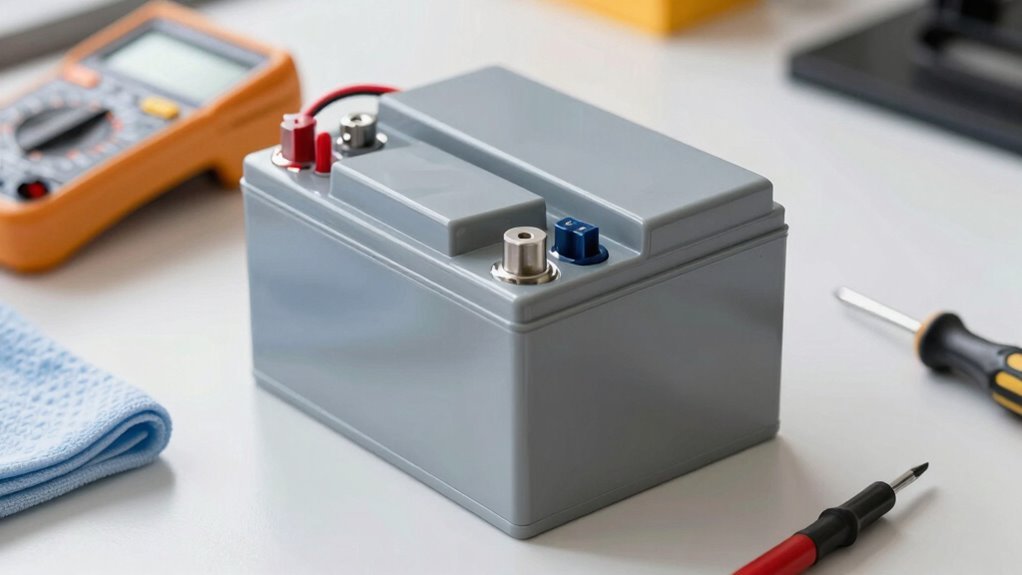
Taking good care of your LiFePO4 battery is essential because it directly impacts its longevity and performance. When we handle the battery properly, we reduce wear and tear that can cause early failure. Proper care prevents issues like capacity loss, overheating, and voltage drops, helping your battery run efficiently for years. Simple habits, such as avoiding deep discharges and keeping the battery within recommended temperature ranges, make a big difference. By maintaining correct charging practices and storing it in a suitable environment, we guarantee the battery stays in good condition. Consistent, attentive care minimizes unnecessary stress on the cells, preserving its capacity and overall health. This proactive approach ultimately saves money and keeps your power source reliable over the long term.
Understanding the Factors That Affect LiFePO4 Battery Lifespan
Understanding what influences the lifespan of a LiFePO4 battery is essential for maximizing its performance and durability. Several factors play a role, including temperature, charge cycles, and storage conditions. High temperatures accelerate battery degradation by speeding up chemical reactions inside, so keeping batteries cool helps extend their life. Frequent deep discharges or overcharging can strain the cells and shorten their lifespan, making proper charging practices vital. Additionally, prolonged storage at full charge or very low charge levels can damage the battery’s chemistry. Mechanical stresses or physical damage also impact longevity. Recognizing these factors allows us to take better care of our batteries, helping them last longer and perform reliably over time.
Best Practices for Charging and Discharging LiFePO4 Batteries
Proper charging and discharging habits are key to extending the lifespan of LiFePO4 batteries. We recommend keeping the charge level between 20% and 80%, avoiding full charges or discharges whenever possible. Using a charger designed specifically for LiFePO4 batteries guarantees proper voltage regulation and prevents overcharging. When discharging, avoid drawing excessive current, which can stress the cells and reduce longevity. It’s best to charge the battery promptly after use, rather than leaving it partially drained for long periods. Additionally, don’t let the battery sit at a high state of charge or fully discharged for extended times. Following these practices helps maintain ideal cell chemistry, prevents undue wear, and ensures your LiFePO4 batteries serve you reliably for years to come.
How to Keep Your Battery Temperatures in Check
Keeping your LiFePO4 battery cool is essential for longevity. We recommend regularly monitoring the temperature and applying appropriate cooling methods when needed. Staying proactive helps prevent overheating and preserves your battery’s health over time.
Monitor Temperature Regularly
Since battery temperatures can fluctuate quickly and impact performance, it’s essential to check them regularly. Consistently monitoring helps us catch overheating or extreme cold that could damage the battery or reduce its lifespan. Use a reliable thermometer or a built-in sensor if available, and record temperature readings periodically. Pay close attention during high-demand periods or hot weather, as these conditions can cause temperature spikes. If you notice temperatures rising beyond the recommended range, it’s a sign to take action or adjust usage. Regular checks give us early warning signs and help prevent thermal stress. By staying vigilant about temperature, we guarantee our Lifepo4 batteries operate within safe limits, ultimately extending their overall life and maintaining peak performance.
Use Proper Cooling Methods
Monitoring temperatures regularly helps us catch any issues early, but actively controlling heat is just as important. Proper cooling methods ensure our Lifepo4 batteries stay within safe temperature ranges, preventing capacity loss and extending lifespan. We can use passive cooling techniques like ventilation, heat sinks, or insulating materials to dissipate heat naturally. For more demanding applications, active cooling solutions such as fans, liquid cooling, or thermoelectric coolers are effective in maintaining ideal temperatures. It’s crucial to position batteries in well-ventilated areas and avoid direct sunlight or heat sources. Regularly checking and adjusting cooling systems keeps the battery environment stable, reducing thermal stress. By implementing these cooling methods, we protect our batteries and maximize their longevity.
Avoiding Over-Voltage and Under-Voltage Conditions
To prevent damage and extend the lifespan of your LiFePO4 battery, it’s essential to avoid over-voltage and under-voltage conditions. Over-voltage can cause overheating and damage cells, while under-voltage leads to capacity loss and potential failure. Monitoring voltage levels actively helps protect your battery. Using a reliable Battery Management System (BMS) ensures voltage stays within safe limits. Here’s a quick guide:
| Voltage Level | Condition | Effect |
|---|---|---|
| Above 3.65V | Over-voltage | Cell damage, reduced life |
| Below 2.5V | Under-voltage | Capacity loss, failure |
| Safe Range | Optimal Usage | Longevity, performance |
| Slight Deviations | Monitor & Adjust | Prevents damage |
| Consistent Overshoot/Undershoot | Avoid | Extends battery life |
Choosing and Using the Right Battery Management System (BMS)
Choosing the right Battery Management System (BMS) plays a vital role in maintaining your LiFePO4 battery’s health and performance. A good BMS protects against overcharging, over-discharging, and balances cells to guarantee longevity. When selecting a BMS, consider factors like current ratings, cell count compatibility, and communication features. Proper use enhances safety and efficiency, preventing damage and reducing maintenance costs.
Here’s what to look for:
- Adequate current and voltage ratings for your application
- Cell balancing capabilities to prevent uneven wear
- Overcurrent and short-circuit protection
- Compatibility with your battery configuration
- Easy-to-use monitoring and control features
Choosing wisely and using your BMS correctly helps maximize your battery’s lifespan and assures reliable operation.
Storing Your LiFePO4 Batteries When Not in Use
When storing your LiFePO4 batteries for an extended period, taking specific steps to preserve their health and performance is vital. First, verify the batteries are charged to about 50-60%, as storing them at full charge or fully discharged can harm their longevity. Store the batteries in a cool, dry place away from direct sunlight and extreme temperatures, ideally between 32°F and 77°F (0°C to 25°C). Avoid exposing them to moisture or humidity, which can cause corrosion. It’s also beneficial to disconnect the batteries from any devices to prevent parasitic drain. Periodically checking the stored batteries and recharging them to the best level if they’ve self-discharged helps maintain their capacity. Proper storage is key to maximize lifespan and guarantee reliable performance later on.
How to Inspect and Clean Battery Connections Regularly
To keep your batteries working smoothly, we need to regularly check and clean the connections. Ensuring the connections are tight, removing any corrosion, and using the right tools helps prevent performance issues. Let’s go over how to do these steps effectively.
Check Connection Tightness
Ever wondered how loose or corroded connections can impact your battery’s performance? Loose connections can cause voltage drops, increase resistance, and reduce overall efficiency. Corrosion can further weaken the connection, leading to potential power loss or even failure. Regularly checking the tightness of your battery connections guarantees ideal performance and longevity.
Here are some tips to keep connections secure:
- Use a socket or wrench to tighten terminal clamps snugly
- Confirm all bolts and screws are secure
- Check for signs of wear or damage
- Ensure cables sit flush against terminals
- Re-tighten connections after any vibrations or movements
Maintaining proper connection tightness prevents power interruptions and prolongs your Lifepo4 battery’s life. It’s a simple step that makes a significant difference.
Remove Corrosion Buildup
Corrosion buildup on battery connections can silently undermine your Lifepo4 battery’s performance over time. It creates resistance, reduces power transfer, and can eventually cause connection failures. To prevent this, inspect your battery terminals regularly for any white, green, or bluish deposits. If you notice corrosion, it’s essential to clean it promptly. Use a mixture of baking soda and water to neutralize the corrosion, applying it with a brush or cloth. Be sure to disconnect the battery before cleaning to avoid any sparks or short circuits. Once the corrosion is removed, dry the connections thoroughly. Removing corrosion helps maintain proper electrical contact and prolongs your battery’s lifespan. Regular inspection and cleaning are simple steps that can considerably improve your battery’s reliability and performance.
Use Proper Cleaning Tools
Regularly inspecting and cleaning your battery connections requires the right tools to do the job effectively and safely. Using proper cleaning tools ensures we don’t damage the terminals or connections, which could shorten battery life. A few essential items include:
- Non-metallic brush or toothbrush for gentle scrubbing
- Soft cloth or microfiber towel for wiping
- Plastic or nylon scraper for stubborn debris
- Isopropyl alcohol wipes for cleaning contacts
- Insulated gloves for safety during handling
These tools help us remove dirt, corrosion, and buildup without risking a short circuit or damaging sensitive components. Proper tools allow us to maintain good contact and prevent issues that could reduce battery efficiency. Regular use of the right cleaning tools keeps our Lifepo4 batteries functioning reliably longer.
Managing Discharge Cycles to Maximize Battery Longevity
Managing discharge cycles is crucial for extending the lifespan of LiFePO4 batteries. We recommend avoiding deep discharges, as regularly draining the battery below 20% can accelerate capacity loss. Instead, aim to keep discharge levels between 20% and 80%, which helps preserve internal chemistry and prolongs overall life. It’s also important to minimize frequent shallow discharges, which can create stress on the battery over time. Consistent, moderate use reduces wear and tear, ensuring the battery maintains its capacity longer. Monitoring your usage and avoiding unnecessary deep discharges is key. By managing how often and how deeply you discharge your battery, you’ll maximize its longevity and get the most value out of your investment.
Selecting Quality Charging Equipment for Your LiFePO4 System
Choosing the right charging equipment is essential to guarantee your LiFePO4 battery system performs reliably and lasts longer. High-quality chargers ensure proper voltage and current control, preventing overcharging or undercharging that can damage the battery. Look for chargers specifically designed for LiFePO4 chemistry, as they optimize charging profiles. Features like temperature compensation and adjustable settings help protect your batteries in different conditions. Using a charger with built-in safety features reduces risks of faults or fires. Additionally, investing in a reliable charger minimizes maintenance needs and maximizes battery lifespan.
Choose dedicated LiFePO4 chargers with adjustable settings and safety features for optimal battery performance and longevity.
- Compatibility with LiFePO4 chemistry
- Adjustable charging profiles
- Temperature sensing and compensation
- Overcharge and short-circuit protection
- User-friendly interface
Frequently Asked Questions
How Does Temperature Fluctuation Affect Lifepo4 Battery Lifespan?
Temperature fluctuations can shorten Lifepo4 battery lifespan by causing stress and degradation of internal components. We recommend keeping batteries in stable, moderate temperatures to guarantee ideal performance and longevity, avoiding extreme cold or heat whenever possible.
Can Using Recycled or Second-Hand Lifepo4 Batteries Impact Longevity?
Using recycled or second-hand Lifepo4 batteries is like opening a box of chocolates—you never know what you’re gonna get. They may have reduced lifespan or capacity, so always test and inspect before trusting their longevity.
What Are Signs of a Failing Lifepo4 Battery?
We notice a failing Lifepo4 battery when it shows reduced capacity, slower charging, increased heat, or voltage drops under load. These signs indicate the battery’s health is declining, and it may soon need replacement for reliable performance.
How Does Depth of Discharge Influence Battery Cycle Life?
We understand that deeper discharges shorten Lifepo4 battery cycle life because they strain the cells more. Keeping discharges shallow helps preserve capacity, meaning our batteries last longer and perform better over time.
Are There Specific Brands Known for Longer-Lasting Lifepo4 Batteries?
We’ve found that reputable brands like CALB, Winston, and A123 produce Lifepo4 batteries that last longer. While cheaper options tempt us with initial savings, investing in trusted brands guarantees durability, reliability, and extended lifespan.
Conclusion
Just like tending a delicate garden, caring for our LiFePO4 batteries requires patience and attention. By nurturing their health through proper maintenance, we guarantee they bloom with longevity and reliability. Every careful connection, mindful charge, and thoughtful storage is like watering and pruning—guiding our batteries to thrive season after season. When we treat them with respect and consistency, we’re not just maintaining a power source; we’re cultivating a resilient life force that supports our journey forward.