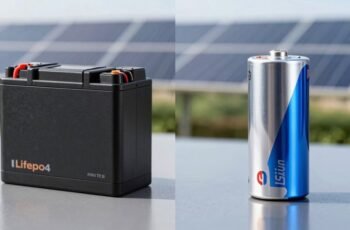
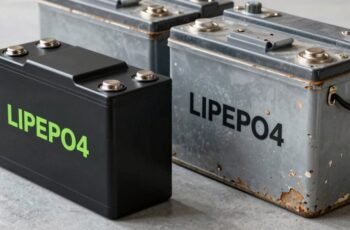
While Lifepo4 batteries excel in safety and longevity, Li-ion batteries dominate with higher energy density and lighter weight. This contrast raises important questions about which technology best fits different needs. As we explore the differences, you’ll see that choosing between them isn’t straightforward. Understanding these nuances can help you make smarter decisions for your applications—whether it’s for electric vehicles, solar storage, or portable devices. Let’s examine what sets these technologies apart.
Key Takeaways
- Lifepo4 offers higher thermal stability and safety, with lower fire risk compared to lithium-ion batteries.
- Lithium-ion batteries have greater energy density, making them more compact and lightweight for portable applications.
- Lifepo4 provides longer cycle life (2000–5000 cycles) and better capacity retention over time.
- Lithium-ion batteries typically cost less initially but may incur higher replacement and maintenance costs long-term.
- Lifepo4 is more environmentally friendly, using less problematic raw materials like iron and phosphate.
What Are Lifepo4 and Lithium-Ion Batteries?
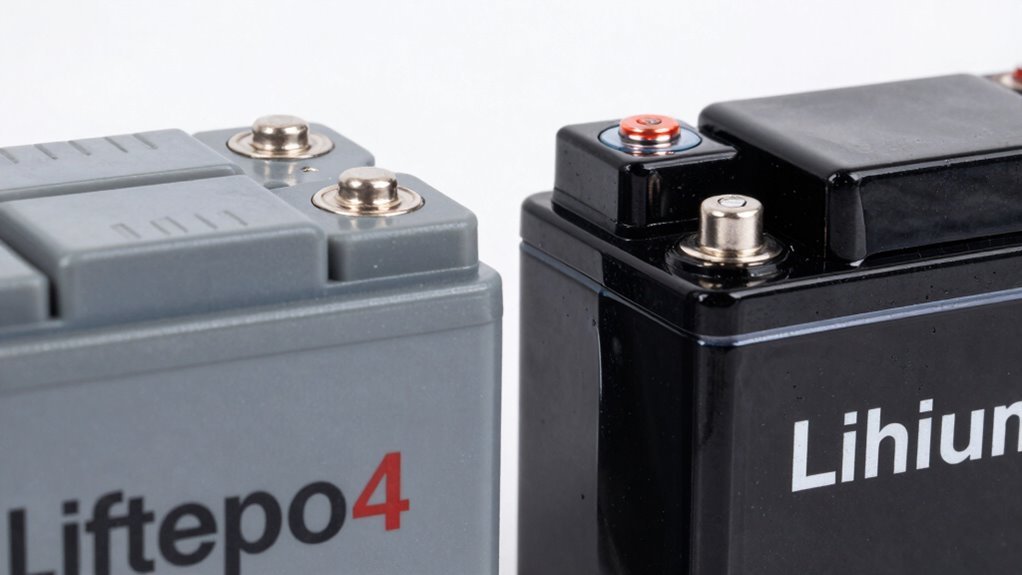
Lifepo4 and lithium-ion batteries are both popular types of rechargeable batteries, but they have distinct differences in chemistry and performance. Lifepo4 batteries use lithium iron phosphate as their cathode material, which offers excellent thermal stability and a longer lifespan. Lithium-ion batteries typically use materials like cobalt oxide or manganese oxide, providing higher energy density but sometimes sacrificing longevity. Lifepo4 batteries are known for their safety, with less risk of overheating or catching fire, making them ideal for large-scale energy storage and electric vehicles. In contrast, lithium-ion batteries are more compact and store more energy in a smaller space, making them common in portable electronics. Both types have their unique advantages, depending on the application’s needs.
Safety Differences Between Lifepo4 and Lithium-Ion Batteries
Are safety concerns a major factor when choosing a rechargeable battery? Absolutely. Lifepo4 batteries are known for their thermal stability and lower risk of overheating, making them safer overall. Lithium-ion batteries, however, are more prone to thermal runaway, which can lead to fires or explosions if damaged or improperly handled. To illustrate:
| Feature | Lifepo4 | Lithium-Ion |
|---|---|---|
| Thermal stability | High | Moderate to low |
| Risk of fire | Very low | Higher |
| Damage tolerance | Better | Less tolerant |
| Overcharge safety | Safer | Requires protection circuits |
| Operating temperature | Wide range | Narrower |
This comparison highlights Lifepo4’s safer profile, especially in demanding applications.
Which Battery Lasts Longer: Lifepo4 or Lithium-Ion?
When comparing Lifepo4 and Lithium-Ion batteries, we focus on their cycle life and how well they resist degradation over time. Lifepo4 batteries generally last longer through more charge cycles, maintaining performance better than Lithium-Ion batteries. Understanding these durability differences helps us choose the right battery for lasting reliability.
Cycle Life Durability
While both Lifepo4 and lithium-ion batteries are popular choices for energy storage, their longevity differs markedly. Lifepo4 batteries generally offer a longer cycle life, making them more durable over time. They can often handle between 2,000 to 5,000 charge cycles, depending on usage conditions. In contrast, lithium-ion batteries usually sustain around 500 to 1,500 cycles before their capacity diminishes substantially. Factors influencing cycle life include:
- Depth of discharge (DoD)
- Charging and discharging rates
- Operating temperature
- Battery management system efficiency
Because Lifepo4 batteries tolerate deeper discharges without damage, they tend to last much longer in demanding applications. This durability makes them ideal for long-term use, especially in renewable energy systems and electric vehicles.
Degradation Over Time
Over time, the rate at which batteries degrade considerably impacts their lifespan, and Lifepo4 batteries generally maintain their capacity longer than lithium-ion counterparts. Lifepo4 chemistry is more stable, which means it’s less prone to capacity loss from repeated charging cycles. While lithium-ion batteries tend to lose about 20% of their capacity after 300-500 cycles, Lifepo4 batteries can often sustain over 80% capacity even after 2000 cycles. This slower degradation translates into a longer useful life, especially in applications requiring frequent charging. Additionally, Lifepo4’s thermal stability reduces the risk of capacity loss caused by overheating. Overall, Lifepo4 batteries degrade more gradually over time, making them a more durable choice for long-term use.
How Do Costs Compare: Lifepo4 vs. Lithium-Ion Batteries
When comparing costs, we look at manufacturing and material expenses, which differ considerably between Lifepo4 and Lithium-Ion batteries. While Lifepo4 batteries may have higher upfront costs, they often offer better long-term value through longer lifespan and lower maintenance. Ultimately, understanding these factors helps us determine which option is more cost-effective over time.
Manufacturing and Material Costs
Manufacturing and material costs are key factors that influence the overall affordability of battery technologies, and LiFePO4 (Lifepo4) batteries often have a different cost profile compared to traditional lithium-ion batteries. Lifepo4 cells use less expensive raw materials, like iron and phosphate, which are more abundant and cheaper than cobalt and nickel used in lithium-ion cells. This often results in lower material costs for Lifepo4. However, the manufacturing process for Lifepo4 can be more complex due to strict safety and quality controls.
- Iron and phosphate are less costly and more sustainable.
- Cobalt and nickel in lithium-ion batteries tend to be more expensive.
- Production of Lifepo4 requires specific electrode formulations.
- Scale of manufacturing impacts overall cost efficiency.
Long-Term Investment Benefits
Although Lifepo4 batteries often have lower material costs, their long-term investment benefits can differ considerably from lithium-ion batteries. Lifepo4 batteries typically last longer, with more charge cycles—sometimes double or triple the lifespan of Li-Ion options—meaning fewer replacements over time. This durability reduces ongoing costs and maintenance expenses, making them more cost-effective in the long run. Additionally, Lifepo4 batteries tend to be safer, minimizing risks of damage or failure that can lead to costly repairs. While the upfront price may be comparable or slightly higher, the extended lifespan and lower maintenance needs make Lifepo4 a smarter financial choice for sustained energy storage. Ultimately, investing in Lifepo4 batteries can lead to significant savings over their entire service life.
Performance and Charging Speed: Lifepo4 vs. Lithium-Ion
Lifepo4 batteries generally offer more consistent performance and faster charging capabilities compared to traditional lithium-ion batteries. They maintain stable voltage levels throughout discharge, ensuring reliability. Additionally, Lifepo4 cells can be charged more quickly without compromising safety or lifespan. This makes them ideal for applications requiring rapid turnaround times.
- Faster charge acceptance due to lower internal resistance
- Reduced risk of overheating during rapid charging
- Longer cycle life supports consistent performance over time
- Less capacity loss after frequent fast charges
These features mean Lifepo4 batteries can handle frequent, quick charges more effectively than lithium-ion variants. They also tend to retain their capacity longer under demanding usage, providing dependable performance in a variety of demanding environments.
Which Battery Is Better for Electric Vehicles and Solar Power Systems?
When choosing batteries for electric vehicles and solar power systems, Lifepo4 batteries often stand out due to their safety, longevity, and stability. They are less prone to thermal runaway, making them safer for high-demand applications. Lifepo4 batteries also last longer, with more charge cycles than typical Lithium-Ion batteries, reducing replacement costs over time. Their stable chemistry ensures reliable performance in various environments, which is essential for both EVs and solar storage. While Lithium-Ion batteries may offer higher energy density, Lifepo4’s durability and safety features make them more suitable for long-term use in these applications. Overall, for electric vehicles and solar power systems, Lifepo4 batteries provide a balanced mix of safety, lifespan, and dependable performance.
Pros and Cons of Lifepo4 Batteries
While Lifepo4 batteries excel in safety and longevity, they also come with their own set of advantages and disadvantages that are worth considering. On the plus side, they’re more stable, less prone to overheating, and have a longer lifespan compared to other lithium options. They’re also environmentally friendlier and maintain performance over many charge cycles. However, there are drawbacks. Their energy density is lower, meaning they store less power for the same size. They tend to be heavier and bulkier, which can be a challenge for portable applications. Additionally, their voltage is slightly lower, which might require compatible hardware adjustments. Finally, Lifepo4 batteries often come with a higher upfront cost, although they can save money long-term through durability.
Pros and Cons of Lithium-Ion Batteries
Lithium-ion batteries have become the standard choice for portable electronics and electric vehicles due to their high energy density and lightweight design. They pack a lot of power into a small package, making them ideal for smartphones, laptops, and EVs. However, they also have drawbacks. They can be sensitive to high temperatures, which may cause safety issues like fires or degradation over time. Their lifespan is limited, often requiring replacement after a few years. Additionally, lithium-ion batteries can be pricey and rely on materials that are environmentally challenging to mine. Despite these cons, their efficiency and ability to deliver quick bursts of energy keep them popular. Overall, while lithium-ion batteries are highly effective, understanding their limitations helps us make informed choices about their use.
Frequently Asked Questions
How Environmentally Friendly Are Lifepo4 and Lithium-Ion Batteries?
We believe Lifepo4 and lithium-ion batteries are relatively eco-friendly, especially Lifepo4, since they contain fewer toxic materials and last longer, reducing waste. Still, recycling and responsible sourcing remain essential for minimizing environmental impacts.
What Are the Temperature Operating Ranges for Both Battery Types?
Think of batteries as weather-vane guides; Lifepo4 operates best between 0°C and 60°C, while Li-ion prefers a narrower 0°C to 45°C range. We find Lifepo4 more resilient across diverse climates, offering broader temperature flexibility.
Can Lifepo4 Batteries Be Recycled Easily Compared to Lithium-Ion?
We find Lifepo4 batteries easier to recycle than lithium-ion batteries because their materials are more stable and less toxic. Recycling processes are simpler, safer, and more environmentally friendly, making Lifepo4 a more sustainable choice overall.
How Do Lifepo4 and Lithium-Ion Batteries Perform in Cold Climates?
We find that Lifepo4 batteries perform better in cold climates, maintaining more stability and capacity, while lithium-ion batteries tend to lose efficiency and struggle with reduced performance, making Lifepo4 a more reliable choice in chilly conditions.
Are There Any Notable Advancements in Lifepo4 Technology Recently?
Like a rising sun, recent advancements in LiFePO4 tech brighten our outlook; we’ve seen improvements in energy density, lifespan, and fast-charging capabilities, making these batteries more reliable and efficient for diverse applications today.
Conclusion
Ultimately, choosing between Lifepo4 and Li-ion batteries depends on your specific needs. Lifepo4 offers safety and longevity, making it perfect for long-term, demanding use, while Li-ion provides lightweight, high-energy solutions for quick power. As the saying goes, “You get what you pay for,” so consider safety, performance, and cost carefully. By understanding these differences, you can make an informed decision that best suits your application.