Did you know that the choice between Lifepo4 and NMC batteries can substantially impact the safety, lifespan, and performance of your devices? While many focus on energy density or cost, the underlying chemistry determines how well a battery meets your specific needs. Understanding these differences could be vital, especially when safety and longevity matter most. Curious about which option might be best for your application? Keep exploring to find out.
Key Takeaways
- Lifepo4 offers superior thermal stability, safety, and longer cycle life compared to NMC batteries.
- NMC batteries have higher energy density, making them more suitable for compact, high-power applications.
- Lifepo4 is generally less expensive upfront and requires less maintenance over its lifespan.
- NMC batteries charge faster but are more sensitive to high temperatures and potential thermal instability.
- Choose Lifepo4 for safety and longevity; opt for NMC when space-saving and higher energy density are priorities.
Which Battery Is Best for Your Electric Vehicle or Energy Storage?
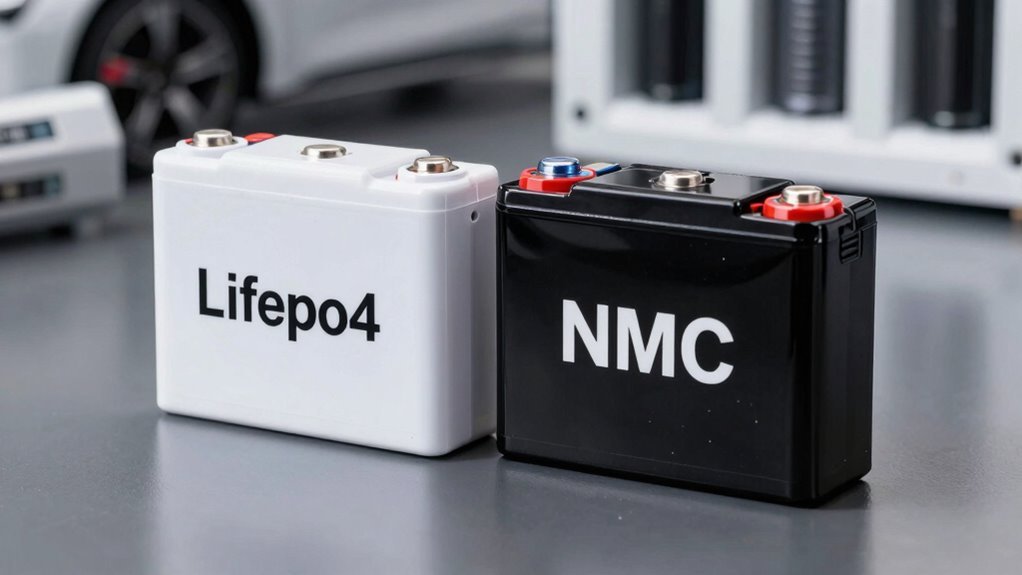
When choosing the right battery for your electric vehicle or energy storage system, it’s essential to understand the key differences between Lifepo4 and NMC batteries. Lifepo4 batteries excel in safety, longevity, and thermal stability, making them ideal for applications prioritizing durability and safety. They also perform well in colder environments and have a longer cycle life. On the other hand, NMC batteries typically offer higher energy density, meaning they can store more power in a smaller space, which is advantageous for compact vehicles or limited space. They also deliver higher power output, making them suitable for high-performance applications. Ultimately, the best choice depends on your specific needs—whether you prioritize safety and longevity or compactness and power density.
Understanding Lifepo4 and NMC Batteries: Chemistry Basics
Understanding the chemistry behind Lifepo4 and NMC batteries is essential to appreciating their differences in performance and safety. Lifepo4 batteries use lithium iron phosphate as the cathode material, offering excellent stability, thermal safety, and a longer lifespan. They operate through a reversible chemical reaction between lithium ions and iron phosphate. NMC batteries, on the other hand, combine nickel, manganese, and cobalt oxides, delivering higher energy density and power output. Their chemistry involves lithium ions moving between layers of metal oxides during charge and discharge cycles. While Lifepo4’s chemistry prioritizes safety and longevity, NMC’s chemistry focuses on higher energy capacity. Understanding these fundamental differences helps us grasp why each chemistry suits specific applications, from electric vehicles to energy storage systems.
Is Lifepo4 or NMC Safer for Your Battery Needs?
When comparing the safety of Lifepo4 and NMC batteries, we consider factors like thermal stability and fire risk. Lifepo4 batteries generally have better stability and are less prone to overheating, making them safer in many situations. Ultimately, understanding their safety features helps you choose the right option for your specific needs.
Thermal Stability Comparison
Thermal stability is a crucial factor in determining battery safety, and LiFePO4 (Lifepo4) batteries generally outperform NMC (Nickel Manganese Cobalt) variants in this aspect. Lifepo4’s chemical structure makes it more resistant to overheating, reducing the risk of thermal runaway. In contrast, NMC batteries are more sensitive to high temperatures, which can lead to instability if not properly managed.
Here are three key points:
- Lifepo4 cells maintain stability at higher temperatures, making them less likely to degrade or fail.
- NMC batteries are more prone to thermal issues if operated outside recommended temperature ranges.
- Proper thermal management is essential for both, but Lifepo4’s inherent stability offers a safer margin.
Risk of Fire
Lifepo4 batteries are generally considered safer than NMC batteries when it comes to the risk of fire, thanks to their chemical stability. Their stable lithium iron phosphate chemistry makes them less prone to thermal runaway, even under abuse or damage. NMC batteries, on the other hand, contain nickel, manganese, and cobalt, which are more reactive and can increase the chance of fire if the battery is punctured or overheated. While both types have protective systems, Lifepo4’s inherent stability reduces the likelihood of catastrophic failure. This makes Lifepo4 a safer choice for applications where safety is a top priority. Overall, if minimizing fire risk is critical for your needs, Lifepo4 batteries offer a significant safety advantage.
Overall Safety Features
Considering safety beyond fire risk, the overall safety features of Lifepo4 and NMC batteries vary considerably. Lifepo4 batteries are known for their stability and thermal resistance, reducing the chance of overheating. In contrast, NMC batteries can be more sensitive to voltage and temperature fluctuations. Here are key safety aspects:
- Thermal stability: Lifepo4 resists thermal runaway better, making it safer during abuse or damage.
- Voltage management: NMC batteries require careful voltage regulation to prevent overcharging and degradation.
- Chemical stability: Lifepo4’s chemistry is less toxic and less prone to leaks or explosions, enhancing safety in various conditions.
Performance Differences: Energy Density and Longevity
While both LiFePO4 and NMC batteries are popular choices for energy storage, they differ markedly in their performance characteristics, particularly regarding energy density and longevity. NMC batteries tend to have higher energy density, meaning they store more power in a smaller space, making them ideal for portable applications. LiFePO4 batteries, on the other hand, excel in longevity, often lasting longer over numerous charge cycles. Here’s a quick comparison:
| Feature | NMC Battery | LiFePO4 Battery | Key Difference |
|---|---|---|---|
| Energy Density | Higher (150-200 Wh/kg) | Lower (90-110 Wh/kg) | Power storage capacity |
| Longevity | 500-1000 cycles | 2000+ cycles | Battery lifespan |
| Thermal Stability | Moderate | Excellent | Safety and stability |
| Weight | Lighter | Heavier | Portability |
| Cost | Usually more expensive | Typically cheaper | Budget considerations |
Cost, Charging Speed, and Maintenance Tips
When comparing Lifepo4 and NMC batteries, cost is a key factor, with Lifepo4 generally offering a lower upfront price. We also want to share practical tips for charging efficiently and maintaining these batteries to extend their lifespan. Let’s explore how these aspects impact your choices and long-term savings.
Cost Differences Overview
Understanding the cost differences between Lifepo4 and NMC batteries is essential for making an informed choice. Generally, Lifepo4 batteries tend to be more affordable upfront, while NMC batteries often come with a higher initial price. Here’s a quick comparison:
- Initial Cost: Lifepo4 batteries usually cost 20-30% less than NMC options.
- Long-term Savings: Lifepo4 batteries have a longer lifespan, reducing replacement expenses over time.
- Maintenance Costs: Lifepo4 batteries require less maintenance, saving money on upkeep.
While Lifepo4 batteries are cheaper initially, NMC batteries might be more suitable if faster charging and higher energy density are priorities. Evaluating these factors helps determine the best fit for your needs.
Charging and Maintenance Tips
Charging and maintaining Lifepo4 and NMC batteries require different approaches to optimize performance and longevity. Lifepo4 batteries handle higher charge rates better and benefit from avoiding deep discharges, so we recommend staying above 20% capacity. They also need less frequent maintenance, but it’s crucial to check for balanced cells periodically. NMC batteries, on the other hand, charge faster but are more sensitive to overcharging; we advise using chargers with proper voltage regulation. Both batteries thrive with temperature control—avoid extreme heat or cold. Regular inspections help spot issues early, especially for NMC batteries, which are more prone to capacity loss from misuse. Ultimately, following manufacturer guidelines for charging voltages and staying vigilant with maintenance prolongs both battery types’ lifespan.
How to Choose the Right Battery for Your Needs
Are you unsure how to pick the right battery for your specific needs? We can help clarify that. First, consider your device’s power requirements: if you need high energy density for compact spaces, NMC batteries might be best. Second, think about lifespan and safety—LiFePO4 batteries generally last longer and are safer for frequent cycling. Third, evaluate your budget and maintenance capacity; LiFePO4 batteries often cost more upfront but save money over time due to lower maintenance. By weighing these factors, you’ll match your needs with the right choice. Whether prioritizing longevity, size, or cost, understanding these key points will guide you to the best battery for your project.
Frequently Asked Questions
How Do Lifepo4 and NMC Batteries Impact Environmental Sustainability?
We believe both Lifepo4 and NMC batteries impact environmental sustainability by offering cleaner energy storage options, but Lifepo4’s longer lifespan and fewer toxic materials make it more eco-friendly, helping reduce waste and resource consumption over time.
What Are Common Applications for Lifepo4 Versus NMC Batteries?
Sure, Lifepo4 batteries are perfect for solar storage and electric vehicles, while NMC batteries suit smartphones and e-bikes. We prefer Lifepo4 for longevity, but NMC’s compactness makes it ideal for portable tech—talk about battery versatility!
How Does Temperature Affect Lifepo4 and NMC Battery Performance?
We find that temperature impacts Lifepo4 and NMC batteries differently; high heat can cause NMC batteries to degrade faster, while Lifepo4 batteries handle temperature fluctuations better, maintaining performance and safety across a broader range of conditions.
Are Lifepo4 or NMC Batteries More Recyclable?
We find Lifepo4 batteries more recyclable than NMC batteries because they contain fewer toxic metals and have a more straightforward recycling process, making them environmentally friendlier. This helps us reduce waste and promote sustainable energy solutions.
What Are the Future Technological Advancements in These Battery Types?
Like explorers charting new waters, we see future advancements in these batteries as innovations in solid-state tech, better energy density, faster charging, and enhanced safety, steering us toward a more sustainable and efficient energy horizon.
Conclusion
Choosing between Lifepo4 and NMC batteries is like picking the right tool for a job—each has its strengths. We once thought a high-energy NMC battery would power our compact drone longer, but the Lifepo4’s durability kept it flying through rough conditions. Ultimately, understanding your needs helps you select the best match—whether it’s safety, longevity, or energy density. Like a good tool, the right battery guarantees your project or ride stays reliable and efficient.