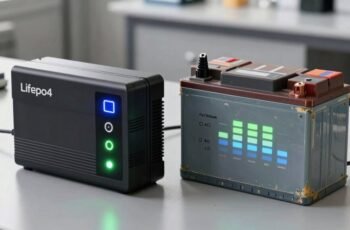
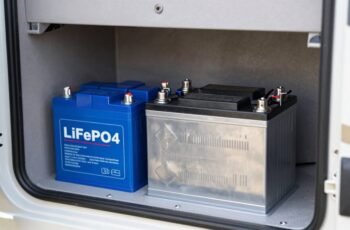
Did you know that LiFePO₄ batteries can last up to 10 years, nearly twice as long as standard Li-ion batteries? This durability makes them a compelling choice for many applications. But how do these two types really compare in safety, performance, and environmental impact? Understanding their differences can influence your decision, whether you’re considering batteries for a small device or a large-scale energy system. Let’s explore what sets them apart.
Key Takeaways
- Li-ion batteries have higher energy density, offering longer range and more compact sizes for portable devices, while Lifepo4 prioritizes safety and longevity.
- Lifepo4 batteries are thermally stable with lower fire risk, making them safer for large-scale storage and electric vehicles.
- Li-ion batteries typically support faster charging and higher peak power, suited for quick-demand applications.
- Lifepo4 has a longer cycle life (2000-5000 cycles) and lower maintenance costs, reducing long-term replacement expenses.
- Lifepo4 is more environmentally friendly and easier to recycle due to its stable chemistry and absence of cobalt.
What Are LiFePO4 and Li-Ion Batteries? An Overview
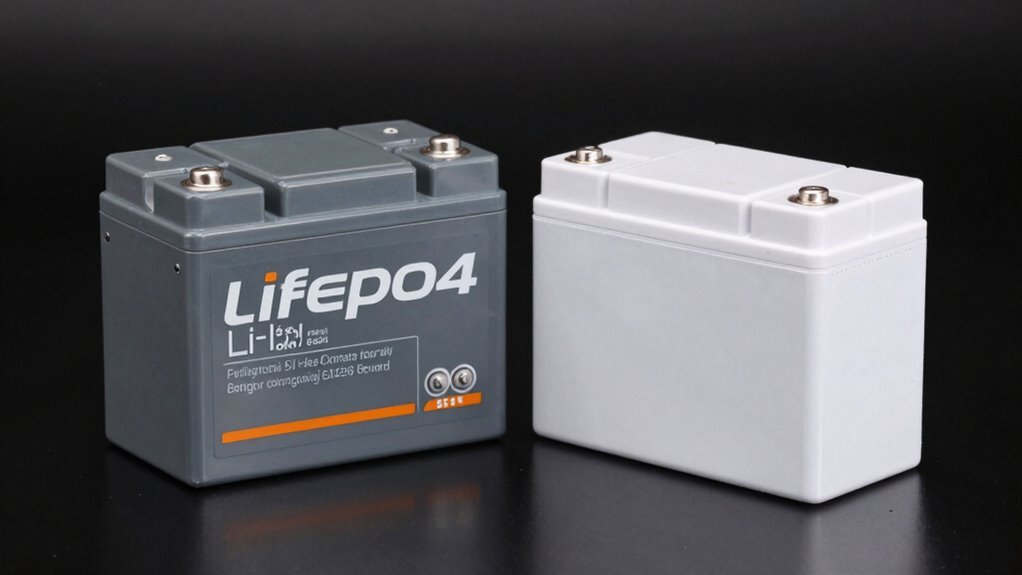
LiFePO4 and Li-Ion batteries are two common types of rechargeable batteries used in various applications. LiFePO4 batteries, also known as lithium iron phosphate batteries, are known for their stability, safety, and long cycle life. They deliver consistent performance and are often used in electric vehicles, solar energy storage, and portable power tools. Li-Ion batteries, or lithium-ion batteries, are widely used in smartphones, laptops, and electric vehicles due to their high energy density and lightweight design. They provide a high voltage output and recharge quickly. Both types rely on lithium chemistry but differ markedly in composition and performance characteristics. Understanding these basic differences helps us choose the right battery for specific needs and applications.
How Do LiFePO4 and Li-Ion Batteries Differ in Composition and Design
We notice that LiFePO4 and Li-ion batteries differ mainly in their cathode materials, with LiFePO4 using lithium iron phosphate and Li-ion utilizing various changing metal oxides. Their electrode structures also vary, affecting how they store and transfer energy. Additionally, the electrolytes in each type have distinct compositions that influence performance and safety.
Cathode Material Differences
While both batteries rely on lithium-based chemistries, their cathode materials differ markedly in composition and design, shaping their performance and safety profiles. Lithium Iron Phosphate (LiFePO₄) uses a cathode made of iron and phosphate, which provides a stable crystal structure. This stability translates into enhanced safety and thermal resistance, reducing the risk of overheating or combustion. In contrast, traditional lithium-ion batteries typically feature cathodes composed of layered transition metal oxides, such as cobalt, nickel, or manganese oxides, which allow for higher energy density but can be less stable. The different cathode chemistries influence not only safety and longevity but also power delivery and charge cycles. These fundamental material differences play a pivotal role in how each battery type performs under various conditions.
Electrode Structure Variations
The internal architecture of LiFePO₄ and traditional lithium-ion batteries varies considerably, shaping their overall performance and safety. In LiFePO₄ batteries, the electrodes typically feature a layered structure with phosphate-based cathodes and graphite anodes. This design results in a more stable and robust electrode, reducing the risk of dendrite formation and thermal runaway. Conversely, standard Li-ion batteries often use layered metal oxide cathodes like lithium cobalt oxide and graphite anodes, which are more prone to structural degradation over cycles. The electrode structures in LiFePO₄ batteries are generally less dense but more resilient, contributing to their longer lifespan and enhanced safety. These structural differences influence how each battery type handles charge cycles, heat, and mechanical stress.
Electrolyte Composition Distinctions
Electrolyte composition plays a crucial role in defining the performance and safety of lithium-ion batteries, and notable differences exist between LiFePO₄ and other lithium-ion chemistries. In LiFePO₄ batteries, the electrolyte typically contains lithium salts like LiPF₆ dissolved in organic solvents such as ethylene carbonate and dimethyl carbonate. These electrolytes are designed to work with the stable, thermally safe phosphate cathode. Conventional Li-ion batteries often use similar electrolytes but are paired with different cathode chemistries like cobalt or nickel-manganese. The electrolyte in LiFePO₄ batteries tends to be more resistant to thermal decomposition, reducing the risk of failure or fire. Overall, electrolyte formulations are tailored to optimize stability, safety, and performance based on the specific electrode chemistry.
Which Battery Is Safer and More Thermally Stable?
When comparing safety and thermal stability, we find that LiFePO4 batteries generally perform better under stress. They have built-in safety mechanisms that prevent overheating and thermal runaway, making them less prone to fires. Overall, their design offers a safer and more stable option for many applications.
Thermal Stability Differences
While both Lifepo4 and Li-ion batteries are popular energy storage options, their thermal stability differs markedly, impacting safety and reliability. Lifepo4 batteries are known for their superior thermal stability, meaning they’re less likely to overheat or catch fire under stress. They can handle higher temperatures without degrading or becoming dangerous. In contrast, Li-ion batteries are more sensitive to heat; elevated temperatures can cause thermal runaway, leading to fires or explosions. This difference stems from their chemical compositions—Lifepo4’s stable chemistry makes it more resilient in extreme conditions. As a result, Lifepo4 batteries are generally safer for applications where temperature fluctuations are common, while Li-ion batteries require careful thermal management to prevent safety hazards.
Safety Mechanisms Present
Both Lifepo4 and Li-ion batteries incorporate different safety mechanisms to prevent accidents, but Lifepo4 batteries generally come equipped with more inherent safety features. Lifepo4 cells are chemically more stable, reducing the risk of thermal runaway and fires. They have a robust lattice structure that resists overcharging and overheating better than traditional Li-ion cells. Additionally, Lifepo4 batteries often include built-in safety features like thermal fuses and pressure relief valves that activate during abnormal conditions. In contrast, Li-ion batteries rely heavily on electronic management systems to prevent overvoltage, overcurrent, and temperature extremes. While effective, these systems depend on external controls, making Li-ion batteries slightly more vulnerable if safeguards fail. Overall, Lifepo4 batteries tend to be safer due to their intrinsic chemical stability and design.
How Long Do LiFePO4 and Li-Ion Batteries Last?
LiFePO4 batteries generally last longer than Li-Ion batteries due to their more stable chemistry and deeper cycle life. Typically, LiFePO4 cells can endure around 2,000 to 5,000 charge cycles, translating to about 8-10 years of regular use. In comparison, Li-Ion batteries usually last between 500 and 1,500 cycles, or roughly 2-3 years. The longer lifespan of LiFePO4 stems from its chemical stability, which reduces degradation over time. Additionally, LiFePO4 batteries maintain performance better under repeated charging and discharging. While initial costs are higher, their durability means fewer replacements over time. Ultimately, if longevity is a priority, LiFePO4 batteries tend to outperform Li-Ion options, offering better value and reliability in the long run.
How Do Charging Speed and Power Output Compare?
Have you ever wondered how quickly these batteries can recharge and how much power they can deliver? Lifepo4 batteries generally have a slower charging rate compared to Li-ion batteries, but they can still be recharged in a few hours with the right charger. Li-ion batteries typically charge faster, making them suitable for quick turnaround applications. When it comes to power output, Li-ion batteries usually provide higher instantaneous power, which is ideal for high-demand devices. Lifepo4 batteries, on the other hand, offer a steadier, more reliable power delivery over time, though their peak power might be lower. Overall, Li-ion batteries excel in rapid charging and high power bursts, while Lifepo4 batteries prioritize safety, longevity, and consistent performance.
What Are the Cost Differences Between LiFePO4 and Li-Ion Batteries?
While LiFePO4 batteries tend to have a higher upfront cost, they often prove more economical over their lifespan due to their longer cycle life and increased safety features. Initially, LiFePO4 batteries are more expensive than Li-ion batteries because of their materials and manufacturing processes. However, they last considerably longer—often 2 to 3 times more charge cycles—reducing replacement costs over time. Additionally, LiFePO4 batteries generate less heat and are more stable, lowering maintenance and safety-related expenses. Li-ion batteries may seem cheaper upfront, but their shorter lifespan and higher risk of thermal issues can lead to higher total costs in the long run. For those seeking durability and safety, LiFePO4 batteries tend to be more cost-effective over time.
Which Battery Is Better for Electric Vehicles and Large-Scale Storage?
When choosing batteries for electric vehicles and large-scale storage, we need to take into account energy density, cost, longevity, safety, and environmental impact. Both LiFePO4 and Li-Ion batteries have distinct advantages and trade-offs in these areas. Let’s explore which option aligns best with your needs.
Energy Density Comparison
Determining which battery type is better for electric vehicles and large-scale storage often hinges on their energy density, which measures how much energy a battery can store relative to its weight or volume. Li-ion batteries generally have higher energy densities, making them ideal for long-range EVs and compact storage solutions. In contrast, Lifepo4 batteries tend to offer lower energy density but excel in safety and lifespan. Consider these points:
- Li-ion batteries pack more energy into less space, enabling longer driving ranges.
- Lifepo4 batteries provide more stability, reducing risks of overheating or fires.
- Higher energy density means better performance in smaller, lighter packages.
- Lower density in Lifepo4 batteries favors applications prioritizing safety and durability.
Choosing the right battery depends on your priorities—power, safety, or longevity.
Cost and Longevity
Cost and longevity play significant roles in choosing the right battery for electric vehicles and large-scale storage. Lifepo4 batteries generally have a higher upfront cost but tend to last longer, often exceeding 2000 charge cycles, which makes them more cost-effective over time. Li-ion batteries usually cost less initially but may require replacement sooner, around 500 to 1000 cycles, leading to higher long-term expenses. When considering longevity, Lifepo4’s stable chemistry resists capacity fade, making it more durable in demanding applications. For large-scale storage, the extended lifespan and lower maintenance of Lifepo4 batteries offer economic advantages. Ultimately, while initial costs are important, longevity and total lifecycle costs often tip the balance toward Lifepo4 batteries for both electric vehicles and large-scale energy systems.
Safety and Environmental Impact
Safety and environmental impact are vital factors when choosing between Lifepo4 and Li-ion batteries for electric vehicles and large-scale storage. Lifepo4 batteries are inherently safer because they’re less prone to thermal runaway and fires, offering peace of mind. They also contain no cobalt, reducing environmental and ethical concerns associated with mining. Conversely, Li-ion batteries are more vulnerable to overheating, which can cause dangerous failures.
Consider this:
- Lifepo4’s stable chemistry minimizes fire risks, protecting lives.
- Both batteries contain hazardous materials, but Lifepo4’s eco-friendlier composition lowers environmental harm.
- Recycling Lifepo4 batteries is simpler and less toxic.
- The safer design of Lifepo4 batteries benefits large-scale storage, reducing ecological and safety hazards.
Ultimately, Lifepo4 leads in safety and eco-friendliness.
What Are the Maintenance and Recycling Challenges?
While LiFePO4 and Li-ion batteries both offer advantages, they also present distinct maintenance and recycling challenges that can’t be overlooked. LiFePO4 batteries generally require less maintenance, as they’re more stable and less prone to capacity loss over time. However, they still need proper management to prevent overcharging or deep discharging, which can reduce lifespan. Recycling LiFePO4 batteries is relatively straightforward, but infrastructure isn’t yet widespread, making disposal less convenient. Li-ion batteries, on the other hand, demand more careful maintenance to avoid capacity fade and safety risks like thermal runaway. Recycling Li-ion batteries is complex due to the variety of chemical compositions, and they often contain hazardous materials that require specialized handling. Both types pose environmental concerns, emphasizing the need for improved recycling technologies and responsible usage practices.
Which Battery Is Best for Portable Devices and Small Electronics?
When choosing a battery for portable devices and small electronics, it’s crucial to take into account their energy density, size, and weight. These factors directly impact device performance and user experience. Lithium-ion batteries often excel here, offering:
- Higher energy density that keeps devices running longer without increasing size
- Lighter weight, making gadgets easier to carry and use on the go
- Compact design, fitting seamlessly into slim smartphones, tablets, and wearables
- Reliable power output, ensuring smooth operation during daily use
While Lifepo4 batteries are safer and longer-lasting, their lower energy density makes them less ideal for compact, portable electronics. For everyday convenience, Li-ion batteries generally take the lead.
How to Choose the Right Battery: Factors to Consider
Choosing the right battery requires careful consideration of several key factors that directly influence performance, safety, and longevity. First, think about your power needs—how much energy do you require and how long should the battery last? Next, consider the size and weight, especially if portability is important. Safety features are also essential; some batteries have built-in protections against overcharging or overheating. Compatibility is another factor—make sure the battery fits your device and meets its specifications. Additionally, think about lifespan and how many charge cycles the battery can handle before performance declines. Finally, evaluate the cost and availability of replacements. By weighing these factors, you can select a battery that best suits your specific usage and guarantees reliable, safe operation.
Frequently Asked Questions
How Do Temperature Conditions Affect the Performance of Each Battery Type?
Temperature impacts both batteries substantially; high temperatures can cause Li-ion batteries to overheat and degrade faster, while Lifepo4 batteries perform better in extreme conditions, maintaining stability and safety across a wider temperature range.
Are There Environmental Impacts Associated With Manufacturing Lifepo4 and Li-Ion Batteries?
While both batteries impact the environment, Li-ion production often involves more toxic chemicals and mining concerns, whereas Lifepo4 manufacturing generally has a lower ecological footprint, making it a slightly greener choice for sustainable energy solutions.
Can Lifepo4 or Li-Ion Batteries Be Safely Used in Extreme Weather?
We can safely use Lifepo4 and Li-ion batteries in extreme weather, but we need to take precautions. Lifepo4 batteries handle cold better, while Li-ion batteries perform well in moderate conditions; always follow manufacturer guidelines for safety.
What Are the Warranty Differences Between Lifepo4 and Li-Ion Batteries?
We find that Lifepo4 batteries typically come with longer warranties, often around 8-10 years, whereas Li-ion batteries usually offer 2-5 years. This difference reflects Lifepo4’s durability and safety, giving us added peace of mind.
How Do Recycling Processes Differ for Lifepo4 and Li-Ion Batteries?
We find that about 95% of Li-ion batteries can be recycled, whereas Lifepo4 batteries often have simpler processes due to fewer hazardous materials. We prefer Lifepo4 recycling for its safety and environmental benefits.
Conclusion
In sum, choosing between LiFePO₄ and Li-ion batteries is like selecting a trusty steed from history’s past—each has its strengths. If safety and longevity matter most, LiFePO₄’s your champion, much like a knight of old. For speed and compactness, Li-ion’s swift and sleek. We believe understanding your needs helps you make the right choice—ensuring your modern adventure remains safe, reliable, and forward-looking, even in a world that sometimes feels as unpredictable as a thunderstorm.