When it comes to choosing batteries for solar energy storage, the debate between LiFePO4 and lithium-ion options is ongoing. Both offer advantages, but understanding their differences is key to making an informed decision. We’re here to explore how these technologies compare in safety, longevity, cost, and environmental impact. With so many factors at play, knowing which one best suits your needs could markedly affect your system’s efficiency and sustainability—so let’s get started.
Key Takeaways
- LiFePO4 batteries offer longer cycle life and greater thermal stability, making them more durable for solar energy storage.
- Lithium-ion batteries have higher energy density and faster charging but are less stable and have shorter lifespans.
- LiFePO4 is safer with lower fire risk and fewer toxic materials, ideal for residential solar systems.
- Despite higher initial costs, LiFePO4’s longevity reduces replacement and maintenance expenses over time.
- Both options require responsible disposal and recycling practices to minimize environmental impact.
What Are LiFePO4 and Lithium-Ion Batteries? An Overview
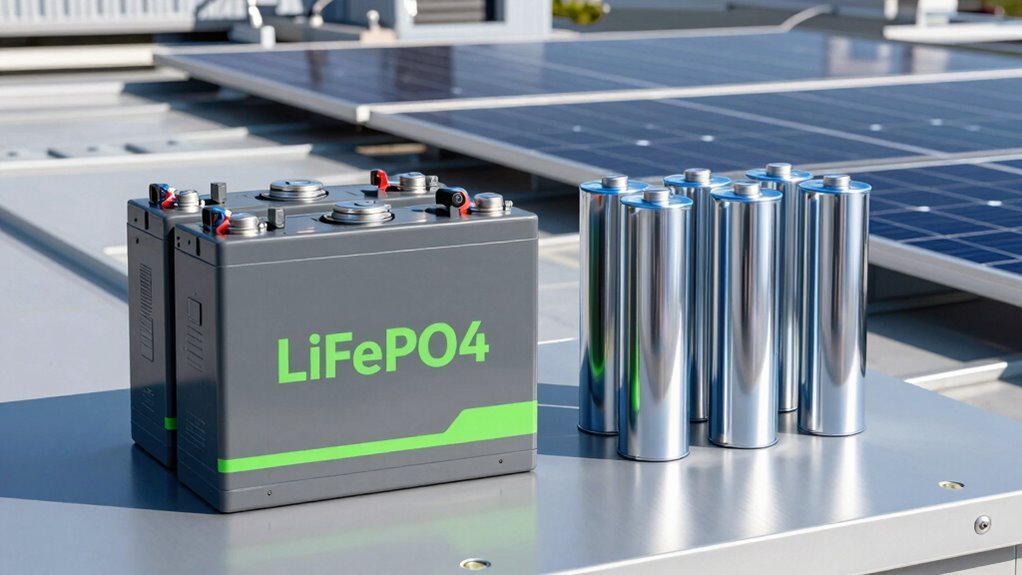
LiFePO4 (Lithium Iron Phosphate) and lithium-ion batteries are two common types of rechargeable batteries used in various applications, including solar energy systems. LiFePO4 batteries are known for their stability, safety, and long cycle life, making them popular for home energy storage. They use a phosphate-based cathode, which helps prevent overheating and thermal runaway. Lithium-ion batteries, on the other hand, are widely used in portable electronics and electric vehicles due to their high energy density and lightweight design. They typically use different cathode chemistries like nickel manganese cobalt. Both types convert electrical energy into chemical energy during charging and revert during discharging, but their chemistry and performance characteristics vary markedly, influencing their suitability for specific solar energy applications.
How Do Lithium Battery Chemistries Differ?
While all lithium-based batteries rely on similar principles, their chemistries differ considerably, impacting performance, safety, and lifespan. Lithium-ion batteries typically use cobalt, nickel, or manganese oxides as cathodes, offering high energy density and fast charging. However, these chemistries can be more unstable and prone to overheating. In contrast, lithium iron phosphate (LiFePO4) batteries have a different chemistry that provides greater thermal stability and safety, but with slightly lower energy density. The chemical composition also influences cycle life; LiFePO4 batteries generally last longer because their chemistry is less prone to degradation. These differences mean that while lithium-ion batteries might deliver more power upfront, LiFePO4 batteries excel in safety and longevity, making them a popular choice for solar energy storage.
Are LiFePO4 Batteries Safer for Solar Systems?
Because safety is a primary concern in solar energy systems, many consider LiFePO4 batteries a better choice due to their inherent stability. These batteries are less prone to thermal runaway, reducing the risk of fires and explosions. Their chemical structure makes them more resistant to overheating and damage from overcharging, providing peace of mind. Additionally, LiFePO4 batteries have a lower likelihood of emitting toxic gases if damaged or improperly handled.
Here are three reasons why they’re safer:
- Thermal stability minimizes fire risk.
- Chemical robustness prevents toxic leaks.
- Overcharge resistance reduces the chance of failure.
How Do These Batteries Stack Up in Performance?
When comparing their performance, it’s clear that both LiFePO4 and traditional lithium-ion batteries excel in different areas. LiFePO4 batteries offer longer cycle life, often surpassing 2,000 cycles, which means they last much longer with consistent performance. They also handle deep discharges better without damaging the battery, making them more reliable for sustained energy use. Lithium-ion batteries, on the other hand, generally provide higher energy density, giving more power in a smaller size—ideal for compact setups. They also charge faster and deliver higher initial power output. However, lithium-ion batteries tend to degrade faster over time and have shorter cycle lives. Overall, LiFePO4 batteries excel in longevity and safety, while lithium-ion batteries shine in energy density and quick charging capabilities.
What Is the Cost Difference Between LiFePO4 and Lithium-Ion?
The upfront cost of LiFePO4 batteries is generally higher than traditional lithium-ion options, but long-term savings can offset this. We also need to evaluate maintenance and replacement expenses over the battery’s lifespan. Let’s explore how these factors compare to help you make an informed decision.
Initial Purchase Price
Initial purchase prices for LiFePO4 batteries tend to be higher than those for traditional lithium-ion options, though the gap varies depending on capacity and brand. Generally, LiFePO4 batteries cost about 20-40% more upfront, but this can be offset by their longer lifespan and safety features.
Here are some key points to weigh:
- Cost per kWh: Lithium-ion batteries often have a lower initial price per kilowatt-hour.
- Brand and Capacity: Premium brands or larger capacities usually increase the cost gap.
- Market Trends: As LiFePO4 technology becomes more common, prices are gradually decreasing.
While the initial investment is higher, understanding these factors helps in making an informed decision.
Long-Term Cost Savings
Although LiFePO4 batteries may cost more upfront, they often save money over time thanks to their longer lifespan and enhanced safety. These batteries typically last 2,000 to 3,000 cycles, compared to 500 to 1,000 cycles for lithium-ion batteries. This means fewer replacements and lower overall expenses. Additionally, LiFePO4 batteries are more stable and less prone to thermal runaway, reducing safety risks and potential costs associated with damage or accidents. Over the long term, the durability and safety features of LiFePO4 batteries translate into significant savings, making them a more economical choice for solar energy systems. While the initial investment is higher, the reduced replacement frequency and improved safety create compelling financial benefits over time.
Replacement and Maintenance
While LiFePO4 batteries typically have a higher upfront cost, they often result in lower maintenance and replacement expenses over their lifespan. They’re more durable, with longer cycle lives, meaning fewer replacements. This reduces long-term costs and hassle.
Here are three key points to evaluate:
- Lifespan: LiFePO4 batteries usually last 10-15 years, compared to 5-8 years for lithium-ion, saving money on replacements.
- Maintenance: LiFePO4 batteries require less upkeep, with no special cooling or balancing needed, lowering service costs.
- Replacement Costs: Although initial costs are higher, fewer replacements mean cost savings over time.
Which Battery Lasts Longer and Why?
When comparing Lifepo4 and lithium-ion batteries, it’s clear that Lifepo4 batteries generally last longer over their lifespan. This is mainly due to their deeper cycle life—often around 2,000 to 3,000 cycles—compared to roughly 500 to 1,000 cycles for standard lithium-ion batteries. Lifepo4’s chemistry is more stable, which reduces degradation over time. Additionally, Lifepo4 batteries are less susceptible to capacity loss from frequent charging and discharging, meaning they maintain their performance longer. Their robust thermal stability also prevents rapid aging caused by temperature fluctuations. Overall, Lifepo4 batteries provide a longer-lasting solution for solar systems, giving us more years of reliable energy storage and reducing the need for frequent replacements.
Maintenance Tips for Solar Battery Reliability
Regular maintenance is essential to guarantee your solar batteries perform reliably over time. Proper upkeep extends battery life and ensures peak performance. Here are three key tips:
- Keep terminals clean: Regularly inspect and clean battery terminals to prevent corrosion, which can hinder connections and reduce efficiency.
- Maintain proper charge levels: Avoid deep discharges and overcharging. Use a suitable charger and monitor voltage levels to keep batteries within recommended ranges.
- Check for physical damage: Routinely inspect batteries for cracks, leaks, or swelling. Address any damage immediately to prevent safety hazards and performance issues.
Following these simple steps helps maximize your battery’s lifespan and guarantees your solar energy system remains dependable for years to come.
Environmental Impact and Recycling of Lithium Batteries
As we focus on maintaining the performance of solar batteries, it’s equally important to take into account their environmental footprint. Lithium batteries, especially lithium-ion, pose challenges due to the extraction of raw materials like lithium, cobalt, and nickel, which can harm ecosystems and local communities. Recycling options exist, but they’re often limited and can be inefficient or costly. Improper disposal of used batteries risks releasing toxic substances into soil and water sources. Lifepo4 batteries generally have a lower environmental impact because they contain fewer hazardous materials and are more stable. Improving recycling technologies and developing sustainable extraction practices are essential steps. Ultimately, responsible manufacturing, usage, and disposal practices help minimize environmental harm and promote a greener future for solar energy storage.
Choosing the Right Solar Battery for Your Needs
Choosing the right solar battery depends on several key factors that align with your energy needs and goals. First, consider your daily energy consumption—larger households or off-grid setups require higher capacity batteries. Second, think about your budget; Lifepo4 batteries tend to be more expensive upfront but last longer, while lithium-ion options may be cheaper initially. Finally, evaluate your desired lifespan and maintenance: Lifepo4 batteries generally offer longer cycles with less upkeep, making them ideal for long-term use.
Here are three key points to guide your choice:
- Capacity needs based on your energy usage
- Budget constraints and long-term savings
- Battery lifespan and maintenance requirements
Frequently Asked Questions
Can Lifepo4 Batteries Handle Extreme Weather Conditions?
Yes, Lifepo4 batteries handle extreme weather well, thanks to their thermal stability and robust chemical composition. We trust they perform reliably in cold or hot conditions, making them a dependable choice for diverse solar energy setups.
How Quickly Can Lifepo4 Batteries Be Recharged?
Lifepo4 batteries can typically be recharged in about 2 to 4 hours, depending on the charger and battery capacity. We find this quick recharge time ideal for maintaining continuous power, especially during extended solar usage.
Are There Size or Weight Differences Influencing Installation?
Size and weight considerably influence installation, and we find Lifepo4 batteries tend to be bulkier but lighter, making them easier to handle and fit into tighter spaces. Lithium-ion batteries are often smaller but heavier, affecting placement options.
What Are the Warranty Differences Between the Two Battery Types?
We find that Lifepo4 batteries typically come with longer warranties, often around 5 to 10 years, compared to lithium-ion batteries, which usually range from 3 to 5 years, offering us greater peace of mind and reliability.
How Do Temperature Variations Affect Battery Performance?
Temperature variations considerably influence battery performance; high heat can diminish lifespan and cause overheating, while cold temperatures lower efficiency and capacity. We recommend maintaining batteries within ideal temperature ranges to guarantee longevity and dependable energy output.
Conclusion
In choosing between LiFePO4 and lithium-ion batteries, safety and longevity often outweigh initial costs. While lithium-ion batteries may seem cheaper upfront, their shorter lifespan and higher risk make them less ideal long-term. LiFePO4 batteries, though pricier initially, offer durability and stability that lithium-ion can’t match. In the end, investing in safer, longer-lasting batteries means fewer replacements and a more reliable, sustainable solar energy system—proof that quality truly pays off.