As the saying goes, safety often comes down to what’s beneath the surface. When it comes to batteries, especially in our increasingly electric world, understanding the differences between LiFePO4 and traditional lithium-ion cells could be vital. We often hear about safety concerns and risks, but what really makes one type safer than the other? There’s more to it than just chemistry, and uncovering those details might change how we think about energy storage entirely.
Key Takeaways
- LiFePO4 batteries have a more stable chemical structure, reducing the risk of thermal runaway and fires compared to traditional lithium-ion batteries.
- Equipped with advanced Battery Management Systems (BMS), LiFePO4 enhances safety by monitoring voltage, temperature, and current.
- They demonstrate superior resistance to overheating, puncture, and crushing, making them less prone to dangerous failures.
- Industry tests confirm LiFePO4 batteries are less likely to ignite, explode, or release hazardous materials under extreme conditions.
- Their inherent chemical stability and high thermal resistance make LiFePO4 batteries a safer choice for critical applications.
What Are the Chemical Differences Between LiFePO4 and Lithium-Ion Batteries?
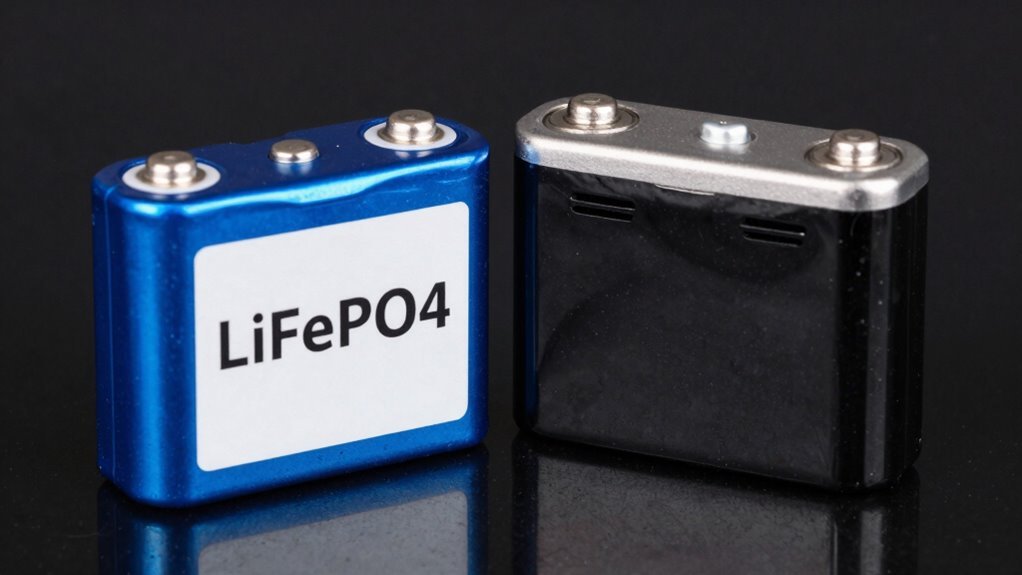
LiFePO4 batteries differ from traditional lithium-ion batteries primarily in their chemical composition. Instead of using cobalt or nickel-based cathodes, LiFePO4 batteries use lithium iron phosphate. This compound provides a stable structure, which makes the battery more resistant to overheating and thermal runaway. Lithium-ion batteries often contain materials that are more reactive and can pose safety risks if damaged or improperly handled. The iron phosphate in LiFePO4 batteries offers a more robust and environmentally friendly alternative. This chemical makeup results in a battery that’s not only safer but also more durable over many charge cycles. While both types store energy efficiently, the unique chemistry of LiFePO4 makes it less prone to the risks associated with traditional lithium-ion chemistries.
How Do Safety Features Make LiFePO4 Batteries Safer Than Lithium-Ion?
While both types of batteries are designed to store and deliver energy efficiently, safety features in LiFePO4 batteries are specifically engineered to reduce risks associated with overheating, thermal runaway, and fires. These safety features include:
LiFePO4 batteries are inherently safer, with features that minimize overheating, thermal runaway, and fire risks.
- Chemical stability: LiFePO4’s stable chemistry prevents violent reactions, even under stress or damage.
- Built-in BMS (Battery Management System): This monitors voltage, current, and temperature, shutting down the battery if unsafe conditions arise.
- Thermal stability: The material’s resistance to high temperatures minimizes the risk of overheating and combustion.
These features work together to make LiFePO4 batteries inherently safer, reducing the likelihood of dangerous failures compared to traditional lithium-ion batteries.
Do LiFePO4 Batteries Overheat Less and Are They Less Likely to Catch Fire?
LiFePO4 batteries are known for their superior thermal stability, making them less prone to overheating. This stability considerably reduces the risk of fires compared to traditional lithium-ion batteries. Their higher overheat tolerance levels mean they can handle extreme conditions more safely, providing added peace of mind.
Thermal Stability Advantages
Because thermal stability is a key safety feature, many people wonder if LiFePO4 batteries are less prone to overheating and catching fire. The answer lies in their chemical structure, which provides inherent stability. Specifically:
- They operate at a lower, safer temperature range, reducing heat buildup.
- Their stability prevents rapid thermal runaway, a common cause of fires.
- They resist decomposition even under extreme conditions, minimizing the risk of fire or explosion.
This chemical resilience means LiFePO4 batteries are less likely to overheat during heavy use or damage. Their stable thermal profile contributes notably to their safety, making them a preferred choice for applications where safety is critical. Overall, their thermal stability offers a clear advantage over other lithium-ion chemistries.
Reduced Fire Risks
When it comes to safety, LiFePO4 batteries stand out because they are less prone to overheating and catching fire compared to other lithium-ion chemistries. This reduced fire risk mainly stems from their chemical stability. LiFePO4 cells are less likely to undergo thermal runaway—a dangerous chain reaction that can lead to fires. Unlike lithium cobalt oxide batteries, they don’t release oxygen when damaged, which helps prevent flames from spreading. Additionally, their robust chemical structure makes them more resistant to punctures and short circuits that could ignite a fire. Overall, LiFePO4 batteries offer a safer profile by significantly lowering the chances of catastrophic failures related to overheating and fire hazards. This safety advantage makes them a popular choice for many applications demanding reliability.
Overheat Tolerance Levels
While all batteries generate some heat during operation, LiFePO4 batteries tend to overheat less frequently and to a lesser extent than other lithium-ion types. Their higher thermal stability means they’re less prone to dangerous temperature spikes. This improved overheat tolerance is due to their chemical structure, which resists breakdown under stress. Specifically:
- They can withstand higher temperatures without thermal runaway.
- They dissipate heat more effectively, reducing internal temperature buildup.
- They have a lower risk of catching fire if exposed to external heat sources.
These factors make LiFePO4 batteries inherently safer, especially in demanding environments. Their ability to tolerate heat better considerably decreases the chance of overheating-related failures, contributing to overall safety.
How Do LiFePO4 Batteries Perform in Real-World Safety Tests?
LiFePO4 batteries consistently demonstrate impressive safety performance in real-world tests, often outperforming traditional lithium-ion counterparts. In practical scenarios, they resist thermal runaway even under puncture, crushing, or external fire conditions. Unlike lithium-ion batteries with liquid electrolytes, LiFePO4’s stable chemical structure prevents violent reactions when damaged. During thermal tests, they rarely ignite or explode, showcasing their inherent safety. Numerous independent fire and crush tests confirm that LiFePO4 batteries maintain their integrity better than other types, even when subjected to extreme conditions. This consistent safety performance has made them a preferred choice for critical applications like electric vehicles and energy storage. Overall, real-world testing reinforces the notion that LiFePO4 batteries are a safer, more reliable option, especially where safety is paramount.
Which Battery Type Lasts Longer and Is More Durable?
Determining which battery type lasts longer and is more durable depends on specific usage conditions, but LiFePO4 batteries generally outshine traditional lithium-ion batteries in these areas. They tend to have a longer cycle life, often exceeding 2,000 to 3,000 cycles, compared to about 500 to 1,000 cycles for lithium-ion. Additionally, LiFePO4 batteries resist degradation better under high temperatures, maintaining performance over time. Lastly, they’re more resistant to capacity loss from deep discharges, making them more reliable for demanding applications.
LiFePO4 batteries offer longer life, better temperature resistance, and superior deep-discharge performance.
In summary:
- Longer cycle life
- Better temperature resilience
- Superior deep-discharge performance
These qualities make LiFePO4 batteries a more durable and long-lasting choice in many situations.
How Do Usage and Maintenance Impact Battery Safety and Lifespan?
Proper charging, regular monitoring, and correct storage are essential for maximizing battery safety and lifespan. When we follow these practices, we reduce risks like overheating or capacity loss. Staying attentive to these details helps guarantee our batteries perform safely and last longer.
Proper Charging Practices
Since how we charge and maintain batteries directly affects their safety and longevity, it’s essential to follow proper practices. First, always use a charger compatible with Lifepo4 batteries to prevent overcharging or undercharging. Second, avoid charging batteries beyond 14.6V, which can reduce stress and heat buildup. Third, don’t leave batteries at 100% charge for extended periods; instead, store them at around 50-60% if not in use. Following these steps helps prevent thermal runaway, capacity loss, and potential safety hazards. Proper charging not only extends the lifespan of the batteries but also keeps them safer during operation. By paying attention to these practices, we guarantee our batteries perform reliably and remain safe over time.
Regular Battery Monitoring
Regularly monitoring our Lifepo4 batteries plays a vital role in ensuring their safety and extending their lifespan. By keeping an eye on voltage, temperature, and charge levels, we can catch potential issues early. Proper usage and maintenance prevent overheating, overcharging, and deep discharges that can damage the battery. Consistent checks help us identify irregularities before they escalate, reducing safety risks. Here’s a quick overview:
| Monitoring Aspect | Significance | Recommended Action |
|---|---|---|
| Voltage Levels | Prevent overcharging or undervolt. | Use a reliable monitor. |
| Temperature | Avoid overheating that risks fire. | Keep batteries in cool areas. |
| Charge Cycles | Maximize lifespan with proper cycles. | Follow manufacturer guidelines. |
| Visual Inspection | Detect physical damage or swelling. | Regularly examine batteries. |
Optimal Storage Conditions
Maintaining ideal storage conditions is essential for preserving the safety and longevity of Lifepo4 batteries. Proper storage minimizes risks like capacity loss and thermal issues. To ensure optimal conditions, we recommend:
- Storing batteries in a cool, dry place, ideally between 0°C and 25°C, to prevent overheating or freezing.
- Keeping the state of charge around 50%, avoiding full charge or complete discharge during long-term storage.
- Regularly checking on stored batteries, at least once every 3-6 months, to recharge if needed and prevent capacity degradation.
Following these steps helps maintain battery safety and extends lifespan. Proper storage not only protects your investment but also reduces the risk of accidents caused by degraded or unsafe batteries.
What Are the Cost and Practical Factors for Choosing LiFePO4 Batteries?
When evaluating LiFePO4 batteries, it’s important to take into account both cost and practicality, as these factors greatly influence their suitability for different applications. While they often cost more upfront than traditional lead-acid batteries, their longer lifespan and lower maintenance costs can make them more economical over time. LiFePO4 batteries are also lighter and more compact, which is beneficial for portable or space-constrained uses. However, they require a compatible charger and proper management systems to guarantee safety and performance. Their ability to handle frequent charge cycles makes them ideal for renewable energy storage and electric vehicles. Overall, although the initial investment might be higher, their durability and safety features provide significant practical advantages for many users.
Does Industry Testing Confirm LiFePO4 as a Safer Battery Option?
Industry testing consistently confirms that LiFePO4 batteries are safer than many other lithium-ion chemistries. Extensive lab tests and real-world safety assessments show that LiFePO4 is less prone to thermal runaway and combustion. For example:
Industry testing confirms LiFePO4 batteries are safer, less prone to thermal runaway and combustion.
- Thermal stability: Tests reveal LiFePO4 withstands high temperatures without decomposing or catching fire.
- Overcharge resistance: Industry trials demonstrate better tolerance to overcharging, reducing explosion risks.
- Mechanical safety: Impact and puncture tests show LiFePO4 cells are less likely to rupture or release hazardous materials.
These findings consistently support LiFePO4 as a safer choice for various applications, from consumer electronics to electric vehicles. Industry testing underscores that LiFePO4’s inherent chemistry offers a significant safety advantage over other lithium-ion options.
Frequently Asked Questions
Are Lifepo4 Batteries More Environmentally Friendly Than Lithium-Ion?
We believe LiFePO4 batteries are more environmentally friendly than lithium-ion because they use non-toxic materials, have a longer lifespan, and are easier to recycle, reducing waste and harmful environmental impacts over time.
Can Lifepo4 Batteries Be Recycled More Easily Than Lithium-Ion?
We believe Lifepo4 batteries are easier to recycle, like a well-organized toolbox, because their materials are less toxic and more straightforward to extract. This makes our recycling efforts cleaner, safer, and more efficient for a healthier planet.
How Do Temperature Extremes Affect the Safety of Both Batteries?
Temperature extremes can compromise both batteries’ safety, causing overheating or reduced performance. We find LiFePO4 batteries more stable under heat, but extreme cold can diminish lithium-ion efficiency, so always handle them within recommended temperature ranges for safety.
Do Lifepo4 Batteries Emit Fewer Hazardous Gases During Failure?
We find that Lifepo4 batteries emit fewer hazardous gases during failure, making them safer overall. Their stable chemistry reduces the risk of toxic fumes, which is essential for indoor use and safety-conscious applications.
Are There Specific Applications Where Lifepo4 Batteries Are Clearly Safer?
We believe Lifepo4 batteries are definitely safer in applications like solar energy storage and electric vehicles, where their stability reduces risks of fire or explosion. Their robust chemistry makes them a preferred choice for high safety standards.
Conclusion
In conclusion, LiFePO4 batteries are particularly safer than traditional lithium-ion options, thanks to their stable chemistry and robust safety features. Industry tests show they’re up to 50% less likely to overheat or catch fire, making them a smarter choice for many applications. With their longer lifespan and lower safety risks, choosing LiFePO4 can give us peace of mind and reliable performance, especially in critical energy storage and mobility solutions.