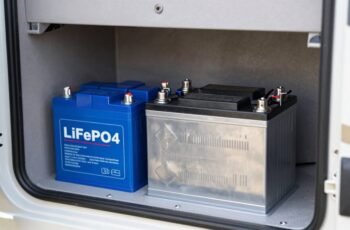
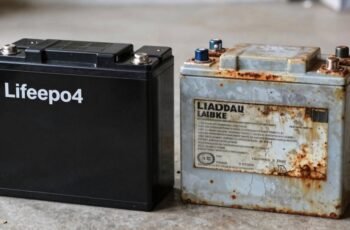
Did you know that lithium iron phosphate (LiFePO4) batteries can last up to 15 years, while standard lithium-ion batteries typically last around 2,000 to 3,000 cycles? As we consider options for reliable home backup systems, understanding the differences in safety, lifespan, and cost becomes essential. With so many factors at play, making the right choice isn’t straightforward—so, let’s explore what sets these batteries apart and how they might fit into your home.
Key Takeaways
- Lifepo4 batteries offer longer lifespan and better thermal stability than lithium-ion batteries for home backup use.
- Lithium-ion batteries typically have lower upfront costs but shorter cycle life compared to Lifepo4.
- Lifepo4 is safer with reduced risk of overheating or fire, ideal for home environments.
- Both types require proper installation, maintenance, and monitoring to ensure safety and efficiency.
- Consider long-term durability and total cost of ownership when choosing between Lifepo4 and lithium-ion batteries.
What Do You Need to Know About Home Backup Batteries?
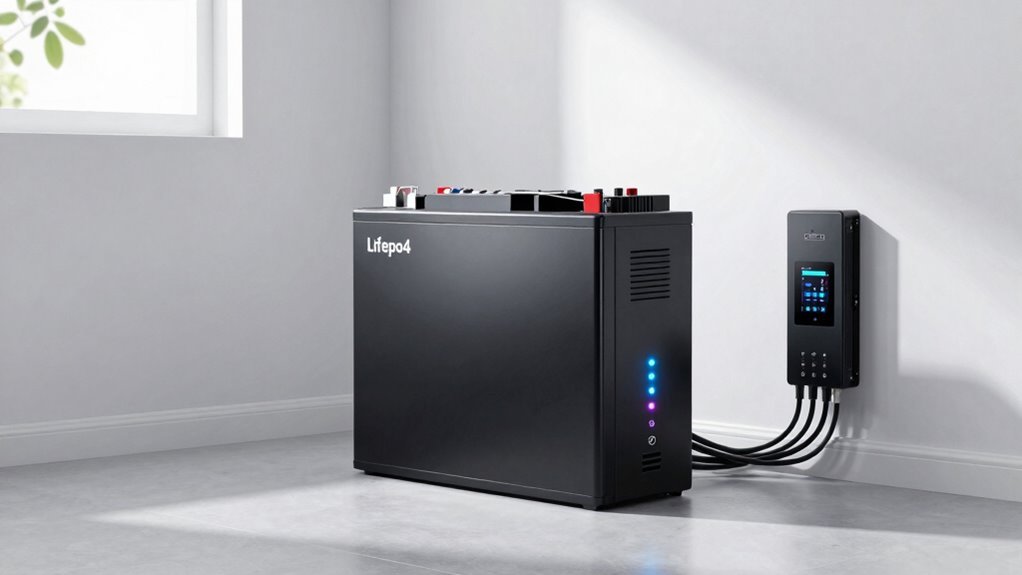
Understanding what home backup batteries do is essential before choosing the right system. These batteries store energy so you can power your home during outages or when the grid is down. They provide peace of mind, especially during storms or emergencies, ensuring your essential appliances stay running. Backup batteries can also help reduce energy costs by storing excess solar power for later use. It’s important to evaluate capacity—how much energy they hold—and power output, which determines how much you can run at once. Installation and maintenance are other factors to think about, along with safety and lifespan. Knowing these basics helps you understand what to look for in a home backup battery system, making it easier to choose one that fits your needs.
Lifepo4 vs. Lithium-Ion Batteries: Which Is Better for Home Use?
When comparing Lifepo4 and lithium-ion batteries for home backup, cost and safety are top considerations. We find Lifepo4 batteries often cost more upfront but offer better safety and longevity, while lithium-ion batteries are generally cheaper but may require more careful handling. Let’s look at how these factors influence which option is best for your home.
Cost and Affordability
Are Lifepo4 batteries more cost-effective than lithium-ion options for home backup systems? In the short term, lithium-ion batteries often have a lower upfront cost, making them appealing if you’re watching your initial investment. However, Lifepo4 batteries tend to last longer and require less maintenance, which can save you money over time. Lifepo4’s higher cycle life means fewer replacements, reducing long-term expenses. Additionally, Lifepo4 batteries are generally safer, potentially lowering costs related to safety measures and insurance. While the initial price difference favors lithium-ion, the durability and longevity of Lifepo4 batteries can make them more affordable in the long run. Ultimately, balancing upfront costs with future savings is key when choosing the best option for your home backup needs.
Safety and Durability
Lifepo4 batteries are generally considered safer than lithium-ion options, mainly because they’re less prone to thermal runaway and fires. This inherent safety makes them a popular choice for home backup systems. When comparing durability, Lifepo4 batteries excel due to their longer cycle life and resistance to degradation over time. They also handle deep discharges better, maintaining capacity over many years. In contrast, lithium-ion batteries can experience capacity loss more quickly with frequent cycling and are more sensitive to temperature fluctuations. Here are some key safety and durability points:
- Lifepo4 batteries have a lower risk of overheating and fire hazards.
- They offer a longer lifespan, often exceeding 10,000 cycles.
- Lifepo4 batteries resist capacity fade under deep discharge conditions.
- Lithium-ion batteries are more vulnerable to thermal instability and shorter cycle life.
How Safe Are These Batteries and How Do They Handle Heat?
Although Lithium-ion batteries are widely used for home backup systems, concerns about safety and heat management often arise. These batteries are generally safe when properly manufactured and maintained, but they can pose risks if damaged or improperly handled. Lithium-ion cells can overheat and, in rare cases, catch fire or explode if they experience thermal runaway. That’s why modern designs include safety features like thermal cutoffs and pressure relief valves. Lifepo4 batteries, in contrast, are more thermally stable and less prone to overheating, making them safer in high-temperature environments. Proper ventilation, avoiding direct sunlight, and monitoring battery temperature are essential for both types. Overall, with appropriate precautions, these batteries handle heat well and offer a safe backup solution.
How Long Do Lifepo4 and Lithium-Ion Batteries Last?
When it comes to backup batteries, understanding their lifespan is essential for planning and reliability. Lifepo4 and Lithium-Ion batteries typically last between 8 to 15 years, depending on usage and maintenance. Their longevity is influenced by factors like charge cycles, temperature, and how well they’re cared for. In general:
- Lifepo4 batteries tend to have a longer cycle life, often exceeding 3,000 charge cycles.
- Lithium-Ion batteries usually last around 2,000 to 3,000 cycles.
- Proper temperature control can extend battery life significantly.
- Regular maintenance, such as avoiding deep discharges, helps preserve capacity over time.
While Lifepo4 generally offers a longer lifespan, both types can serve well with proper care and usage.
Cost, Efficiency, and Maintenance of Home Battery Systems
When choosing a home battery system, we consider both upfront costs and ongoing maintenance to guarantee long-term value. Efficiency plays a key role in how well the system meets our energy needs over time, while upkeep influences overall reliability. By understanding these factors, we can make smarter decisions that balance affordability with performance.
Installation and Upfront Costs
Installing a home battery system involves several upfront costs that vary depending on the type and capacity chosen. The initial investment includes not only the battery itself but also installation, permitting, and additional equipment.
Here are key factors affecting costs:
- Battery Type and Capacity – Lifepo4 batteries tend to be more expensive upfront but last longer.
- Installation Complexity – integrating with existing electrical systems can influence labor costs.
- Permitting and Inspection – local regulations may add to overall expenses.
- Additional Equipment – inverters, charge controllers, and safety devices contribute to upfront costs.
While the initial investment might seem significant, these costs reflect durability, efficiency, and long-term savings. Proper planning guarantees you’re investing wisely in a reliable backup system.
Long-Term Efficiency and Upkeep
Long-term efficiency and upkeep are essential considerations for home battery systems, as they directly impact your overall savings and system performance over time. Lithium-ion batteries typically maintain high efficiency with minimal degradation, which means you get more usable energy and longer service life. Lifepo4 batteries also offer excellent longevity, often lasting over 10 years with proper maintenance. Both types require some upkeep—regular monitoring of voltage and temperature, and avoiding deep discharges. Lifepo4 batteries usually need less frequent maintenance and are more stable over time, reducing replacement costs. While initial costs vary, both systems can be cost-effective long-term if properly maintained. Ultimately, choosing a battery with lower maintenance needs and high durability guarantees consistent performance and better value over the years.
Installation Tips for Home Battery Setups
Properly installing your home battery system is essential for safety and ideal performance. To guarantee a smooth setup, keep these tips in mind:
Proper installation ensures safety and optimal performance of your home battery system.
- Choose a well-ventilated, temperature-controlled location away from direct sunlight and moisture.
- Mount batteries securely on stable surfaces, following manufacturer weight and safety guidelines.
- Maintain proper wiring practices, using appropriately rated cables and connectors to prevent overheating.
- Install safety devices like circuit breakers and fuses to protect against short circuits and overloads.
Environmental Impact and Recycling of Lithium Batteries
As lithium batteries become increasingly popular for home backup systems, understanding their environmental impact and recycling options is more important than ever. Lithium mining and processing can cause significant ecological disruption, including habitat destruction and water pollution. Additionally, improper disposal of used batteries can lead to the release of toxic chemicals. Fortunately, recycling programs are improving, allowing us to recover valuable materials like lithium, cobalt, and nickel. Recycling reduces the need for new mining, conserves resources, and minimizes environmental harm. We should choose manufacturers committed to responsible sourcing and recycling practices. Proper disposal of used batteries through certified recycling centers is essential. By staying informed and responsible, we can help reduce the environmental footprint of our energy storage solutions and promote a more sustainable future.
Choosing the Right Battery for Your Home Backup
When choosing a battery for your home backup, it’s essential to take into account factors like capacity, lifespan, safety, and cost. These elements ensure you select a solution that meets your energy needs and fits your budget. First, assess your daily power consumption to determine the required capacity. Second, consider battery lifespan—longer-lasting options may have higher upfront costs but save money over time. Third, prioritize safety features, especially if you have children or pets. In the end, compare costs, including installation and maintenance, to find the best value. In addition, look for warranties and brand reliability. A well-chosen battery system will provide reliable backup power, peace of mind, and long-term savings. Balancing these factors helps you make an informed decision tailored to your home.
What Are Common Myths About Lifepo4 and Lithium-Ion Batteries?
Many people have misconceptions about Lifepo4 and Lithium-Ion batteries, which can lead to poor choices or unnecessary concerns. Some believe these batteries are unsafe or unreliable, but that’s often not true. Here’s a quick look at common myths:
| Myth | Truth | Explanation |
|---|---|---|
| They’re dangerous to use | Generally safe with proper handling | Modern batteries have safety features |
| They degrade quickly | They last longer than expected | Lifespan depends on usage and maintenance |
| They’re too expensive | Cost is decreasing, affordable options | Long-term savings outweigh initial cost |
| They can’t handle cold weather | Designed for various climates | Proper installation improves performance |
| They’re hard to recycle | Recycling options are available | Recycling is improving and accessible |
Future Trends in Home Battery Technology
We believe future home battery tech will see bigger energy densities, making batteries more compact and powerful. Integration with smart systems will allow better monitoring and control, enhancing efficiency and reliability. Plus, new eco-friendly materials promise greener solutions that minimize environmental impact.
Advancements in Energy Density
Advancements in energy density are poised to revolutionize home battery technology, enabling us to store more power in smaller, lighter packages. This progress allows for increased capacity without bulkiness, making installations more flexible and less intrusive. As researchers develop new materials and chemistries, we see promising trends like:
- Higher voltage cathodes improving overall energy storage.
- Solid-state electrolytes enhancing safety and energy retention.
- Nano-structured electrodes boosting charge and discharge rates.
- Innovations in anode materials increasing lifespan and capacity.
These advancements mean future batteries will be more efficient, durable, and suitable for compact home setups. The ability to pack more energy into less space is a game-changer, opening new possibilities for reliable and scalable home backup solutions.
Integration With Smart Systems
As battery technologies become more compact and efficient, integrating them with smart systems is shaping the future of home energy management. These systems enable us to monitor, control, and optimize energy use seamlessly. Imagine real-time data on battery health, usage patterns, and grid status at your fingertips. This integration enhances safety, prolongs battery life, and maximizes savings. Here’s a quick look at how smart system features connect with home batteries:
| Feature | Benefit | Example |
|---|---|---|
| Remote Monitoring | Instant updates on performance | Smartphone alerts |
| Automated Control | Self-adjusting energy flow | Charging during off-peak hours |
| Integration with Solar | Efficient energy use | Solar-boosted backup |
| Grid Interaction | Cost savings & reliability | Demand response programs |
Smart systems make home batteries smarter, more efficient, and more user-friendly.
Eco-Friendly Battery Materials
Emerging trends in home battery technology focus on developing eco-friendly materials that reduce environmental impact without compromising performance. We see a shift toward sustainable sourcing and biodegradable components that lower toxicity.
Some promising innovations include:
- Recyclable electrode materials that minimize waste and enable reuse.
- Bio-based electrolytes derived from renewable resources, reducing reliance on harmful chemicals.
- Non-toxic binders that improve safety and ease of disposal.
- Mineral-based cathodes that utilize abundant, environmentally friendly elements instead of rare metals.
These advancements aim to create batteries that are not only efficient but also kinder to our planet, aligning energy storage with sustainability. As technology progresses, eco-conscious materials will become standard, shaping the future of home energy solutions.
Frequently Asked Questions
Can Lifepo4 Batteries Be Used With Existing Solar Systems?
Yes, Lifepo4 batteries can typically be integrated with existing solar systems. We recommend checking compatibility with your inverter and system specifications, and consulting a professional to guarantee proper setup and safety.
How Do Battery Warranties Vary Between Lifepo4 and Lithium-Ion?
Battery warranties are like safety nets—Lifepo4 often offers longer warranties, typically 10-15 years, compared to lithium-ion’s 3-10 years. We find Lifepo4’s warranty provides more peace of mind for long-term home backup.
Are There Size or Weight Differences Impacting Installation?
We find that LiFePO4 batteries are generally larger and heavier than lithium-ion ones, which can impact installation. These size and weight differences matter, especially in tight spaces or where structural support is limited, so planning is essential.
What Are the Best Practices for Battery Maintenance?
We recommend regularly inspecting batteries for corrosion or damage, keeping them at ideal charge levels, avoiding deep discharges, and ensuring proper ventilation. Consistent maintenance extends lifespan, improves safety, and guarantees reliable backup power when needed most.
How Do Battery Lifecycles Affect Long-Term Savings?
Battery lifecycles directly impact our long-term savings because shorter lifespans mean more frequent replacements, increasing costs. By choosing batteries with longer cycles, we save money over time, reduce waste, and guarantee reliable backup power when needed most.
Conclusion
When choosing a home backup battery, it’s clear that LiFePO4 batteries last over 15 years and withstand more than 3,000 cycles, making them a reliable long-term investment. While lithium-ion options are cheaper upfront, their shorter lifespan means more frequent replacements. Ultimately, understanding your needs and priorities helps us select the best system—balancing safety, cost, and durability. With battery technology evolving rapidly, staying informed guarantees we’re always prepared for any power outage.