When it comes to choosing batteries for deep cycle use, we recognize there’s a lot to consider. Lithium-ion and LiFePO4 batteries both have their strengths, but their differences can considerably impact long-term performance, safety, and cost. As we explore these options, we’ll look at how their chemistries influence durability and suitability for demanding applications—something that can make all the difference in your decision. Let’s examine what sets them apart and which might be the best fit for your needs.
Key Takeaways
- LiFePO4 batteries have a longer cycle life (2,000–3,000+ cycles) compared to lithium-ion (500–1,000 cycles), making them better for deep cycling.
- LiFePO4 offers superior thermal stability and safety during deep discharges and demanding conditions.
- Lithium-ion batteries are more sensitive to temperature extremes, risking capacity loss and safety issues in deep cycle applications.
- Despite higher initial costs, LiFePO4’s durability reduces replacement frequency, offering better long-term cost-effectiveness.
- LiFePO4 is more suitable for stationary, off-grid, and solar storage due to its stability and deep cycle capabilities.
What Are Lithium-Ion and LiFePO4 Batteries?
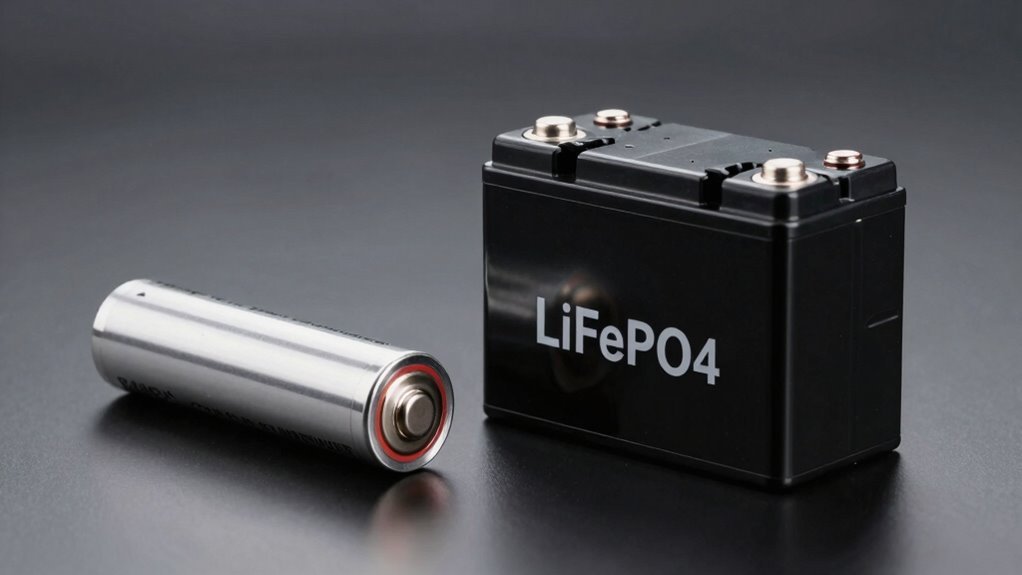
Lithium-ion and LiFePO4 batteries are two common types of rechargeable batteries used for deep cycle applications. Lithium-ion batteries are popular for their high energy density, lightweight design, and widespread use in electronics. They typically use a lithium cobalt oxide or similar chemistry, which offers excellent power but can be more sensitive to overheating and safety issues. LiFePO4 batteries, on the other hand, utilize lithium iron phosphate chemistry. They provide a more stable chemical structure, making them safer, with a longer lifespan and better thermal stability. While both types store and release electrical energy through lithium ions moving between electrodes, their chemistries determine their performance, safety, and durability characteristics. Understanding these differences helps us choose the right battery for specific deep cycle needs.
How Do Their Chemistries Affect Safety and Durability?
The chemistry of these batteries substantially impacts their safety and longevity. Lithium-ion batteries are more prone to thermal runaway, which can cause fires, while Lifepo4 batteries offer greater thermal stability. Additionally, Lifepo4 cells typically last longer through more charge cycles, making them more durable over time.
Thermal Stability Differences
Because of their distinct chemistries, these batteries differ considerably in thermal stability, which directly impacts safety and durability. Lithium-ion batteries generally have a higher risk of overheating because their electrolyte and cathode materials are more reactive at elevated temperatures. This makes them more susceptible to thermal issues if damaged or improperly managed. In contrast, Lifepo4 batteries are inherently more stable due to their robust chemistry, which resists temperature fluctuations and reduces the risk of thermal degradation. This stability translates into safer operation over a broader temperature range. Consequently, Lifepo4 batteries tend to last longer and maintain performance better under harsh conditions. Understanding these differences helps us make informed choices for applications where safety and long-term durability are critical.
Risk of Thermal Runaway
While both Lithium-ion and Lifepo4 batteries can experience thermal runaway, their differing chemistries markedly influence how prone they are to this event. Lithium-ion batteries often contain flammable electrolytes, increasing the risk if overheating occurs. In contrast, Lifepo4 chemistries are more stable due to their strong chemical bonds, making thermal runaway less likely. The table below highlights key differences:
| Feature | Lithium-ion | Lifepo4 |
|---|---|---|
| Flammability | Higher; flammable electrolytes | Lower; stable chemistry |
| Risk of Overheating | Moderate | Lower |
| Safety | Requires careful management | More inherently safe |
| Thermal Stability | Less stable | More stable |
| Durability | Susceptible to damage from heat | Resilient under thermal stress |
This chemistry impacts safety, with Lifepo4 offering a safer option in high-temperature scenarios.
Cycle Life and Durability
Chemistries play a crucial role in determining how long batteries last and how well they withstand repeated use. Lithium-ion and LiFePO4 chemistries differ markedly in their cycle life and durability. Lithium-ion batteries typically endure around 500 to 1,000 charge cycles before capacity drops substantially. In contrast, LiFePO4 batteries often last 2,000 to 3,000 cycles, making them more durable over time. This increased cycle life is due to their stable chemistry, which resists degradation better under deep cycling conditions. Additionally, LiFePO4 batteries are more resistant to thermal stress and voltage fluctuations, enhancing their safety and longevity. Overall, for deep cycle applications, LiFePO4 batteries offer superior durability, making them a more reliable choice for long-term use.
Which Battery Lasts Longer for Deep Cycling?
When comparing lithium-ion and LiFePO4 batteries for deep cycling, it’s essential to take into account their longevity under repeated charge and discharge cycles. Generally, LiFePO4 batteries tend to last longer in this regard, often delivering between 2,000 to 5,000 cycles, sometimes more with proper care. Lithium-ion batteries typically offer around 500 to 1,500 cycles before their capacity markedly diminishes. The longer cycle life of LiFePO4 makes it more suitable for deep cycle applications where batteries are regularly drained and recharged. This durability means they maintain performance over many years, reducing the need for frequent replacements. In contrast, lithium-ion batteries may require more frequent replacement, especially under heavy deep cycling conditions.
Are Lithium-Ion or LiFePO4 Batteries More Cost-Effective?
Considering the longer cycle life of LiFePO4 batteries, many wonder how the upfront costs compare to lithium-ion options. While LiFePO4 batteries tend to be more expensive initially, their durability means fewer replacements over time, saving money in the long run. Lithium-ion batteries are cheaper upfront but may require more frequent replacements, increasing overall costs. Here’s a quick comparison:
| Aspect | Lithium-Ion | LiFePO4 | Emotional Impact |
|---|---|---|---|
| Initial Cost | Lower | Higher | Immediate affordability, longer-term investment |
| Cycle Life | Shorter | Longer | Peace of mind through durability |
| Replacement Frequency | More frequent | Less frequent | Confidence in lasting performance |
| Total Cost Over Time | Potentially higher | More economical | Financial security and reliability |
Ultimately, LiFePO4 offers more value for those investing in long-term performance.
How Do Power Output and Performance Compare?
While both Lithium-Ion and LiFePO4 batteries are popular choices for deep-cycle applications, their power output and performance can differ considerably. Lithium-Ion batteries typically deliver higher energy density, resulting in more power in a smaller package. They can provide rapid bursts of energy, making them suitable for applications requiring quick, high power. However, their performance can decline at extreme temperatures and over time. LiFePO4 batteries, on the other hand, offer a more stable and consistent power output, especially during prolonged use. They tend to have lower internal resistance, allowing for reliable performance over many cycles. Overall, Lithium-Ion batteries excel in high-power, short-duration demands, while LiFePO4 batteries shine in long-term, steady power delivery.
Which Battery Is Safer for High-Discharge Applications?
When it comes to high-discharge applications, safety is a top concern, especially regarding thermal stability. Lithium Iron Phosphate (Lifepo4) batteries are known for their better thermal stability, reducing the risk of overheating. In contrast, traditional lithium-ion batteries carry a higher risk of thermal runaway, which can lead to safety hazards.
Thermal Stability and Safety
Thermal stability is a critical factor when evaluating the safety of lithium-ion batteries for high-discharge applications. Lithium Iron Phosphate (LiFePO4) batteries are known for their superior thermal stability, making them inherently safer during intense use. They resist overheating and thermal runaway better than traditional lithium-ion chemistries. Here’s a quick comparison:
| Feature | Lithium-Ion | Lifepo4 |
|---|---|---|
| Thermal Stability | Moderate | High |
| Risk of Overheating | Higher | Lower |
| Safety in Abuse | Less safe | Safer |
| Heat Tolerance | Lower | Higher |
| Fire Risk | Greater | Lower |
This table highlights Lifepo4’s advantages in safety and stability, making it a better choice for demanding, high-discharge environments.
Risk of Thermal Runaway
In evaluating safety for high-discharge applications, understanding the risk of thermal runaway is key. Thermal runaway occurs when a battery’s temperature rapidly increases, potentially causing fires or explosions. Lithium-ion batteries are more prone to this risk because their electrolyte can ignite if damaged or improperly charged. In contrast, Lifepo4 batteries are inherently safer due to their stable chemistry.
Here are three key points:
- Lithium-ion batteries can experience thermal runaway more easily under stress or damage.
- Lifepo4’s stable chemistry minimizes the risk of fire, even if damaged.
- Proper management and safety systems are crucial for both types, but Lifepo4 batteries generally offer a safer profile for high-discharge use.
Key Factors to Consider When Choosing Between Lithium-Ion and LiFePO4
Choosing between lithium-ion and LiFePO4 batteries depends on several critical factors that can influence your overall performance and long-term savings. First, consider safety: LiFePO4 batteries are inherently more stable and less prone to thermal runaway, making them safer for many applications. Next, think about lifespan; LiFePO4 batteries typically have a longer cycle life, reducing replacement costs over time. Cost is another factor—initially, lithium-ion batteries may be cheaper but could lead to higher expenses due to shorter lifespan. Charging requirements also matter; LiFePO4 batteries often require specific chargers, whereas lithium-ion batteries are more flexible in charging options. Finally, consider your environment and usage patterns, as these influence which chemistry best fits your needs for durability and reliability.
Best Uses for Lithium-Ion and LiFePO4 Batteries in Real-World Applications
Lithium-ion and LiFePO4 batteries each excel in different applications, making it essential to match their strengths to specific needs. Lithium-ion batteries are ideal for portable electronics, electric vehicles, and applications requiring high energy density and fast charging. They deliver quick power and are lightweight, making them perfect for mobile use. LiFePO4 batteries, on the other hand, shine in stationary storage, solar energy systems, and off-grid setups due to their stability, long cycle life, and safety. They handle deep discharges better and are more durable over time.
- Portable electronics and EVs (Lithium-ion)
- Solar energy storage and off-grid systems (LiFePO4)
- Uninterruptible power supplies (both, depending on needs)
Which Battery Is the Right Fit for Your Deep Cycle Energy Needs?
Determining the right battery for your deep cycle energy needs depends on understanding how each type performs under demanding conditions. Lithium-ion batteries excel with high energy density, fast charging, and lightweight design, making them ideal for portable or space-constrained applications. However, they can be more sensitive to temperature extremes and may require careful management. LiFePO4 batteries, on the other hand, are known for their stability, safety, and longer lifespan, even under heavy use. They handle deep discharges better and are more tolerant of harsh environments. Your choice depends on your priorities—if you need lightweight, quick-charging power, lithium-ion may be best. For durability, safety, and longevity, LiFePO4 is often the smarter option. Consider your specific energy demands and environmental conditions before deciding.
Frequently Asked Questions
How Do Temperature Fluctuations Impact Lithium-Ion and Lifepo4 Battery Performance?
Temperature fluctuations can reduce both battery types’ performance, causing capacity loss and faster degradation. Lithium-ion batteries are more sensitive to heat, while Lifepo4 batteries handle cold better, but extreme temperatures still impact their efficiency and lifespan.
Can Lithium-Ion or Lifepo4 Batteries Be Recycled Effectively?
Like recycling a treasure chest, both lithium-ion and LiFePO4 batteries can be recycled effectively. We guarantee proper collection and processing, recovering valuable materials, reducing environmental impact, and supporting sustainable practices in battery use and disposal.
What Are the Environmental Impacts of Manufacturing These Batteries?
We believe manufacturing these batteries impacts the environment through resource extraction, energy use, and waste. Lithium and cobalt mining can harm ecosystems, but advancements in recycling and greener processes aim to reduce these effects considerably.
How Do Charging Times Compare Between Lithium-Ion and Lifepo4 Batteries?
Think of charging times as a race—Li-ion batteries usually finish quicker, like a lightning bolt, while Lifepo4 takes a steady, reliable pace. We find Li-ion faster, but Lifepo4 offers lasting, consistent performance over time.
Are There Specific Maintenance Requirements for Each Battery Type?
We find that lithium-ion batteries require minimal maintenance but benefit from regular checks on terminals and electrolyte levels, while Lifepo4 batteries need occasional voltage balancing and cleaning to guarantee peak performance and longevity.
Conclusion
When choosing between lithium-ion and LiFePO4 batteries for deep cycling, it’s clear that LiFePO4’s longer lifespan—up to 3,000 cycles—gives it a significant edge for demanding applications. Their superior safety and stability make them ideal for long-term use, especially in off-grid or solar setups. Ultimately, understanding your energy needs will help us pick the best fit, ensuring reliable, safe, and cost-effective power for years to come.