Much like a finely tuned engine, the lifespan of a LiFePO4 battery hinges on careful management and understanding its limits. We know these batteries can last for many years, but factors like usage, environment, and maintenance play vital roles. If you’re curious about how to maximize their longevity and guarantee you get the most out of your investment, there’s more to consider—let’s explore what influences their true lifespan.
Key Takeaways
- LiFePO4 batteries typically last between 8 to 10 years with proper maintenance.
- They can endure approximately 2,000 to 5,000 charge cycles before significant capacity loss.
- Environmental factors like high temperatures and humidity can shorten their lifespan.
- Proper charging, storage, and usage practices help maximize battery longevity.
- Compared to lead-acid and other chemistries, LiFePO4 offers a longer, more durable lifecycle.
How Long Do Lifepo4 Batteries Usually Last?
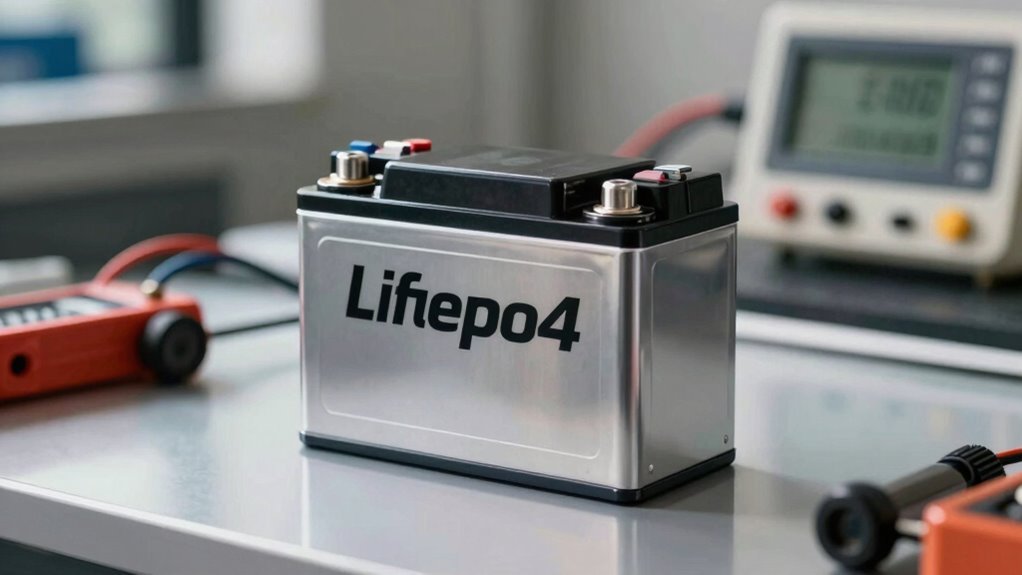
When it comes to lifespan, LiFePO4 batteries are known for their impressive durability. Typically, these batteries last between 2,000 and 5,000 charge cycles, which often translates to 8 to 10 years of reliable use. This is significantly longer than traditional lead-acid batteries, making LiFePO4 a smart choice for long-term applications. Their design allows them to withstand repeated charging and discharging without major degradation. We’ve seen that with proper maintenance, they maintain a high capacity over many years. Whether used in solar energy systems, electric vehicles, or portable devices, these batteries usually outperform other types in longevity. Their robust construction ensures they resist wear and tear, providing dependable power for a decade or more.
What Factors Affect Lifepo4 Battery Lifespan?
We understand that operating temperature, charge cycle limits, and proper charging habits all influence how long a Lifepo4 battery lasts. High or low temperatures can damage the battery, while exceeding cycle limits accelerates wear. Following best charging practices helps maximize its lifespan and keeps it performing reliably.
Operating Temperature Effects
Operating temperature plays a crucial role in determining the lifespan of a LiFePO4 battery. When temperatures are too high or too low, the battery’s chemistry can be affected, leading to faster degradation. High temperatures accelerate chemical reactions, causing capacity loss and reducing overall life. Conversely, cold temperatures slow down reactions, making batteries less efficient and potentially damaging internal components. To optimize lifespan, it’s best to keep batteries within a moderate temperature range.
Key temperature considerations include:
- Avoiding prolonged exposure to extreme heat
- Protecting batteries from freezing conditions
- Using thermal management systems
- Storing batteries in cool, dry environments
Maintaining proper operating temperatures helps guarantee your LiFePO4 batteries perform efficiently and last longer.
Charge Cycle Count Limits
Charge cycle count limits substantially influence the lifespan of LiFePO4 batteries. Each full charge and discharge cycle gradually wears down the battery’s internal components. Typically, LiFePO4 batteries can endure between 2,000 and 5,000 cycles before their capacity drops considerably. However, this number isn’t fixed; it varies based on usage patterns, depth of discharge, and overall care. Shallow cycles—partial charges—extend the battery’s life, while deep cycles accelerate aging. Over time, reaching the maximum cycle count means reduced capacity and shorter runtime. That’s why understanding and managing the cycle count is essential for maximizing your battery’s lifespan. Regularly monitoring cycle usage and avoiding unnecessary full discharges can help you get the most out of your LiFePO4 battery.
Proper Charging Practices
Proper charging practices are essential in extending the lifespan of your LiFePO4 battery, as improper charging can accelerate capacity loss and reduce overall durability. To maximize lifespan, avoid overcharging or discharging too deeply, which stresses the battery. Using a compatible charger designed for LiFePO4 chemistry ensures safe and efficient charging. It’s also important to keep the battery within recommended voltage and temperature ranges during charging.
Some key points to keep in mind:
- Always use a charger with the correct voltage and current ratings
- Avoid charging at extremely high or low temperatures
- Do not leave the battery plugged in after reaching full charge
- Regularly monitor and maintain proper charge levels for peak health
How Do Usage Habits Impact Battery Durability?
The way we charge and store our Lifepo4 batteries considerably affects their lifespan. Poor charging habits or unfavorable storage conditions can lead to faster degradation. By paying attention to these habits, we can help guarantee our batteries last longer and perform better.
Charging Practices Matter
Since how we handle charging can greatly influence a LiFePO4 battery’s lifespan, it’s essential to understand the impact of our usage habits. Proper charging practices help maximize battery life and performance. Avoiding frequent full charges to 100% and deep discharges below 20% can markedly reduce wear. Using the right charger and avoiding high current charges also matter. Here are key points to take into account:
- Keep charge levels between 20% and 80%
- Use chargers specifically designed for LiFePO4 batteries
- Avoid rapid charging unless necessary
- Don’t leave the battery at full charge or low for extended periods
Storage Conditions Impact
How we store our LiFePO4 batteries considerably affects their longevity. Proper storage conditions prevent capacity loss and degradation over time. We recommend keeping batteries in a cool, dry place, ideally around 50°C (122°F), and avoiding extreme temperatures that can cause damage or accelerated aging. It’s best to store batteries at about 50% charge; fully charged or discharged states can stress the cells and shorten lifespan. Additionally, maintaining a stable environment with minimal humidity reduces corrosion risks. We avoid leaving batteries connected to chargers or loads during long-term storage, as this can lead to over-discharge or overcharge. Regularly checking on stored batteries and recharging them to 50% if needed helps preserve their health and ensures they’re ready for use when needed.
How Charging Practices Can Extend Your Battery’s Life
Proper charging practices play a crucial role in maximizing the lifespan of your LiFePO4 battery. To extend its life, avoid overcharging or letting it discharge completely. Instead, aim to keep the charge level between 20% and 80%. Using a quality charger designed for LiFePO4 batteries is essential for safe and efficient charging. Additionally, always charge in a cool, dry place to prevent heat buildup that can damage the battery.
Maximize LiFePO4 battery life by avoiding full discharges, overcharging, and charging in hot environments.
To summarize, keep these practices in mind:
- Avoid full discharges; recharge before reaching 20%
- Do not overcharge; unplug around 80%
- Use chargers specifically made for LiFePO4 batteries
- Charge in a cool, ventilated environment
Following these guidelines helps preserve your battery’s capacity and longevity.
Environmental Conditions That Influence Battery Longevity
Maintaining ideal environmental conditions is key to ensuring your LiFePO4 battery lasts as long as possible. Temperature, humidity, and exposure to elements directly impact its lifespan. High temperatures accelerate capacity loss, while cold weather can reduce performance temporarily. Humidity causes internal corrosion, shortening battery life. Proper storage and use in a controlled environment help preserve its health.
| Condition | Effect on Battery Life |
|---|---|
| High temperatures | Accelerates capacity fade, shortens lifespan |
| Cold temperatures | Temporarily reduces performance |
| Humidity | Causes corrosion, damages internal parts |
| Exposure to elements | Increases risk of damage and degradation |
How to Recognize When Your Lifepo4 Battery Is Worn Out
Over time, you’ll notice certain signs that indicate your LiFePO4 battery has reached the end of its useful life. One common sign is a noticeable decrease in capacity, meaning it won’t hold a charge as long as it used to. You might also observe longer charging times or inconsistent performance. Additionally, the battery could exhibit swelling, abnormal heating, or frequent shutdowns during use.
Signs your LiFePO4 battery is failing include decreased capacity, swelling, overheating, and inconsistent performance.
Be alert to these signs:
- Reduced runtime per charge
- Longer charging periods
- Swelling or physical deformation
- Excessive heat or frequent shutdowns
Recognizing these symptoms early helps prevent potential damage to your system and ensures you take timely action to replace or service your battery before failures occur.
Top Tips to Maximize Your Lifepo4 Battery Life
To get the most life out of your LiFePO4 battery, adhering to some simple but effective practices is essential. First, avoid deep discharges; keeping the battery between 20% and 80% charge helps extend its lifespan. Regularly monitor and maintain proper voltage levels, as overcharging or undercharging can cause unnecessary wear. Store the battery in a cool, dry place when not in use, since high temperatures accelerate degradation. Using a compatible charger designed for LiFePO4 chemistry guarantees safe and efficient charging cycles. Finally, avoid exposing the battery to extreme temperatures or physical damage. By following these tips, we can greatly improve the longevity and performance of our LiFePO4 batteries, ensuring they serve us reliably for years to come.
Comparing Lifepo4 Batteries’ Lifespan to Other Types
While LiFePO4 batteries are often praised for their longevity, they generally outperform many other common battery types, such as lead-acid or nickel-based chemistries. They typically last 8 to 10 years or around 2000 to 5000 cycles, depending on usage. In comparison:
- Lead-acid batteries usually last 3 to 5 years
- Nickel-based batteries tend to have shorter cycle lives
- Li-ion batteries generally last 2 to 3 years
- LiFePO4 batteries offer higher cycle stability and deeper discharge capabilities
This means LiFePO4 batteries not only last longer but also maintain performance over more charge-discharge cycles, making them a reliable choice for long-term energy storage solutions.
Frequently Asked Questions
Can Lifepo4 Batteries Be Recycled After Their Lifespan Ends?
Yes, we can recycle Lifepo4 batteries after their lifespan ends. We actively participate in recycling programs that safely recover valuable materials, reducing environmental impact and promoting sustainable use of resources for future battery manufacturing.
How Does Temperature Fluctuation Specifically Affect Lifepo4 Battery Life?
Temperature fluctuations can substantially reduce Lifepo4 battery life by causing internal stress, accelerating capacity loss, and damaging the cells. We recommend keeping batteries within ideal temperature ranges to guarantee longevity and reliable performance over time.
Are Lifepo4 Batteries Suitable for High-Drain Applications?
Absolutely, Lifepo4 batteries excel in high-drain applications, acting like reliable engines that deliver quick, sustained power. Their robust design and stable chemistry make them ideal, ensuring performance without compromising longevity, even under demanding conditions.
What Are Common Signs of Internal Damage in Lifepo4 Batteries?
We notice internal damage in Lifepo4 batteries through swelling, unusual heat, rapid capacity loss, leaks, or persistent error messages. These signs indicate compromised safety and performance, so we recommend inspecting and replacing damaged batteries promptly for reliability.
How Do Manufacturing Quality Differences Influence Lifepo4 Battery Longevity?
Manufacturing quality differences greatly impact Lifepo4 battery longevity by affecting internal components, safety, and consistency. Higher quality production ensures better materials, precise assembly, and fewer defects, which all contribute to longer-lasting batteries we can rely on over time.
Conclusion
In understanding the lifespan of LiFePO4 batteries, we see that proper care, mindful usage, and ideal conditions are key. We can extend their life by avoiding extremes, practicing good charging habits, and monitoring their health. Ultimately, it’s about respecting the battery’s limits, nurturing its performance, and appreciating its durability. By doing so, we guarantee our batteries serve us longer, work smarter, and deliver reliable power—because longevity depends on how well we care.