Many believe that all lithium-based batteries can be charged using the same methods, but the truth is more nuanced. Lifepo4 and lithium-ion batteries have distinct chemistry and require different charging approaches to maximize their safety and lifespan. Understanding these differences is essential for proper maintenance and ideal performance. So, how do these differences influence the way we should charge each type? That’s what we’ll explore next.
Key Takeaways
- Lifepo4 batteries require a controlled, steady charge around 3.65-3.70V per cell, with current limited to about 0.5C to ensure safety.
- Lithium-ion batteries utilize multi-stage charging: bulk, absorption, and float, allowing faster charging but needing careful voltage and temperature management.
- Lifepo4 chargers strictly regulate voltage to prevent overcharging, while lithium-ion chargers control current and voltage across multiple phases.
- Lithium-ion batteries support rapid charging, but overcharging or overheating can damage them; Lifepo4 batteries prioritize safety with slower, steadier charging.
- The choice depends on application needs: lithium-ion for quick recharge and portability, Lifepo4 for safety, durability, and long-term stability.
How Do Lifepo4 and Lithium-Ion Batteries Charge Differently?
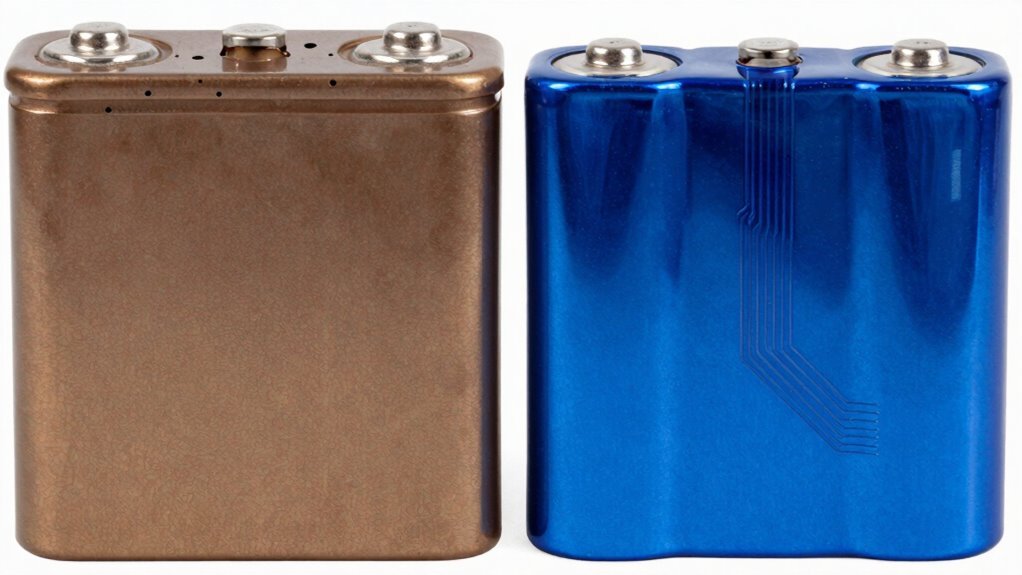
While both Lifepo4 and lithium-ion batteries store electrical energy through similar chemical processes, their charging methods differ considerably due to their unique chemistry and safety requirements. Lifepo4 batteries require a more controlled, steady charging approach to prevent overcharging and ensure safety. They tolerate higher charge voltages but need careful regulation to avoid damage. Lithium-ion batteries, on the other hand, are more sensitive to overcharging and typically need precise voltage limits to prevent overheating or capacity loss. Their charging profiles involve multiple stages, including constant current and constant voltage phases, to optimize life and performance. These differences mean that each battery type demands tailored chargers and charging protocols to operate efficiently and safely.
What Are the Charging Voltage and Current Needs for Lifepo4?
To get the best performance from Lifepo4 batteries, achieving the optimal charging voltage and current needs is crucial. We’ll cover the ideal charging voltage, recommended current levels, and safe practices to protect your battery’s lifespan. Let’s explore how to charge Lifepo4 batteries correctly and safely.
Optimal Charging Voltage
Understanding the ideal charging voltage for Lifepo4 batteries is essential to maximize their lifespan and performance. Typically, the recommended charging voltage for Lifepo4 cells is around 3.65 volts per cell, with a maximum of 3.65 to 3.70 volts. Charging beyond this range can risk overvoltage, which may damage the battery and shorten its life. It’s important to use a charger specifically designed for Lifepo4 chemistry, as it maintains the correct voltage during the charging process. Keeping within these voltage limits guarantees safe, efficient charging and peak performance. Additionally, a stable voltage prevents stress on the battery’s internal components, prolonging its overall lifespan. Proper voltage regulation is key to safe and effective Lifepo4 battery maintenance.
Recommended Charging Current
Maintaining the proper charging current for Lifepo4 batteries is just as important as setting the correct voltage. Generally, we recommend a charging current of around 0.5C to 1C, where C is the battery’s capacity. For example, a 100Ah Lifepo4 battery would ideally be charged at 50A to 100A. Using a current higher than this can cause excessive heat and reduce battery lifespan, while too low a current prolongs charging time without benefits. Most Lifepo4 batteries are designed to handle a maximum charge rate of about 1C safely. It’s best to follow manufacturer guidelines for specific models. Properly managing the charging current ensures efficient charging, maximizes battery health, and prevents damage over time.
Safe Charging Practices
Proper charging voltage and current are essential for guaranteeing Lifepo4 batteries remain safe and perform at their best. We recommend charging Lifepo4 cells within a voltage range of 3.65 to 3.70 volts per cell, with a maximum of 3.65 volts during regular use to prevent overcharging. The charging current should not exceed 0.5C (half the battery’s capacity per hour). For example, a 100Ah Lifepo4 battery should be charged at no more than 50A. Using a charger designed specifically for Lifepo4 chemistry helps maintain correct voltage and current levels. Always monitor the charging process, avoid overcharging, and disconnect once fully charged. Following these practices ensures safety, longevity, and peak performance of your Lifepo4 batteries.
How Do Lithium-Ion Battery Charging Profiles Work?
Understanding how lithium-ion batteries are charged helps us appreciate their efficiency and longevity. We’ll explore the different charging stages and how voltage and current are carefully regulated during each phase. This knowledge allows us to optimize charging and ensure the best performance from our batteries.
Charging Stages Explained
Charging a lithium-ion battery involves distinct stages, each designed to guarantee efficient and safe energy transfer. First, we have the bulk stage, where current flows freely into the battery, rapidly raising the voltage until it nears the set limit. Next is the absorption (or taper) stage, where the current decreases as the voltage stabilizes, allowing the battery to reach full capacity without overcharging. Finally, the trickle or float stage maintains the battery at a full charge, compensating for self-discharge and preventing overvoltage. These stages work together to optimize battery health and lifespan, ensuring a controlled, gradual process that minimizes stress on the cells. Understanding these stages helps us appreciate how proper charging protocols protect the battery’s longevity and performance.
Voltage and Current Control
Lithium-ion battery charging profiles are primarily governed by carefully controlling voltage and current to guarantee safety and efficiency. During charging, the charger adjusts these parameters to match the battery’s needs, ensuring ideal performance. In the constant current phase, the charger supplies maximum current until reaching a set voltage. Then, it switches to the constant voltage phase, where voltage remains steady while current gradually drops. This balance prevents overcharging and prolongs battery life. Here’s a quick overview:
| Charging Stage | Voltage Behavior | Current Behavior |
|---|---|---|
| Constant Current | Rises until limit | High, steady |
| Constant Voltage | Holds steady | Decreases gradually |
| Topping Off | Slight adjustments | Minimal, to full capacity |
| Trickle Charging | Very low | Very low |
| Complete Stop | No charge | No current |
This control is essential for safe, efficient lithium-ion charging.
Why Proper Charging Practices Are Key to Battery Safety and Longevity
Since batteries rely on precise chemical reactions, proper charging practices are essential to guarantee both safety and longevity. Incorrect charging can cause overheating, reduce capacity, and even lead to dangerous failures. Using the right charger, voltage, and current settings helps prevent these issues. Overcharging or deep discharging can damage the battery’s internal structure, shortening its lifespan. Consistent, controlled charging minimizes the risk of thermal runaway and other safety hazards. Additionally, following manufacturer guidelines ensures the battery operates within safe limits, preserving its performance over time. Proper charging isn’t just about avoiding hazards; it’s about maintaining the battery’s health, efficiency, and lifespan. By adopting good practices, we ensure safer operation and get the most value from our batteries.
How Charging Habits Impact Battery Performance and Lifespan
Proper charging habits play a crucial role in determining how well a battery performs over time and how long it lasts. Consistent, correct practices help prevent capacity loss and extend lifespan. For example, avoiding frequent deep discharges and not overcharging preserves battery health. Maintaining ideal charging levels ensures stable performance. Here’s a quick comparison:
| Habit | Effect on Battery | Recommendation |
|---|---|---|
| Partial charging | Reduces stress, prolongs life | Charge between 20-80% |
| Overcharging | Causes overheating, degradation | Use charger with proper cutoff |
| Deep discharges | Accelerates wear | Keep above 20% charge |
Common Charging Mistakes to Avoid With Lifepo4 and Lithium-Ion Batteries
While avoiding common charging mistakes is essential for maintaining battery health, many users unintentionally harm their Lifepo4 and lithium-ion batteries by neglecting basic best practices. One mistake is overcharging, which can cause overheating and reduce battery lifespan. Similarly, letting batteries drain completely before recharging stresses the cells and shortens their life. Using incompatible chargers or charging at incorrect voltages is another common error that risks damage. Additionally, charging in extreme temperatures—hot or cold—impairs performance and can lead to permanent capacity loss. Not monitoring the charging process or ignoring manufacturer guidelines also increases the risk of accidents and battery degradation. Staying aware of these pitfalls helps protect your batteries, ensuring they perform most effectively and last longer.
How to Optimize Charging for Each Battery Type
Optimizing the charging process for Lifepo4 and lithium-ion batteries requires understanding their unique characteristics and adjusting our approach accordingly. For Lifepo4, we should use chargers with a strict voltage cutoff and avoid overcharging to prolong lifespan. Lithium-ion batteries benefit from chargers that provide a controlled, steady current and voltage, preventing overheating. To get the best performance, consider these tips:
- Use a compatible charger designed for each battery type
- Avoid fast charging unless specified safe by the manufacturer
- Keep charging temperatures within recommended ranges
- Never let batteries fully discharge regularly
- Monitor charging cycles to prevent overuse
Which Battery Chemistry Is Best for Your Charging Needs?
Choosing the right battery chemistry depends on your specific charging needs and priorities. If you need a battery with high energy density and long runtime, lithium-ion might be the best choice. It charges quickly and offers excellent performance in compact sizes, ideal for portable electronics. However, it requires careful management to prevent overcharging or overheating. On the other hand, LiFePO4 batteries excel in safety, longevity, and stability. They charge more slowly but are more durable over many cycles, making them suitable for solar energy storage or electric vehicles where reliability is vital. Ultimately, your decision hinges on whether you prioritize rapid charging and compactness or safety and long-term durability. Analyzing your application’s demands helps determine which chemistry aligns best with your charging requirements.
Frequently Asked Questions
How Does Temperature Affect Lifepo4 and Lithium-Ion Charging Efficiency?
Temperature critically affects charging efficiency; cooler temps delay both batteries’ charge acceptance, while excessive heat can cause damage. We recommend charging within ideal temperature ranges to guarantee safety, longevity, and effective performance for Lifepo4 and lithium-ion batteries.
Can I Use the Same Charger for Both Lifepo4 and Lithium-Ion Batteries?
We can’t use the same charger for both Lifepo4 and lithium-ion batteries because they require different charging profiles. Using the wrong charger risks damaging the batteries or causing safety issues, so always choose a compatible charger for each type.
What Are the Environmental Impacts of Charging Each Battery Type?
Charging Lifepo4 and lithium-ion batteries impacts the environment differently; Lifepo4 is greener due to fewer toxic materials and longer lifespan, reducing waste, while lithium-ion batteries involve more hazardous substances and energy-intensive manufacturing, increasing environmental concerns.
How Do Aging and Cycle Life Influence Charging Strategies?
Aging and cycle life profoundly influence our charging strategies; for example, we reduce charging rates as batteries age to extend lifespan, since slower charging minimizes stress and degradation, ultimately preserving capacity over many cycles.
Are There Specific Safety Protocols for Charging Each Battery Chemistry?
We follow specific safety protocols for each battery chemistry, ensuring proper charging voltages, avoiding overcharging, and using compatible chargers. This minimizes risks, prolongs battery life, and maintains safety, especially since Lifepo4 and lithium-ion batteries have different requirements.
Conclusion
In short, choosing the right charging method is like selecting the perfect tool for a craft—each battery type needs its own careful touch. By understanding their unique charging needs and avoiding common mistakes, we can extend their lifespan and guarantee safe, reliable performance. Whether you’re powering a small gadget or a large system, proper charging practices are the foundation—like a steady hand guiding us toward longer-lasting, more efficient batteries.