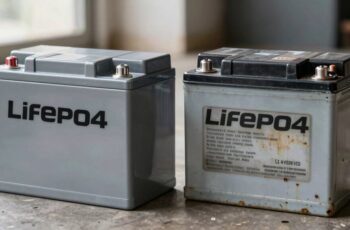
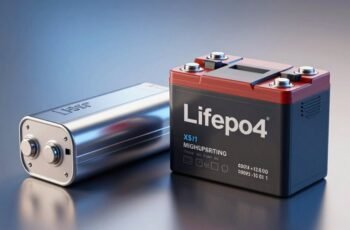
Did you know that despite their similar shapes, Lifepo4 and sealed lead acid batteries have vastly different strengths that could impact your projects more than you realize? While many assume they are interchangeable, understanding their true differences can save you money and headaches down the line. We’re here to explore these contrasts—what makes one a better choice than the other for your specific needs—and why that matters.
Key Takeaways
- Lifepo4 batteries have higher energy density, offering more capacity in a smaller, lighter package than sealed lead acid batteries.
- They typically last 8-10 years with over 2,000 charge cycles, outperforming the 3-5 years and 500-1,000 cycles of lead acid.
- Lifepo4 requires minimal maintenance and has lower long-term costs despite higher initial investment.
- They are more thermally stable and safer, reducing risks of overheating and gas emissions.
- Suitable for long-term, portable, and high-performance applications, while lead acid may suit short-term, budget needs.
Understanding LiFePO4 and Sealed Lead Acid Batteries
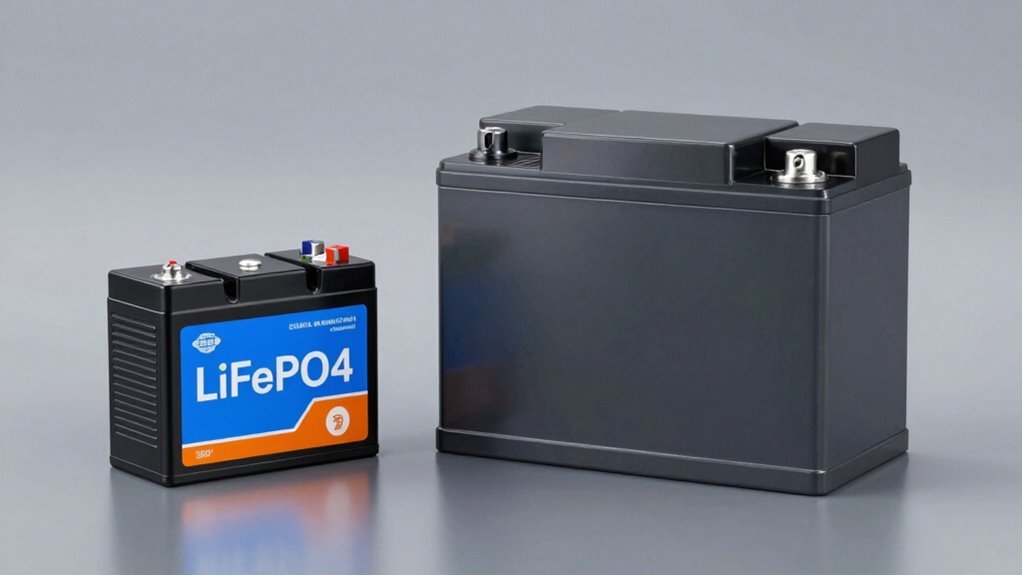
Although both LiFePO4 and sealed lead acid batteries are popular energy storage options, they have distinct characteristics that set them apart. LiFePO4 batteries are a type of lithium-ion battery known for their high energy density, longer lifespan, and lightweight design. They deliver consistent power and charge quickly, making them ideal for demanding applications. Sealed lead acid batteries, on the other hand, are more traditional, generally heavier, and have a shorter cycle life. They’re reliable and cost-effective for stationary uses like backup power and renewable energy systems. While both types are sealed and maintenance-free, their chemistry, efficiency, and longevity differ markedly. Understanding these core aspects helps us choose the right battery based on our specific energy needs.
What Are the Main Differences Between These Battery Types?
When comparing these battery types, we notice differences in energy density and capacity, which affect how much power they can store. Maintenance and lifespan also vary, with Lifepo4 batteries generally lasting longer and requiring less upkeep than sealed lead acid ones. Understanding these key points helps us choose the right battery for our needs.
Energy Density and Capacity
Energy density and capacity are key factors that set Lifepo4 batteries apart from sealed lead-acid ones. Lifepo4 batteries generally offer higher energy density, meaning they store more energy in a smaller, lighter package. This makes them ideal for applications where space and weight matter. In terms of capacity, Lifepo4 cells often deliver more usable power over their lifespan, maintaining consistent performance. Sealed lead-acid batteries tend to have lower energy density, making them bulkier and heavier for the same capacity. While lead-acid batteries can provide high surge currents, their overall capacity diminishes faster over time. Ultimately, Lifepo4 batteries pack more energy into less space and retain their capacity longer, making them a more efficient choice for many modern applications.
Maintenance and Lifespan
Lifepo4 batteries generally require less maintenance and tend to have a longer lifespan compared to sealed lead-acid batteries. They don’t need regular watering or equalization charges, which simplifies upkeep. Lifepo4 cells are more tolerant to deep discharges, meaning they can be drained further without damage, extending their overall lifespan. In contrast, sealed lead-acid batteries typically last around 3 to 5 years and require careful monitoring to prevent sulfation and damage. Lifepo4 batteries often last 8 to 10 years with proper care, making them more cost-effective long-term. Overall, Lifepo4’s durability and lower maintenance needs make them a preferred choice for reliable, long-lasting energy storage.
Which Battery Lasts Longer and Is More Durable?
While both Lifepo4 and sealed lead acid batteries offer reliable power sources, Lifepo4 batteries generally last longer and are more durable over time. Lifepo4 batteries typically have a deeper cycle life, often exceeding 2,000 cycles compared to around 500-1,000 cycles for lead acid. They resist wear from repeated charging and discharging better, maintaining capacity longer. Additionally, Lifepo4 batteries are more resistant to temperature fluctuations and physical stress, making them suitable for demanding environments. They also have a lower rate of capacity loss over their lifespan. Overall, Lifepo4 batteries provide a more durable, longer-lasting solution, often offering better value despite a higher initial cost. This longevity makes them a smarter choice for those seeking reliability and durability.
How Safe Are LiFePO4 and Sealed Lead Acid Batteries?
Both LiFePO4 and sealed lead acid batteries have distinct safety profiles, especially when it comes to thermal stability and fire risk. LiFePO4 batteries are generally more stable and less prone to overheating, reducing the chance of fires. However, sealed lead acid batteries contain hazardous chemicals that require careful handling to prevent leaks or accidents.
Thermal Stability Differences
Thermal stability is a crucial factor when evaluating battery safety, especially under stress or adverse conditions. LiFePO4 batteries are known for their excellent thermal stability, meaning they resist overheating and thermal runaway better than sealed lead acid (SLA) batteries. In contrast, SLA batteries are more prone to temperature fluctuations, which can compromise safety.
Here are four key differences:
- LiFePO4 can operate safely at higher temperatures without degrading.
- SLA batteries are more sensitive to heat, increasing the risk of failure.
- LiFePO4 has a stable chemical structure, reducing the chance of thermal runaway.
- SLA batteries may emit dangerous gases if overheated or damaged.
Risk of Fire Hazards
Fire hazards are a major safety concern when using batteries, and understanding how different types handle these risks is essential. LiFePO4 batteries are inherently safer because they are more chemically stable, reducing the likelihood of thermal runaway and fires. They’re less prone to overheating or catching fire in case of damage or misuse. Sealed Lead Acid batteries, on the other hand, can pose higher fire risks if overcharged, mishandled, or damaged, as they contain sulfuric acid and can produce flammable hydrogen gas. While both types are designed with safety features, LiFePO4’s stability makes it a preferable choice for applications where fire safety is critical. Nonetheless, proper handling and maintenance are crucial to minimize fire hazards for any battery type.
Chemical Safety Factors
Understanding the chemical safety of battery types is essential because it directly impacts how secure they are during use and handling. Lithium Iron Phosphate (LiFePO4) batteries are known for their stable chemistry, making them less prone to thermal runaway and fires. In contrast, sealed lead acid (SLA) batteries contain sulfuric acid, which can be hazardous if leaked or damaged. Here are some key safety factors:
- Thermal Stability — LiFePO4 batteries resist overheating better than SLA batteries.
- Chemical Leakage — SLA batteries risk acid leaks, posing chemical burns.
- Toxicity — Lead in SLA batteries is toxic, requiring careful disposal.
- Fire Risk — LiFePO4 batteries are safer but still need proper handling to prevent hazards.
Both types demand respect, but LiFePO4 generally offers a safer chemical profile.
How Do Costs and Maintenance Compare?
When comparing costs and maintenance, LiFePO4 batteries often prove more economical over their lifespan despite a higher initial price. They generally last longer—up to 10 years or more—reducing replacement costs. Maintenance needs are minimal; they don’t require regular watering or equalization, unlike sealed lead acid batteries. LiFePO4 batteries are also less prone to sulfation and capacity loss over time, which means they maintain performance longer with less upkeep. Conversely, sealed lead acid batteries typically need periodic checks, watering, and tend to degrade faster, leading to more frequent replacements. While the upfront investment for LiFePO4 is higher, the lower maintenance costs and longer lifespan make them more cost-effective in the long run. This overall savings makes LiFePO4 batteries a smarter choice for many applications.
Which Battery Is Best for Your Specific Needs?
Choosing the right battery depends on your specific needs and application, as each type offers distinct advantages. To help you decide, consider these factors:
- Usage Duration: Lifepo4 batteries last longer and handle deeper cycles, ideal for frequent use.
- Weight and Size: Sealed lead acid batteries are heavier and bulkier, better for stationary setups.
- Budget: Sealed lead acid batteries are typically cheaper upfront, but Lifepo4 batteries save money over time.
- Maintenance: Lifepo4 requires minimal upkeep, while lead acid needs regular watering and checks.
Assess your priorities—whether it’s longevity, portability, cost, or maintenance—and choose the battery that aligns with your specific needs.
Frequently Asked Questions
Can Lifepo4 Batteries Be Recycled Easily?
Yes, lifepo4 batteries can be recycled easily. We find recycling centers accept them due to their valuable materials like lithium and iron, making the process environmentally friendly. Proper recycling helps reduce waste and conserves natural resources effectively.
Are Sealed Lead Acid Batteries Suitable for High-Temperature Environments?
Sealed lead acid batteries aren’t ideal for high-temperature environments because they can overheat, swell, or leak, risking damage and safety issues. We recommend using batteries specifically designed for high temperatures to guarantee safety and longevity.
How Do Charging Times Compare Between the Two Battery Types?
Charging times vary; Lifepo4 batteries generally charge faster than sealed lead acid ones, so we often say “time is of the essence.” This means Lifepo4’s quicker charge can save us valuable time in our projects.
What Are the Environmental Impacts of Disposing of Each Battery?
Disposing of LiFePO4 batteries is less harmful because they contain fewer toxic metals, but recycling is still essential. Sealed lead acid batteries release harmful acids and lead, posing greater environmental risks if not properly recycled.
Do These Batteries Perform Well in Cold Weather Conditions?
We find Lifepo4 batteries perform better in cold weather, maintaining higher efficiency and charging capacity, while sealed lead acid batteries often struggle with reduced performance and slower charging, making Lifepo4 a more reliable choice in colder environments.
Conclusion
Ultimately, choosing between LiFePO4 and SLA batteries depends on your needs. Did you know LiFePO4 batteries can last over 2,000 cycles, outlasting SLA batteries by years? If you prioritize longevity, safety, and efficiency, LiFePO4 is the smarter choice. While the initial cost is higher, the long-term savings and performance make it worth considering. We’re confident that understanding these differences helps you make an informed decision for your specific application.