It’s interesting how we often stumble upon the fact that LiFePO4 batteries can last for years, almost by coincidence, when we’re considering their long-term value. Their impressive lifespan, stretching from 8 to 15 years with proper care, makes them a popular choice for various applications. But what truly determines how long they’ll serve us well? Keep exploring, because understanding these factors can make a real difference in how you choose and maintain your batteries.
Key Takeaways
- LiFePO4 batteries typically last between 2,000 to 5,000 charge cycles, equating to about 8 to 15 years of use.
- Proper maintenance and avoiding deep discharges can extend battery lifespan.
- Operating within the ideal temperature range (20°C to 25°C) helps prevent premature aging.
- Signs of aging include capacity loss, reduced runtime, and increased charging frequency.
- Technological advancements aim to further improve longevity and durability of LiFePO4 batteries.
What Is a LiFePO4 Battery and How Does It Work?
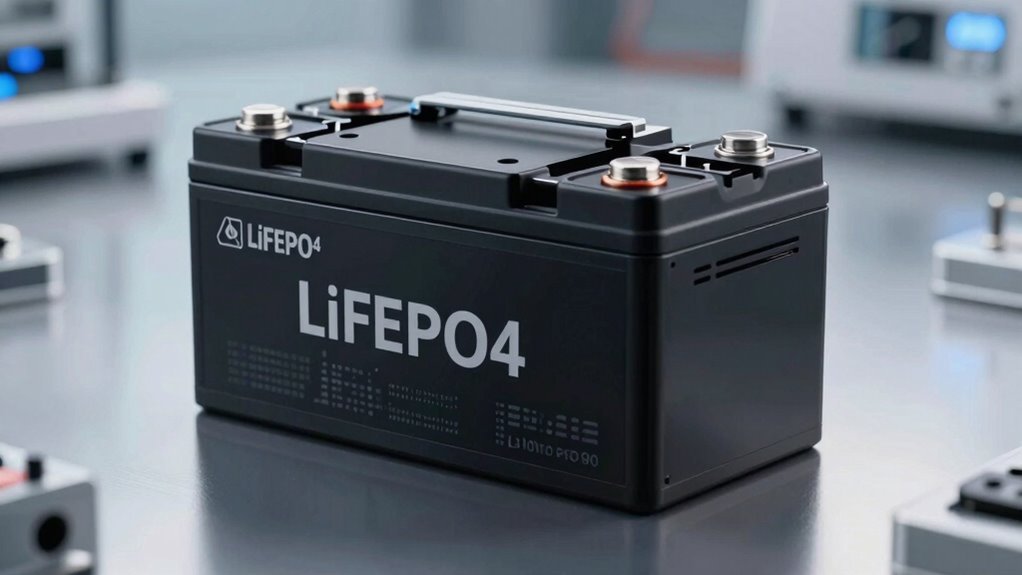
A LiFePO4 battery, also known as a lithium iron phosphate battery, is a type of rechargeable battery that offers high stability and safety. It uses lithium iron phosphate as its cathode material, which helps prevent overheating and thermal runaway. When we use these batteries, lithium ions move from the cathode to the anode during charging, and in reverse during discharging. This process stores and releases energy efficiently. Unlike other lithium-ion batteries, LiFePO4 batteries have a longer lifespan, better thermal stability, and are less prone to fire hazards. They’re commonly found in electric vehicles, solar energy systems, and portable power storage. Overall, their design makes them a reliable, safe, and sustainable choice for various applications.
What Factors Affect the Lifespan of a LiFePO4 Battery?
The lifespan of a LiFePO4 battery mainly depends on how we use it and the conditions it faces. Frequent charging cycles and improper operating temperatures can shorten its life. Understanding these factors helps us maximize its performance and longevity.
Usage Patterns and Cycles
Understanding how we use our LiFePO4 batteries considerably impacts their lifespan. Frequent shallow cycles, instead of full charges and discharges, can extend battery life, as the chemistry handles partial cycles well. Conversely, deep cycling—draining the battery close to zero—accelerates wear. Consistently cycling within the ideal voltage range helps preserve capacity over time. Also, rapid charge and discharge rates create stress, which can shorten lifespan, so maintaining moderate current levels is beneficial. Regularly cycling the battery within its recommended parameters prevents unnecessary strain. Additionally, avoiding excessive cycling frequency and ensuring balanced use among multiple batteries help maintain overall health. By adopting mindful usage patterns, we can greatly prolong our LiFePO4 batteries’ effective lifespan and maximize their performance.
Operating Conditions and Temperatures
Operating conditions, especially temperature, play a crucial role in determining the lifespan of a LiFePO4 battery. Excessive heat accelerates chemical reactions, causing faster degradation, while cold temperatures can reduce capacity temporarily. Ideally, keep batteries between 20°C and 25°C for maximum longevity. Extreme temperatures—below 0°C or above 45°C—accelerate aging and diminish performance. To help visualize this, consider the following:
| Temperature Range | Effect on Battery Life |
|---|---|
| 0°C – 25°C | Peak performance and longevity |
| 25°C – 45°C | Slightly accelerated aging |
| Below 0°C | Capacity loss, potential damage |
| Above 45°C | Rapid degradation, reduced lifespan |
Maintaining stable temperatures extends your battery’s life and performance.
How Long Does a Typical LiFePO4 Battery Last?
LiFePO4 batteries are known for their long lifespan, often outlasting other lithium-ion types. Typically, these batteries last between 2,000 and 5,000 charge cycles, depending on usage and maintenance. This durability means they can serve for about 8 to 15 years in many applications. To maximize their lifespan, consider these key factors:
LiFePO4 batteries offer 2,000–5,000 cycles, lasting 8–15 years with proper care and maintenance.
- Regularly monitor and keep the battery within recommended temperature ranges.
- Avoid deep discharges; aim to keep the state of charge between 20% and 80%.
- Use a quality charger compatible with LiFePO4 chemistry to prevent overcharging or undercharging.
Following these guidelines helps guarantee your battery reaches its full potential lifespan, providing reliable power for years to come.
How Can You Tell When Your LiFePO4 Battery Is Near the End of Its Life?
We can often tell our LiFePO4 batteries are nearing the end of their life when their capacity drops noticeably or they need more frequent charging. You might also notice voltage patterns that fluctuate more than usual during use. Recognizing these signs helps us know when it’s time to think about replacing the battery.
Reduced Capacity Indicators
As batteries age, their ability to hold a charge diminishes, making it important to recognize early warning signs. Reduced capacity is a key indicator that your LiFePO4 battery is nearing the end of its lifespan. You might notice:
- Shorter run times between charges
- The need to recharge more frequently
- A sudden drop in overall performance
These signs suggest the battery isn’t performing as efficiently as it once did. If you observe any of these, it’s a good idea to monitor your battery’s behavior closely. Over time, reduced capacity becomes inevitable, but early detection helps you plan replacements and maintain system reliability. Staying aware of these indicators ensures you avoid unexpected failures and extend the overall life of your battery.
Increasing Charging Frequency
When a battery approaches the end of its lifespan, you’ll likely notice you need to charge it more often than before. This increased charging frequency happens because the battery’s capacity diminishes, so it can’t hold a charge as long as it used to. As a result, each cycle depletes the battery more quickly, forcing you to top it up more frequently. You might also find yourself waiting longer between charges, only to realize that the battery isn’t lasting as long as it once did. This pattern is a clear sign that the battery’s health is declining. If you’re noticing this trend, it’s a good idea to monitor the overall performance and consider replacement before it fails unexpectedly.
Voltage Drop Patterns
A noticeable change in how your LiFePO4 battery behaves during use can be a strong indicator of its declining health. One key sign is the voltage drop pattern under load. As the battery ages, you’ll notice it discharges more quickly, and the voltage dips sharply near the end of each cycle. To spot this, pay attention to these signs:
- The voltage remains stable early on but drops suddenly in the final stages.
- The voltage often falls below the recommended cutoff point earlier than usual.
- The overall runtime decreases, even with the same load.
These patterns suggest the battery’s capacity is diminishing. Monitoring voltage behavior during use helps you catch early signs of aging, preventing unexpected failures and optimizing battery lifespan.
How Can You Maximize Your LiFePO4 Battery’s Lifespan?
Maximizing the lifespan of your LiFePO4 battery involves several key practices. First, avoid deep discharges; keeping the battery between 20% and 80% charge reduces stress and prolongs life. Regularly monitoring voltage and temperature helps prevent damage from overheating or overcharging. Use a compatible charger designed for LiFePO4 chemistry, and never leave the battery fully charged or discharged for extended periods. Store the battery in a cool, dry environment when not in use, as high temperatures accelerate aging. Gentle cycling, avoiding rapid charge and discharge, also protects the cells. Ultimately, follow manufacturer guidelines for maintenance and usage, as proper care ensures your battery performs efficiently over its lifespan. These practices help you get the most out of your LiFePO4 battery.
Comparing LiFePO4 Battery Lifespan to Other Types
LiFePO4 batteries are often praised for their long lifespan compared to other lithium-ion chemistries, making them a popular choice for various applications. They typically last 2,000 to 5,000 cycles, which exceeds many alternatives. In comparison:
LiFePO4 batteries last 2,000 to 5,000 cycles, surpassing many other lithium-ion options for durability and reliability.
- Lithium-ion (LiCoO2) batteries usually offer around 500 to 1,000 cycles.
- Nickel-Metal Hydride (NiMH) batteries tend to last about 500 to 1,000 cycles.
- Lead-acid batteries generally provide 200 to 1,000 cycles, depending on maintenance.
This durability means LiFePO4 batteries stay functional longer, reduce replacement costs, and support more reliable performance over time. Their superior cycle life makes them ideal for long-term energy storage needs.
Common Mistakes That Shorten Your LiFePO4 Battery’s Life
Even though LiFePO4 batteries are built to last, certain common mistakes can substantially shorten their lifespan. Overcharging is a primary culprit; it stresses the battery and accelerates capacity loss. Similarly, discharging below the recommended voltage can cause irreversible damage. Ignoring proper charging practices, like using incompatible chargers or skipping voltage regulation, also harms the cells. Excessive exposure to high temperatures speeds up degradation, so keeping batteries in cool, well-ventilated areas is essential. Additionally, frequent deep discharges wear out the battery faster, so maintaining a moderate state of charge helps prolong life. Ultimately, neglecting regular maintenance or failing to monitor voltage and current levels can lead to unnoticed damage, ultimately reducing the battery’s overall longevity. Avoiding these mistakes guarantees your LiFePO4 battery performs at its best for years.
When Should You Replace or Upgrade Your LiFePO4 Battery?
Determining when to replace or upgrade your LiFePO4 battery depends on several key indicators of performance decline. First, monitor the capacity; if it drops below 70-80% of the original, it’s time to contemplate an upgrade. Second, watch for increased internal resistance, which causes reduced efficiency and longer charging times. Third, pay attention to frequent voltage drops during use, signaling aging cells. Additionally, if your battery shows signs of physical damage or persistent errors in monitoring systems, replacement is wise. Recognizing these signs early helps prevent system failures and guarantees excellent performance. Ultimately, staying alert to these indicators allows us to decide when a replacement or upgrade will keep our system running smoothly.
Future Trends That Could Extend LiFePO4 Battery Lifespan
Advancements in battery technology and materials science promise to substantially extend the lifespan of LiFePO4 batteries in the coming years. Researchers are exploring new electrode materials and coatings that reduce degradation and improve charge cycle stability. Solid-state electrolytes are gaining attention for their potential to enhance safety and longevity. Additionally, smarter battery management systems are being developed to optimize charging and discharging processes, minimizing stress on the cells. We also expect innovations in thermal management techniques to prevent overheating and extend battery life. These trends collectively aim to make LiFePO4 batteries more durable, reliable, and cost-effective. As these technologies mature, we’ll likely see batteries that last considerably longer, reducing replacements and promoting broader adoption in electric vehicles, renewable energy storage, and portable electronics.
Frequently Asked Questions
What Environmental Conditions Best Preserve Lifepo4 Battery Lifespan?
We recommend storing Lifepo4 batteries in a cool, dry place, away from direct sunlight and extreme temperatures. Keeping them at a partial charge and avoiding frequent deep discharges helps preserve their lifespan effectively.
How Does Temperature Impact Lifepo4 Battery Aging?
Temperature markedly impacts Lifepo4 battery aging; high temperatures accelerate degradation, reducing lifespan, while moderate, stable temperatures help preserve capacity and extend battery life. We recommend keeping batteries cool and avoiding extreme heat exposure.
Are There Specific Charging Cycles That Extend Battery Life?
Yes, we find that shallow, partial charging cycles and avoiding deep discharges help extend battery life. Regularly maintaining ideal charge levels and avoiding extreme temperatures also promote longevity, ensuring our Lifepo4 batteries perform well over time.
Can Improper Storage Damage a Lifepo4 Battery?
Yes, improper storage can damage a Lifepo4 battery. We recommend storing it in a cool, dry place, partially charged, and avoiding extreme temperatures to prevent capacity loss and potential safety hazards over time.
What Are the Signs of Irreversible Battery Capacity Loss?
We can tell there’s irreversible capacity loss when a Lifepo4 battery’s runtime considerably decreases despite proper charging, and it struggles to hold a charge or shows reduced voltage levels under load, indicating permanent internal damage.
Conclusion
In summary, LiFePO4 batteries are remarkably durable, often lasting between 8 to 15 years with proper care. Did you know they can withstand up to 5,000 charge cycles? By avoiding deep discharges and maintaining ideal temperatures, we can maximize their lifespan and get the most value from our investment. With ongoing advancements, these batteries are poised to become even more reliable, making them a smart choice for sustainable energy solutions.